

There’s a narrative that gets thrown around a lot. That capitalism is extractive. That it only takes.
That the people who build massive businesses are hoarding wealth while the rest of the world suffers.
And look… some of that criticism is earned. I’m not here to pretend every billionaire is a saint…
But here’s what rarely gets talked about. Some of the most impactful organizations on the planet…
The ones feeding kids, curing diseases, building libraries, funding scholarships, training millions of people in new skills… were created by capitalists.
Business founders. CEOs. Corporations. People who made their money through commerce and then turned around and said,
What if we put this to work for something bigger?
Nobody forced them to do it. There was no law. No mandate. No PR crisis they were trying to spin their way out of. They just… did it.
Because they wanted to.
I started thinking about this when I was reflecting on two organizations that most of us know but rarely think about in this context. Ronald McDonald House. Tim Hortons Children’s Foundation. These are household names.
We see them at every drive-through and every checkout counter. But when you actually look at the numbers…
When you see that RMHC operates 387 houses in 62 countries and saves families $678 million a year in lodging costs…
Or that Tims Camps have served 315,000+ underprivileged kids completely free of charge…
Me included. The impact Tim Hortons Children’s Foundation had on me was so significant that I went back as a counselor a few years later:
It kind of hits different.
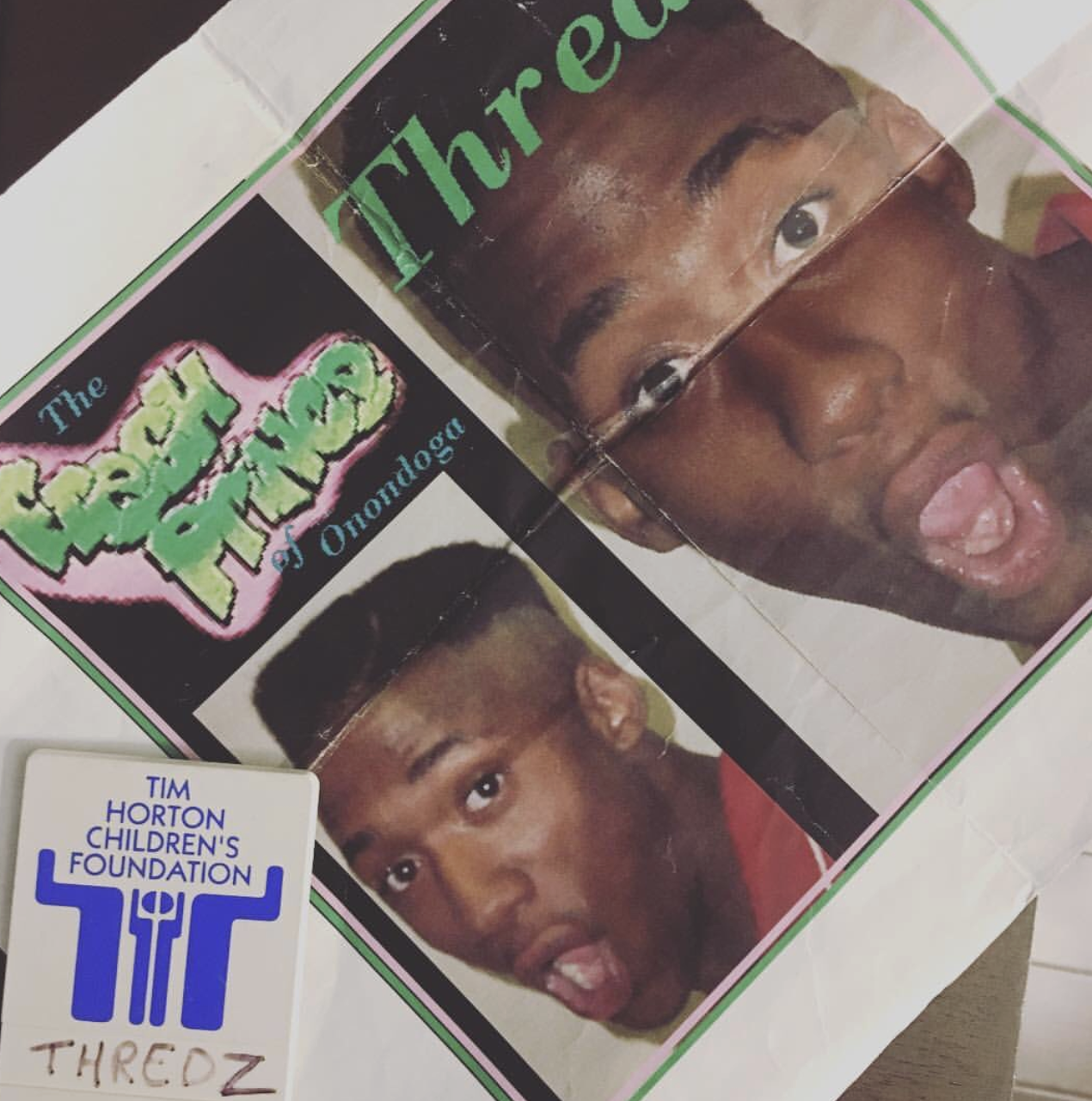
And today…
I look back with conviction that the THCF played a key role in my life turning out the way it did.
So I went deep. I wanted to build the most comprehensive list I could find of capitalist-built organizations that have had a massive, measurable, undeniable impact on the world. No political agenda. No partisan identity. Just organizations built to do good.
Here are 50 of them…. Grab a coffee & enjoy.
The first two: the ones that started this whole exploration
1. Tim Hortons Children’s Foundation (Tims Camps) — Tim Hortons
Established in 1974 in honor of NHL player Tim Horton, who founded the restaurant chain. The Foundation operates 7 camps across Canada and the United States, serving youth aged 12–16 from low-income families through multi-year, camp-based leadership programs. Since inception, Tims Camps have supported more than 315,000 underserved young people… all completely free of charge, including travel. Camp Day, the chain’s annual fundraiser where 100% of coffee sales go to the Foundation, has generated roughly $250 million over its history. The 2024 event alone raised $12.7 million. In September 2024, the Foundation expanded beyond camps, launching an In-Community Program for grade 5–6 students in low-income neighbourhoods.
2. Ronald McDonald House Charities (RMHC) — McDonald’s Corporation
Founded in 1974 in Philadelphia after the daughter of Eagles player Fred Hill was undergoing leukemia treatment. McDonald’s regional manager Ed Rensi and local franchise owners helped fund the first house near the hospital. Today, RMHC operates 387 Ronald McDonald Houses in 62 countries, plus 271 Family Rooms inside hospitals and 41 Care Mobiles delivering healthcare to underserved communities. The network serves more than 7 million children per year and has a presence at 89% of the world’s top children’s hospitals. In 2024 alone, RMHC saved families an estimated $678 million in lodging and meal costs. Fifty years in, RMHC has become the world’s most recognizable family-support network in pediatric healthcare.
Legacy titans who built the template for giving
3. Carnegie Libraries / Carnegie Corporation of New York — Andrew Carnegie
Steel magnate Andrew Carnegie funded the construction of 2,509 free public libraries across the globe between 1883 and 1929. More than half of those American libraries still serve their communities today. By 1920, Carnegie-funded buildings accounted for roughly half of all public libraries in the United States. Carnegie gave away approximately $350 million in his lifetime (equivalent to $7–10 billion today), with $56 million dedicated to library construction alone. The Carnegie Corporation of New York, established in 1911, continues his mission with ongoing grants in education, democracy, and international peace.
4. The Rockefeller Foundation — John D. Rockefeller
Founded in 1913 by America’s first billionaire. The Foundation has distributed more than $22 billion across 112 years. Its most staggering achievement is the Green Revolution: starting with a 1943 agricultural program in Mexico, the Foundation hired Norman Borlaug, whose high-yield crop varieties are credited with saving up to one billion lives from starvation. Borlaug won the Nobel Peace Prize in 1970. More recently, its 2021 Global Energy Alliance committed $500 million to bring renewable power to one billion underserved people. In 2025, it pledged $100 million to reach 100 million children with nutritious school meals.
5. Ford Foundation — Henry Ford / Edsel Ford
Established in 1936 with a modest $25,000 gift, the Ford Foundation grew into one of the world’s largest private foundations after inheriting 90% of Ford Motor Company’s non-voting shares. It now holds approximately $16.8 billion in net assets and makes roughly 1,500 grants per year. The Foundation helped create PBS in 1951 and gave the $1 million that launched Sesame Street in 1969. During the pandemic, it raised $1 billion through bond issuances to support nonprofits… the first foundation ever to do so. Its BUILD initiative has committed $2 billion to strengthen social justice organizations globally.
6. Milton Hershey School / Hershey Trust — Milton S. Hershey
In 1909, chocolate magnate Milton Hershey and his wife Catherine founded a school for orphaned boys. In 1918, after Catherine’s death, Hershey transferred his controlling interest in the Hershey Company… then worth $60 million… to the school trust. Today, Milton Hershey School is the wealthiest K–12 institution in the United States, with trust assets of $17.4 billion, serving approximately 2,100 students entirely free of charge. The school provides residential housing, academics, medical care, dental care, and social services, spending roughly $90,000–$139,000 per student per year. The Hershey Trust controls 81% of the voting shares of the Hershey Company. A Fortune 500 corporation governed by a children’s charity.
7. W.K. Kellogg Foundation — Will Keith Kellogg
The cereal magnate founded this institution in 1930 in Battle Creek, Michigan. It has grown into one of America’s largest private foundations, with approximately $9.1 billion in total assets and annual grant distributions of $340–$430 million. Its three strategic pillars… thriving children, working families, and equitable communities… drive programs across the U.S., Latin America, the Caribbean, and Southern Africa. Its Racial Equity 2030 Challenge awarded $90 million in funding to visionary organizations worldwide.
8. Howard Hughes Medical Institute (HHMI) — Howard Hughes
Founded in 1953, HHMI is the largest private funder of academic biomedical research in the world, with $24.2 billion in net assets. Rather than awarding project grants, HHMI employs scientists directly under a “people, not projects” model. Among current and emeriti investigators are 34 Nobel Prize laureates and over 150 members of the National Academy of Sciences. In 2025, it announced AI@HHMI, a $500 million, decade-long investment in AI-driven life sciences research.
Tech founders and the new age of mega-philanthropy
9. Bill & Melinda Gates Foundation — Bill Gates / Microsoft
The world’s largest private foundation by spending, with a $77.2 billion endowment and approximately $100 billion in cumulative charitable spend since 2000. The Foundation works with 11,750+ partner organizations across 40+ strategic areas. Its global health work is unparalleled: instrumental in nearly eradicating polio, accelerating HPV vaccines, and dramatically reducing child mortality worldwide. In May 2025, Gates announced the Foundation will close by December 31, 2045, and he will give virtually all his remaining wealth to it before then.
10. Bloomberg Philanthropies — Michael Bloomberg / Bloomberg L.P.
Michael Bloomberg’s lifetime giving has reached $25.4 billion. In 2025, Bloomberg Philanthropies invested $4.3 billion globally across 700+ cities in 150 countries. He spent $1 billion fighting tobacco use worldwide, helped retire 390 U.S. coal plants since 2011, gave $4.55 billion to Johns Hopkins University (including $1 billion in 2024 to make medical school free), and enrolled over 1 million women in job-training programs. Bloomberg has pledged his 88% stake in Bloomberg L.P. to the organization upon his death.
11. MacKenzie Scott’s Yield Giving — MacKenzie Scott
Since her 2019 divorce from Jeff Bezos, MacKenzie Scott has donated over $26 billion to more than 2,700 nonprofit organizations. In 2025 alone, she gave $7.17 billion to roughly 225 organizations. Her approach is revolutionary: unrestricted, no-strings-attached grants that allow organizations full flexibility. She has given $1.35 billion to HBCUs, $436 million to Habitat for Humanity, and hundreds of millions to healthcare, housing, and racial equity organizations.
12. Chan Zuckerberg Initiative (CZI) — Mark Zuckerberg & Priscilla Chan / Meta
Established in 2015 with a pledge of 99% of Zuckerberg’s Facebook shares over their lifetimes, CZI has committed over $7.22 billion in grants. Its science division received a $3 billion, decade-long commitment and created the CZ Biohub in San Francisco with the goal of curing, managing, or preventing all disease by 2100.
13. Bezos Earth Fund & Bezos Day One Fund — Jeff Bezos / Amazon
Jeff Bezos committed $10 billion to the Earth Fund to combat climate change… one of the largest individual environmental pledges ever made. The Fund has committed $2 billion to nature conservation, $1 billion to food systems, and over $300 million to environmental justice. Separately, the Bezos Day One Fund has donated more than $850 million across all 50 states, helping divert 28,000+ families from homelessness. The Day 1 Academies Fund operates Bezos Academy… tuition-free Montessori preschools in underserved communities.
14. Michael & Susan Dell Foundation — Michael Dell / Dell Technologies
Since 1999, the Dell Foundation has made $3 billion in commitments to accelerate opportunity for children in urban poverty, with approximately $7.5 billion in assets under management. The Dell Scholars Program has awarded $300 million in scholarships since 2004. In Austin, it built the Dell Children’s Medical Center and established the Dell Medical School, transforming the city’s healthcare infrastructure.
15. Salesforce.org and the 1-1-1 Model — Marc Benioff / Salesforce
When Marc Benioff founded Salesforce in 1999, he simultaneously launched a philanthropy model that has reshaped corporate giving: 1% of equity, 1% of product, and 1% of employee time dedicated to community benefit. Over 25 years, Salesforce has given over $240 million in grants, 3.5 million hours of volunteer service, and free or discounted software to 39,000+ nonprofits and schools. Benioff’s model inspired Pledge 1%, a global movement now joined by more than 18,000 companies in 130+ countries.
16. Google.org — Larry Page & Sergey Brin / Alphabet
Google’s charitable arm has provided more than $18 billion in donated products and nearly $6 billion in cash funding since 2004. Organizations supported have reached more than 300 million people. Major initiatives include AI-powered flood forecasting, a $75 million AI Opportunity Fund for digital skills, and a Fellowship program that embeds Google engineers pro bono with nonprofits worldwide.
17. Cisco Foundation & Networking Academy — Cisco Systems
The most quietly transformative corporate education program in the world. Since 1997, Cisco’s Networking Academy has trained 17.5 million people in IT skills across 190 countries through 11,800 educational institutions. Cisco set a goal to positively impact one billion lives… and exceeded it by December 2023, more than a year early.
18. Azim Premji Foundation — Azim Premji / Wipro
Indian tech billionaire Azim Premji has irrevocably donated 66% of Wipro’s economic ownership… approximately $29 billion… to his Foundation. It works to improve government school education across India, with field operations in 7 states supporting over 350,000 government schools through 1,700 field professionals. It runs Azim Premji University, provides 30,000–250,000 scholarships annually for girls’ higher education, and feeds 5.5 million children through school meal supplements.
19. Skoll Foundation — Jeff Skoll / eBay
eBay’s first president founded this organization in 1999 and has given it approximately $1 billion in eBay stock. The Foundation has awarded more than $935 million worldwide, investing in 165 organizations led by 122 social entrepreneurs across five continents. It holds $1.5 billion+ in assets and hosts the annual Skoll World Forum… dubbed the “Davos for the nonprofit set” by Forbes.
20. Jack Ma Foundation — Jack Ma / Alibaba
Founded in 2014, the Foundation channels Alibaba’s co-founder’s wealth into education and entrepreneurship. Its Africa Netpreneur Prize Initiative committed $100 million over ten years to recognize 100 African entrepreneurs. In China, the Rural Teachers Initiative selects 100 outstanding rural teachers each year. During COVID-19, the Foundation shipped medical supplies to more than 150 countries.
Consumer brands that baked generosity into the business model
21. Newman’s Own Foundation — Paul Newman
Paul Newman built the world’s first “all profits to charity” food brand in 1982. Since then, Newman’s Own has donated more than $600 million to thousands of organizations. Newman co-founded the SeriousFun Children’s Network in 1988, which now operates camps on five continents for children with serious illnesses.
22. IKEA Foundation — Ingvar Kamprad / IKEA
Funded by the Stichting INGKA Foundation… once valued by The Economist at €36 billion, making it the world’s wealthiest charitable foundation by asset value… the IKEA Foundation has provided more than €1.5 billion in grants through 2021. Its partnership with UNHCR invested approximately €89 million in Dollo Ado refugee camps, the largest private-sector contribution to UNHCR camp operations.
23. Patagonia / Holdfast Collective / 1% for the Planet — Yvon Chouinard
In September 2022, Yvon Chouinard did something no major company founder had ever done: he gave away the entire company. 100% of nonvoting stock went to the Holdfast Collective, a nonprofit fighting the environmental crisis. All future profits… from a company generating roughly $1.5 billion in annual revenue… now flow to climate action. Since 1985, Patagonia has donated over $140 million to grassroots environmental groups. Chouinard also co-founded 1% for the Planet, which has generated over $800 million in certified environmental giving.
24. LEGO Foundation — Kirk Kristiansen Family / LEGO
In 2021, the LEGO Foundation committed over $440 million in grants and operates programs in more than 32 countries. During COVID-19, the Foundation reached over 30 million children through 24 emergency partnerships. It invested $100 million in the Play to Learn partnership for children in refugee settings and supported 7 million children and 200,000 teachers through its decade-long partnership with Right To Play.
25. The Coca-Cola Foundation — The Coca-Cola Company
Founded in 1984, the Foundation has awarded more than $1.7 billion in grants over its 40-year history. Its 5by20 initiative… launched to empower 5 million women entrepreneurs by 2020… exceeded its goal, enabling over 6 million women across 100 countries. The separate Coca-Cola Scholars Foundation has awarded nearly $27 million in scholarships to approximately 3,250 students since 1986.
26. Starbucks Foundation — Howard Schultz / Starbucks
The Starbucks College Achievement Plan, launched in 2014 with Arizona State University, provides 100% upfront tuition coverage for a bachelor’s degree… more than 16,000 partners have graduated, with 26,000+ currently enrolled. Since 2013, Starbucks has hired more than 40,000 veterans and military spouses. Its Neighborhood Grants program has awarded more than $25 million across 16,000+ grants.
27. Target Foundation — Target Corporation (Dayton Family)
Target’s giving tradition stretches back to 1918. Since 1946, Target has given 5% of its profits to communities… historically cited as $4+ million per week. The Take Charge of Education program donated more than $460 million to over 120,000 schools nationwide. In 2021, Target pledged $100 million over five years for racial equity grants.
28. UPS Foundation — Jim Casey / United Parcel Service
Founded in 1951, the UPS Foundation has invested more than $3 billion in communities worldwide. In 2024, it responded to 80 global disasters and humanitarian crises, positively impacting more than 120 million lives. UPS employees have logged more than 18.7 million volunteer hours since 2011. The Foundation has planted 22 million trees since 2012, targeting 50 million by 2030.
29. Subaru Share the Love Event — Subaru of America
Now in its 17th year, this program… donating $250+ per vehicle sold during the holiday season to the buyer’s chosen charity… has generated nearly $350 million in total giving. Subaru is the largest corporate donor to the ASPCA ($38.1 million) and the National Park Foundation ($20.3 million). Through its Meals on Wheels partnership, Subaru has helped deliver more than 4.6 million meals to homebound seniors.
30. Chick-fil-A Foundation — S. Truett Cathy / Chick-fil-A
Since 1973, Chick-fil-A has invested more than $215 million in over 122,000 employee scholarships through its Remarkable Futures program. In 2025 alone, the company awarded more than $27 million… its highest annual scholarship investment in over 50 years. Founder S. Truett Cathy also created the WinShape Foundation, which provides foster care homes, summer camps, and marriage retreats.
31. Costco and Children’s Miracle Network Hospitals — Costco Wholesale
Since 1988, Costco has raised more than $550 million for Children’s Miracle Network Hospitals, making it one of CMN’s largest corporate partners. These funds go directly to 170 member hospitals across the U.S. and Canada that collectively provide 32 million treatments per year to children.
32. Wegmans Employee Scholarship Foundation — Wegmans Food Markets
Since 1984, Wegmans has awarded scholarships to more than 48,000 employees, totaling over $150 million in tuition assistance. There is no limit on the number of scholarships awarded and no restrictions on field of study. Wegmans has been named to Fortune’s “100 Best Companies to Work For” list for 28 consecutive years.
Foundations built on industrial fortunes
33. The Wellcome Trust — Sir Henry Wellcome / Burroughs Wellcome & Co.
Established in 1936 from the estate of pharmaceutical magnate Henry Wellcome, the Trust holds a £37.6 billion (~$48 billion) endowment, making it the UK’s largest non-governmental science funder. The Trust funds the Wellcome Sanger Institute (which played a leading role in the Human Genome Project) and co-founded the Francis Crick Institute, Europe’s largest biomedical research facility.
34. Bournville Village Trust — George Cadbury / Cadbury Chocolate
In 1893, Quaker chocolate manufacturer George Cadbury began building a model village for his workers. The health results were extraordinary: Bournville’s death rate in 1910 was 5.6 per 1,000 versus 16.1 in Birmingham. Infant mortality was 68 per 1,000 versus 121.4. Today, the Trust manages 7,800 homes on 1,000 acres. Bournville’s design became a blueprint for model housing estates throughout Britain and influenced urban planning internationally.
35. Leverhulme Trust & Port Sunlight — Lord Leverhulme / Lever Brothers (Unilever)
William Lever began building the Port Sunlight model village in 1888 for his soap factory workers. Between 1899 and 1914, he constructed 800 houses along with a gallery, hospital, schools, and recreational facilities. Today, Port Sunlight contains 900 Grade II-listed buildings. The Leverhulme Trust now holds approximately £3.44 billion and distributes over £100 million per year in research funding.
36. Alfried Krupp von Bohlen und Halbach Foundation — Krupp Industrial Dynasty
Established in 1968 as the sole heir to the Krupp industrial fortune, this German foundation has invested €696 million in funding projects since inception. It has established more than 20 endowed professorships at institutions including Harvard and the College of Europe. The Alfried Krupp Prize awards €1.1 million to young professors in natural sciences and medicine.
37. Robert Bosch Stiftung — Robert Bosch / Robert Bosch GmbH
The Foundation holds approximately 94% of the capital stock of Robert Bosch GmbH. Since 1964, it has spent approximately €2.5 billion on charitable work. It operates the Bosch Health Campus in Stuttgart… which includes a hospital Robert Bosch himself inaugurated in 1940, a clinical pharmacology institute, and a tumor research center.
Global capitalists investing in their home regions
38. Tata Trusts — Tata Family / Tata Group (India)
India’s oldest non-sectarian philanthropic organization, dating to 1892. The Trusts own 66% of the equity in Tata Sons… the apex holding company of the $365 billion Tata Group… and all dividends flow to philanthropy. They founded nationally transformative institutions including the Indian Institute of Science, Tata Institute of Fundamental Research, and Tata Memorial Hospital (India’s premier cancer center). The Trusts now run India’s largest chain of 20 cancer hospitals.
39. Aga Khan Development Network (AKDN) — His Highness the Aga Khan
A network of private, non-denominational development agencies operating in 30 countries with over 80,000 employees. Its annual non-profit budget is approximately $950 million. The network provides healthcare to more than 14 million people annually through 940 hospitals and clinics, reaches over 2 million learners each year, and generates electricity for 10 million people.
40. Li Ka Shing Foundation — Li Ka-shing / CK Hutchison (Hong Kong)
Li Ka-shing calls this foundation his “third son” and has pledged one-third of his assets to it. To date, he has invested over HK$30 billion (~$3.8 billion) in education, healthcare, and anti-poverty programs. His cornerstone project is Shantou University, founded in 1981 with cumulative grants exceeding HK$12 billion… the only privately funded public university in China.
41. Carlos Slim Foundation — Carlos Slim / América Móvil & Telmex (Mexico)
Mexico’s richest person has channeled more than $4 billion through his foundation since 1986. The Foundation has supported over 165,000 young people in attending university and directly served over 30 million people. The Mesoamerica Health Initiative… a partnership with the Gates Foundation… improves maternal and child health across eight Latin American countries.
42. Mo Ibrahim Foundation — Mo Ibrahim / Celtel International
Sudanese-British billionaire Mo Ibrahim built Celtel, one of Africa’s first mobile telecom companies, then founded this governance-focused organization in 2006. Its Ibrahim Prize for Achievement in African Leadership is the world’s largest individual prize: $5 million paid over 10 years to democratically elected former heads of state who demonstrate exceptional governance. The Ibrahim Index assesses all 54 African countries using 322 variables… the most comprehensive dataset on African governance.
43. Infosys Foundation — N.R. Narayana Murthy / Infosys (India)
Under the decades-long leadership of Sudha Murty, the Foundation has donated more than ₹50 crore specifically to expand hospital capacity. It supports the Akshaya Patra mid-day meal program… one of the world’s largest school feeding programs, serving millions of children daily. The Foundation also supports the Murty Classical Library of India, published by Harvard University Press.
Finance and corporate foundations with outsized reach
44. Mastercard Foundation — Mastercard
Established in 2006 when Mastercard went public, this Toronto-based foundation has grown to hold $47 billion in assets… the wealthiest charitable foundation in Canada. Its Scholars Program committed $500 million toward the education of 15,000 African scholars. Its central strategy, Young Africa Works, seeks to enable 30 million young people to access dignified work by 2030. In Canada, the EleV Program aims to support 100,000 Indigenous youth in completing post-secondary education.
45. Goldman Sachs 10,000 Small Businesses & 10,000 Women — Goldman Sachs
Goldman’s 10,000 Small Businesses program is a $750 million commitment that has served more than 17,000 small businesses across all 50 states. A Babson study found 63.7% of graduates reported revenue increases. Its Women Entrepreneurs Opportunity Facility invested $3.17 billion… more than 5x its original goal… reaching over 267,000 small and medium enterprises across 59 countries.
46. Charles Schwab Foundation — Charles Schwab Corporation
Since 2004, the Schwab Foundation has given away over $4 billion to underserved communities, including more than $3.8 billion for affordable housing. Its Money Matters program, partnered with Boys & Girls Clubs since 2003, has reached teens over 1 million times with financial literacy education.
47. Novo Nordisk Foundation — Novo Nordisk (Denmark)
The quiet giant of global philanthropy. This Danish enterprise foundation… majority owner of Novo Nordisk… had a 2023 net worth of DKK 1,060 billion (~$148 billion), making it the wealthiest charitable foundation in the world, surpassing even the Gates Foundation. In 2024, it awarded DKK 10.1 billion (~$1.39 billion) in grants supporting nearly 1,800 new projects.
Visionary founders who built institutions beyond business
48. Virgin Unite — Richard Branson / Virgin Group
Founded in 2004 as the nonprofit arm of the Virgin Group, all overhead is covered by Branson and Virgin, meaning 100% of donations go directly to programs. Over 20 years, it has incubated world-changing organizations: The Elders (convened by Nelson Mandela), The B Team (global business leaders pursuing a better model), Ocean Unite (driving campaigns to protect 30% of the ocean), and the Branson Centre of Entrepreneurship in South Africa and Jamaica.
49. Walmart Foundation & Walton Family Foundation — Sam Walton / Walmart
In 2025, Walmart and its Foundation contributed $2 billion in cash and in-kind donations globally. The Walton Family Foundation separately holds $8.6 billion in assets. Walmart’s hunger relief work includes a $2 billion commitment that resulted in the donation of over 1.1 billion pounds of food and $250 million in grants to hunger organizations.
50. Emerson Collective — Laurene Powell Jobs
Structured as an LLC to combine philanthropy, venture capital, and advocacy with maximum flexibility, the Emerson Collective was founded in 2011 by Laurene Powell Jobs. She founded College Track in 1997 to help first-generation students complete college. The Collective’s XQ: The Super School Project committed $100 million to transform 10 model high schools. It acquired a majority stake in The Atlantic to support independent journalism. A friend of Powell Jobs noted that what the public knows about is probably a fraction of 1 percent of what she actually does.
So what does this all mean?
Here’s what gets me about this list.
Nobody talks about this stuff. We talk about billionaires buying yachts. We talk about stock buybacks. We talk about wealth inequality.
And those are real conversations worth having.
But we almost never talk about the fact that Andrew Carnegie built half the public libraries in America. That the Rockefeller Foundation funded research that saved a billion lives. A billion. That a chocolate company in Pennsylvania is spending $139,000 per year per student to give 2,100 kids a free education. That a Danish insulin company’s foundation is now worth $148 billion and just gave away $1.39 billion in a single year.
These are real numbers. Real organizations. Real kids in real beds in Ronald McDonald Houses. Real women starting businesses through Goldman’s 10,000 Women. Real villages built from scratch by Cadbury and Lever because they believed their workers deserved better lives.
I think the reason this matters… especially for those of us building businesses… is that it reframes what success can look like.
The individual wealth is one thing. But the impact you leave behind is worth taking note of…
This is Conscious Capitalism.
Every one of these stories started with someone who had already won the game of business…
They’d already built the company. Already made the money. And then they asked a different question:
What can I do with this that outlasts me?
That’s the part that sticks with me. The voluntary nature of it all. Nobody made Paul Newman give away 100% of his salad dressing profits. Nobody forced Yvon Chouinard to hand over his entire company. Nobody required Marc Benioff to bake 1% philanthropy into his cap table on day one.
They just decided the money should do more…
And if you’re a founder, an operator, a CEO reading this… the question isn’t whether you can do this at the scale of Gates or Bloomberg.
The question is whether you’re thinking about it at all.
Because the data is pretty clear.
Capitalism can be one of the most powerful forces for good the world has ever seen.
Especially when the people who build the wealth choose to put it to work.
A note on how this research was done
I used Claude (by Anthropic) to research and compile this list. The data was pulled from a wide range of sources including the organizations’ own websites and annual reports, Wikipedia, Charity Intelligence Canada, Inside Philanthropy, PR Newswire, Forbes, CNBC, The Philanthropy Roundtable, Foundation Center / Candid, and various news outlets. Every entry was cross-referenced for accuracy against publicly available data, but given the scale of the research, I’d encourage you to verify any specific figures that matter for your own work. The writing is mine. The research engine was Claude. If you want to build something like this yourself… honestly, it’s a game-changer for content creation. The ability to go deep on 50 organizations across multiple source types in a single session is exactly the kind of thing that would have taken a team of researchers weeks to compile manually.