

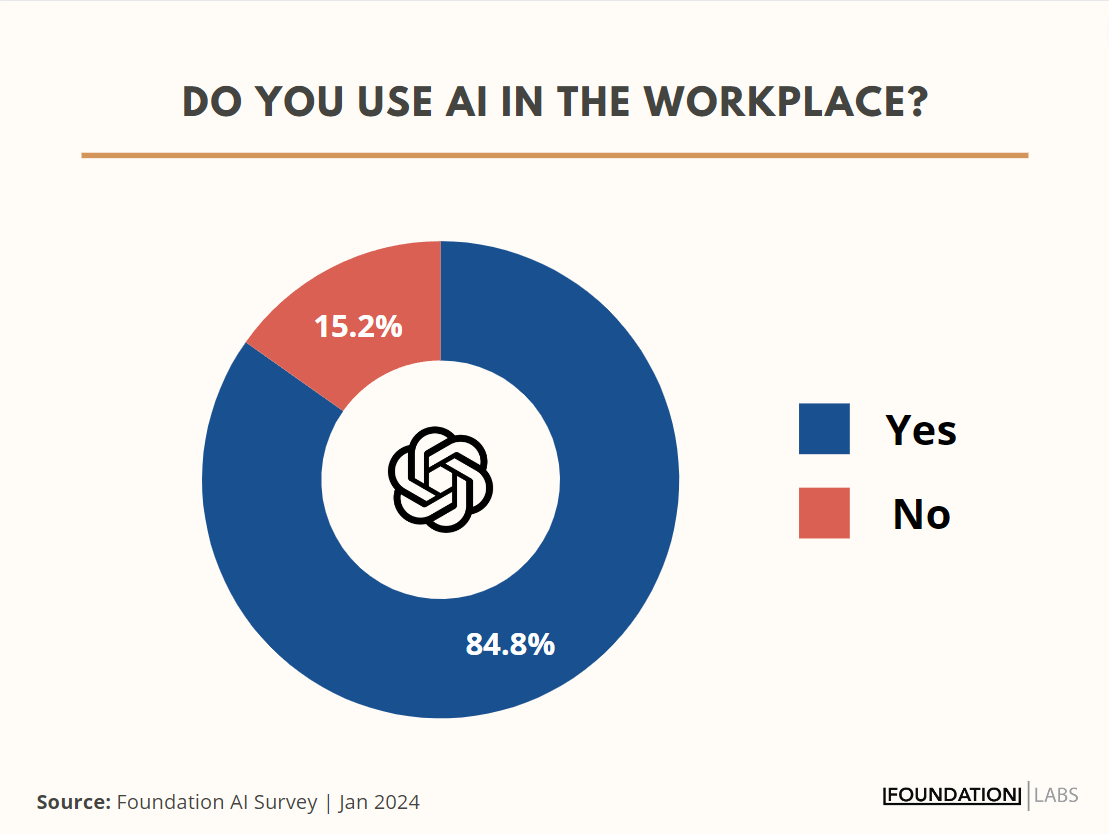
Everyone is using AI tools. Okay, almost everyone. According to a study conducted by my team at Foundation, more than 84% of marketers say they use AI in their workplace on a day-to-day basis.
But despite the proliferation of hundreds of these tools into the workplace in recent years, picking the ones that offer the most value can be challenging. According to Hubspot’s State of AI report, 95% of respondents say that using AI tools for marketing helps them spend less time on manual tasks and more time on the most important parts of their role.
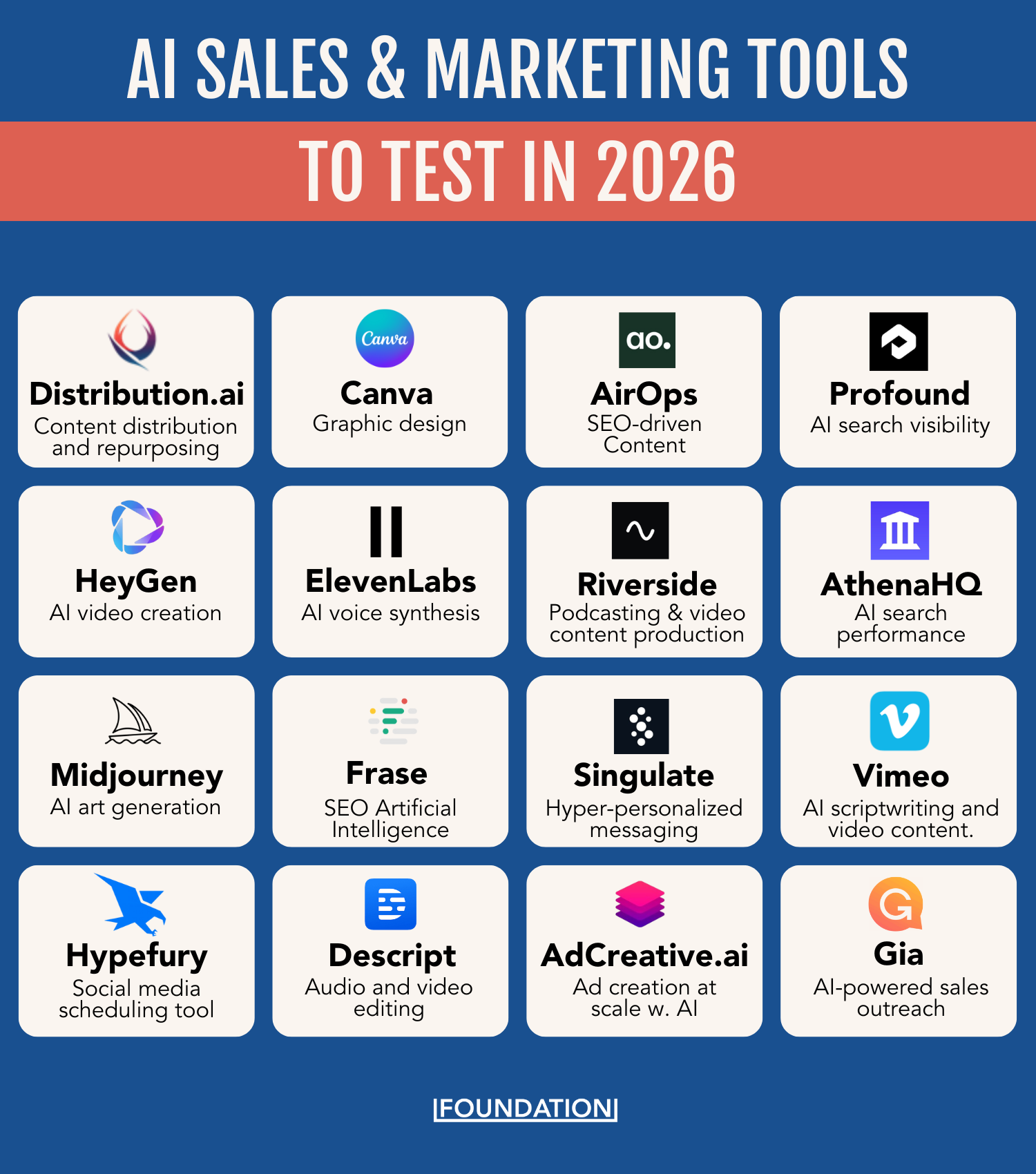
Well, you are here. So you might as well read my opinion. Here are my top AI tools that survived my end-of-year productivity and usefulness cull and will be my go-to in 2026. I’ll look at each of them in more detail below.
Here’s the list of my favorite AI marketing tools if you would rather go straight to their website
- Distribution.AI: Content distribution and repurposing tool.
- AirOps: SEO-driven content & AI workflows
- Profound: AI search visibility and brand authority.
- AthenaHQ: AI search performance
- Frase: On-site SEO and brief creation.
- Content Toolkit (by Semrush): SEO-driven content creation
- ElevenLabs: Audio AI and voice creation.
- HeyGen: AI video and avatar creation.
- Descript: AI-assisted podcast editing tool.
- Riverside: Podcasting & video content production
- Unbounce: AI landing pages and targeting.
- Hubspot AI Writer: Social media content generator.
- HypeFury: AI social media scheduling tool.
- Canva: Image creation and creative design.
- Zapier: Connect AI tools with platforms.
- Midjourney: AI graphics and art creation.
- Runway: Transform graphics into video assets.
- Ignition: GTM planning and strategizing tool.
- AdCreative: AI-assisted ad creation and design.
- Opus Pro: Convert videos into short clips.
- Bardeen.ai: Streamlining workflows within tasks.
- Surfer SEO: AI-assisted content creation and optimization.
- Vimeo AI: AI scriptwriting and video content.
- SimilarWeb: AI research and website analysis.
- Murf AI: Text-to-voiceover AI tool.
- ElevenLabs (again): AI global translation services.
- Figma AI: AI-driven design and prototyping.
- Notion: Content creation and project management.
- Singulate: Hyper-personalized messaging
- Zebracat: Blog posts to video assets.
- Writesonic: AI article writing and SEO.
- Lumen5: AI-powered video creation platform.
- Gia: AI-powered sales outreach & conversion
- Grammarly: AI-powered spell check and writing support.
This isn’t a bait and switch. But before we get into the tools, I gave in to the itch to talk a bit more about why AI is a must-have and must-use for today’s marketers
What is AI used for in marketing?
In 2026, there’s no question that marketing is going to be all about combining creativity with data.
Artificial intelligence is arming some of the best creatives with the ability to use data in a way that leads to better outcomes, more efficiencies and strong communication.
Creativity has always been a pillar part of great communication and branding.
It always will be.
But…
Things are changing thanks to AI.
The ways a creative team can use AI to do more with less has never been more significant and powerful. Creative marketers can use AI to do things that at one point took weeks (sometimes months) to accomplish in the matter of hours.
Combine that with industry specific knowledge or data and the outcomes can be significant. Whether it’s data on your competitors, on market trends or data surrouinding what existing and future customers (and potential customers) want – there’s a lot of opportunity to use data to strike marketing gold.
Artificial intelligence and the various tools that marketers can leverage to do their job makes workflows more efficient than ever before.
From SEO to email marketing and CRO – the power of AI within our marketing toolkit is a shift that will forever impact the way we work. Today, it’s one of the hottest topics but I imagine in the year 2035, the idea of “AI powered” marketing will be as exciting as the idea of “spellcheck” in a word document. The technology will become second nature and a standard part of our tools.
In this comprehensive overview of top AI marketing tools and platforms, we will dive into the functionalities, advantages, and potential constraints of each. I’ve either spent time using these tools first hand or relied on my team to provide their perspective and take on how these tools supported them with their day-to-day marketing tasks.
Let’s get into it…
1. Distribution.AI for content distribution & repurposing
Content distribution is one of the most important parts of the content marketing mix. It’s underrated by many, which is why I wrote Create Once, Distribute Forever.
I wanted that book to be the playbook for every creator looking to tell their story online and build a reputation for themselves. But I also recognized early in my career that distributing content wasn’t easy. It takes a lot of work. It takes consistency. And it often becomes the bottleneck after content is published.
Distribution.ai makes that entire process a lot simpler.
How?
Blog posts can be turned into social posts.
Podcasts can be turned into newsletters.
Videos can be turned into articles and captions.
And every long-form asset can be broken into dozens of platform-ready pieces in minutes.
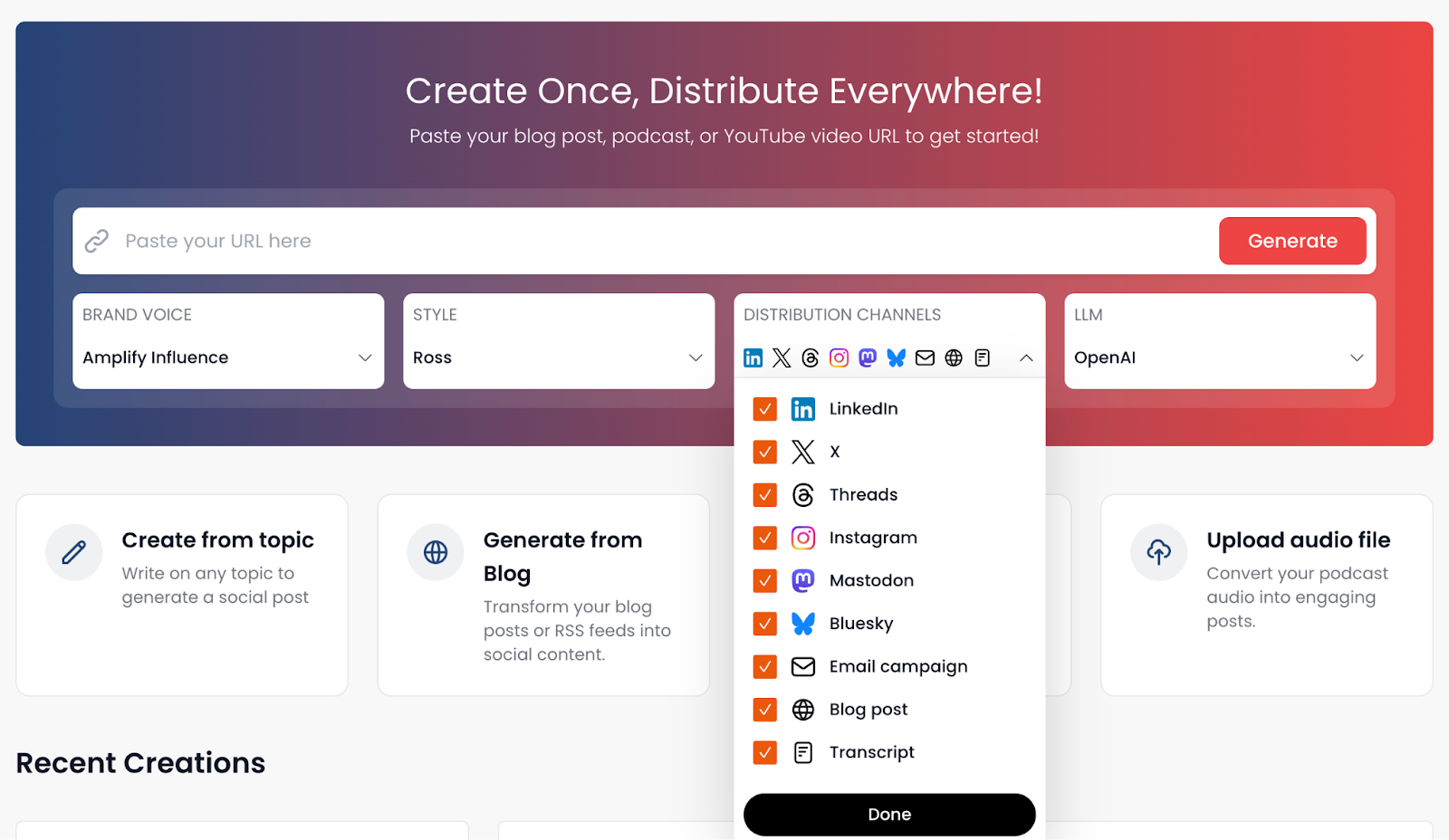
Distribution.ai has AI content repurposing tools that take a single piece of content and transform it into multi-channel outputs from LinkedIn posts and X threads to email copy, blog summaries, social captions, and more. It’s not just rewriting, it’s optimizing for format and platform so your message lands where your audience already is.
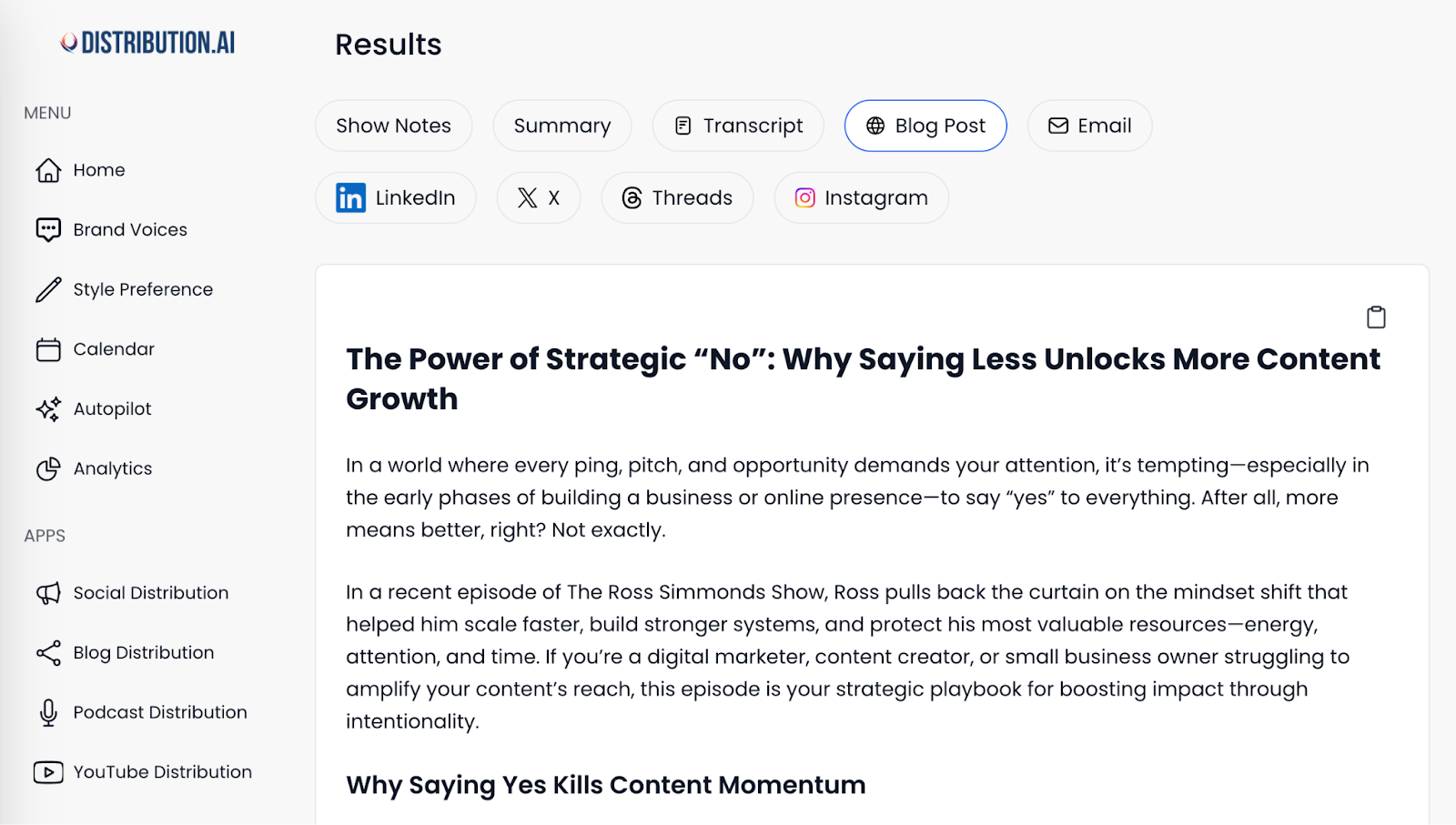
This tool has revolutionized the way I think about distribution. You can literally tell it what you want to write about, or upload a blog post, podcast episode, or video via RSS, and in the matter of minutes get repurposed content that can be used online to get the word out about the things I’ve developed and ideas I want to share.

Beyond repurposing, Distribution.ai includes social media content generation and AI-powered content distribution, so you can schedule posts and keep your channels active without manually pushing every update. Instead of asking “what should I post today?” you get a pipeline of ready-to-publish content aligned with your story and voice.
Distribution.ai has a simple interface, is easy to use, and in my opinion, should be a part of every marketer’s toolkit. It helps you maximize the value of each asset you create, amplify your reach, and keep your audience engaged across platforms without the chaos of manual repurposing.
It’s one of the most powerful AI tools today focused on content distribution, repurposing, and multi-channel publishing all from one central dashboard.
2. AirOps for SEO-driven content & AI workflows
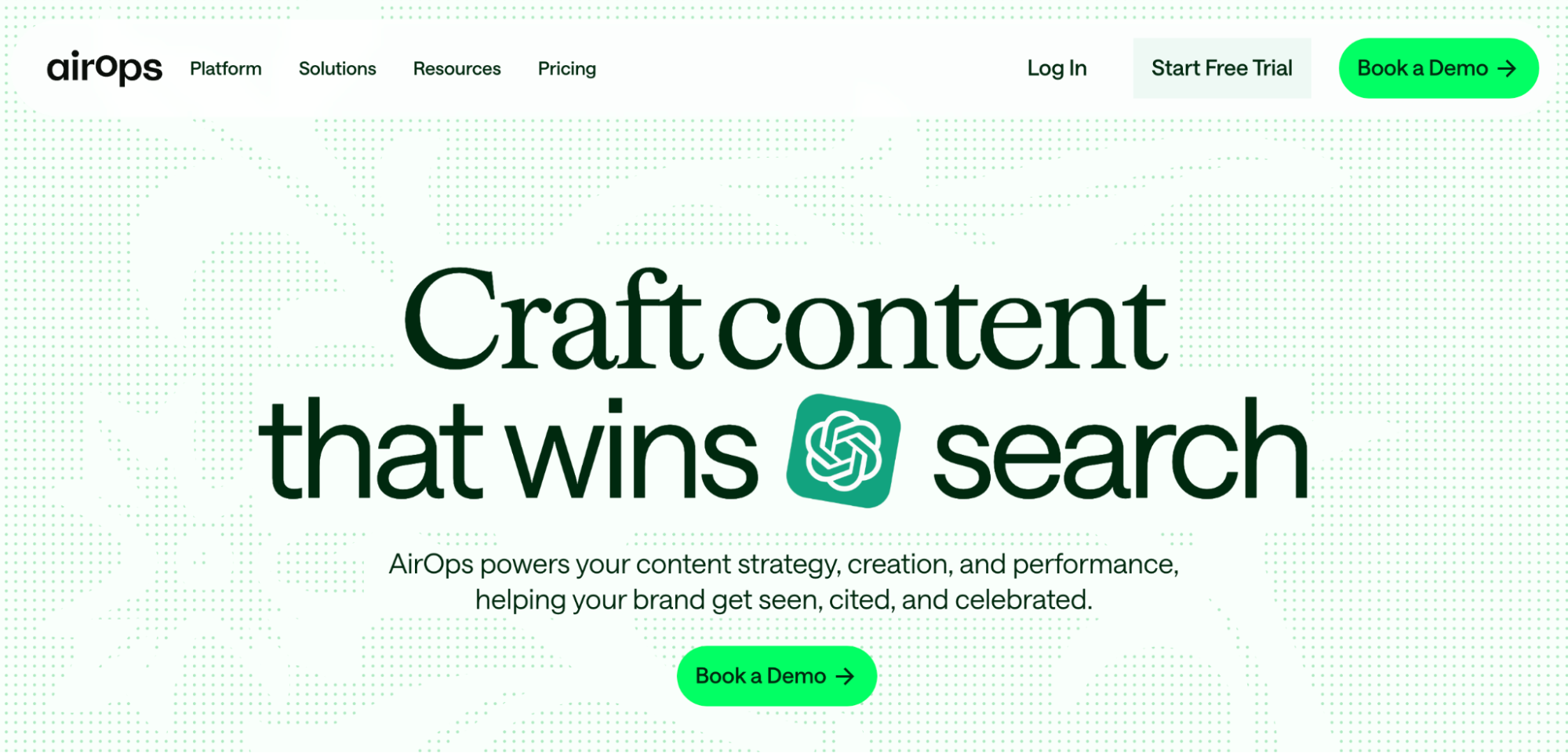
One of the first AI tools that made me rethink how content teams should operate at scale was AirOps. Not because it writes flashy copy — but because it treats content like a system, not a series of one-off tasks.
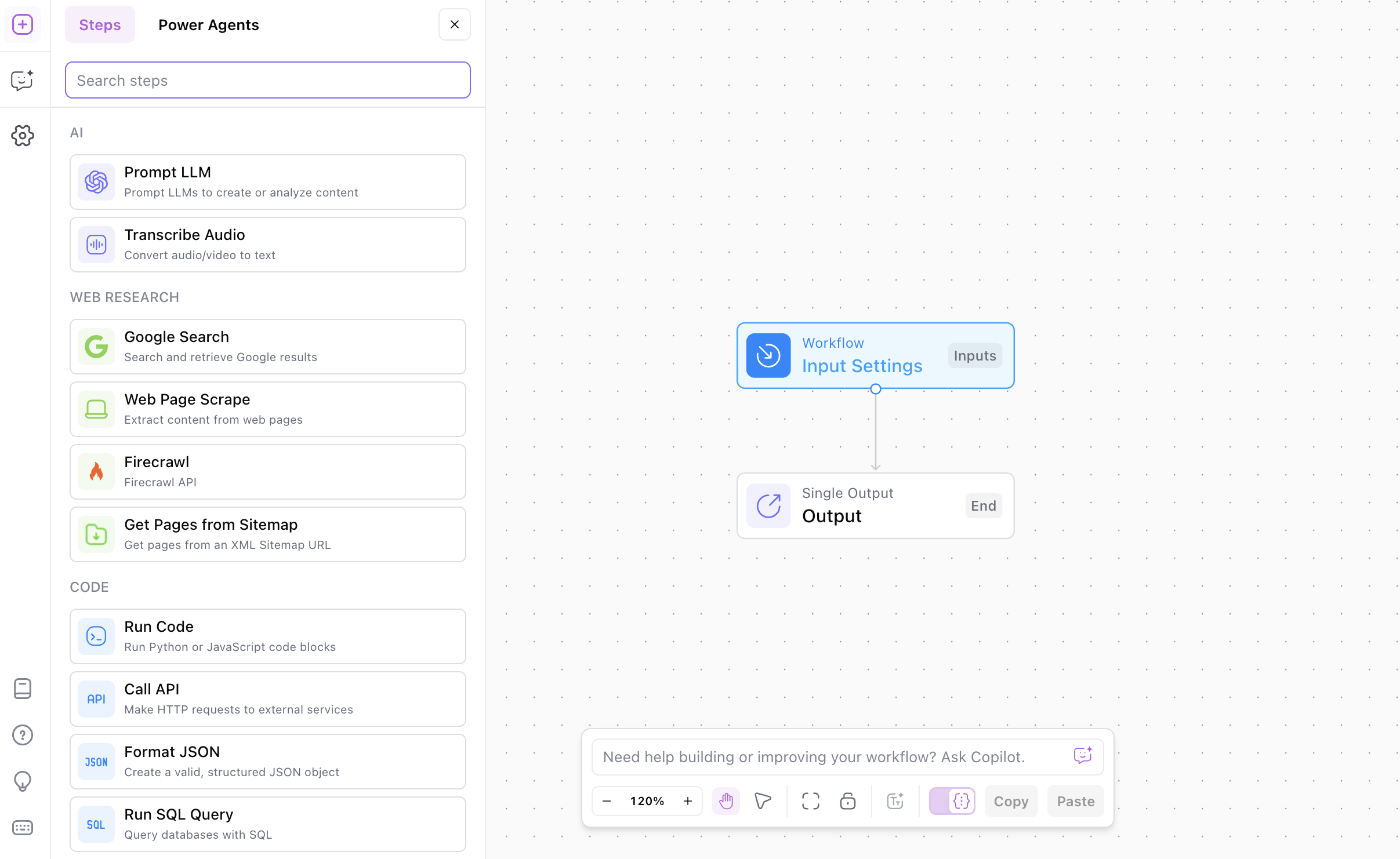
AirOps stands out as a powerful platform for teams that care deeply about search performance, repeatability, and quality control. Instead of asking AI to “write a blog post,” AirOps lets you design end-to-end workflows that combine data, prompts, internal knowledge, and human review. The result? Content that’s far more consistent, strategic, and scalable than what most teams are producing with basic AI tools.
At its core, AirOps is built for content teams who already know what good looks like — and want AI to help them execute faster. You can connect your SEO data, define your structure, lock in your brand voice, and then deploy AI across research, outlines, drafts, refreshes, and optimizations.
The most important pieces of AirOps come down to how it treats content operations:
Workflow automation: Turn repeatable content processes into reusable workflows that your entire team can run.
Brand & prompt control: Centralize prompts, guidelines, and structure so outputs don’t drift off-brand.
SEO-first execution: Build content using real search data instead of guessing what might rank.
Human-in-the-loop editing: AI accelerates the work — but humans stay in control of quality.
Here’s the real advantage: AirOps doesn’t just help you create more content. It helps you create better content, consistently, without reinventing the wheel every time.
For teams managing dozens — or hundreds — of pages, this is the difference between chaos and leverage.
You can check out AirOps here.
3. Profound for AI search visibility & brand authority
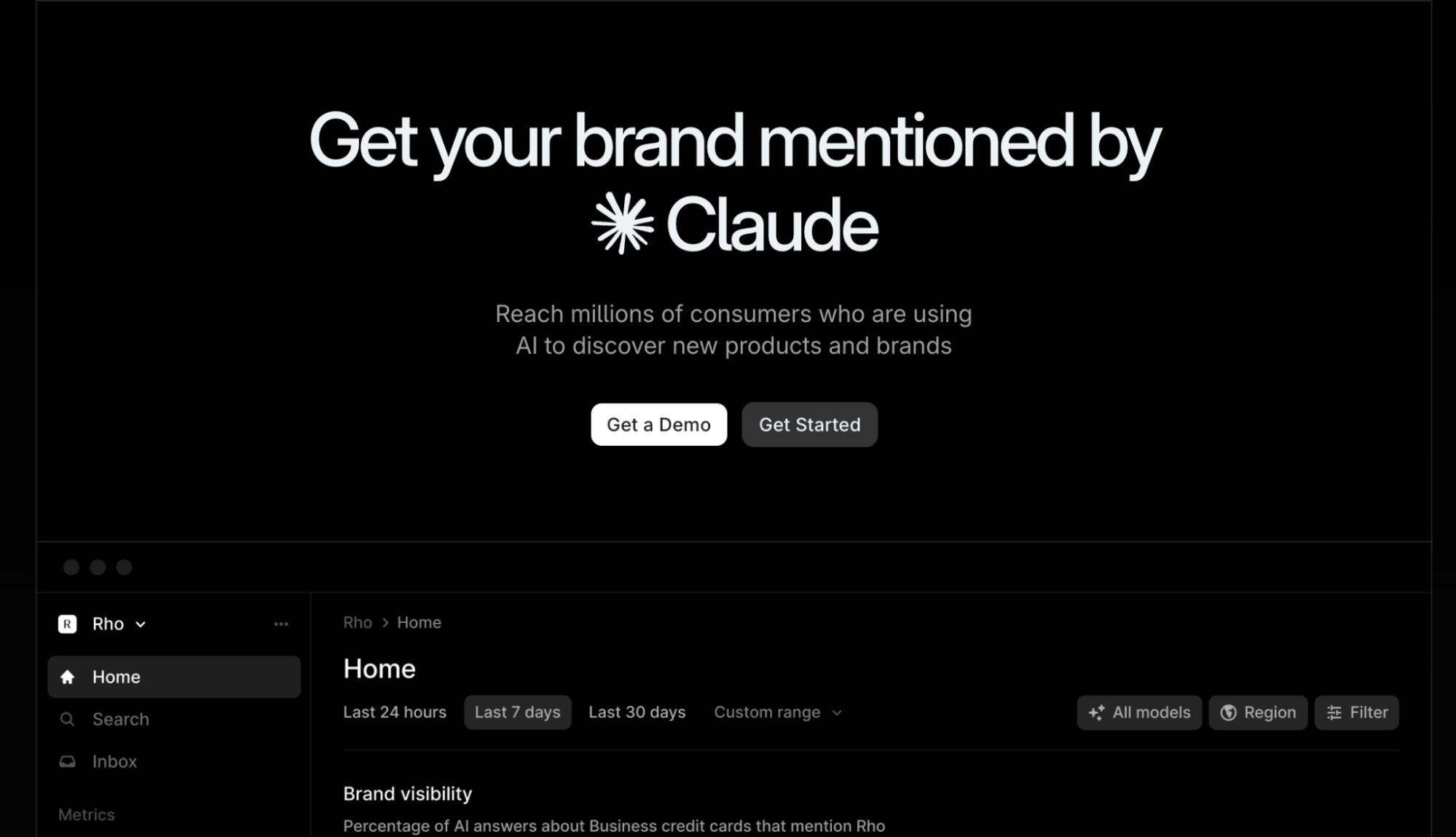
One of the biggest shifts happening in marketing right now is invisible to most teams: discovery is moving from search results to AI-generated answers. Profound is one of the first tools I’ve seen that takes this shift seriously.
Profound is designed to help brands understand how — and where — they appear in AI-driven search experiences like ChatGPT, Perplexity, Gemini, and other answer engines. Instead of tracking rankings and clicks, Profound focuses on mentions, citations, sentiment, and presence inside AI outputs.
This matters more than most marketers realize.
When people ask AI tools questions, they don’t get ten blue links. They get a synthesized answer — and only a handful of brands make it into that response. Profound helps you see whether you’re one of them.
What makes Profound stand out is its focus on measurement and insight, not speculation. You can analyze how often your brand is referenced, how competitors are showing up, and which topics or prompts you’re winning (or losing).
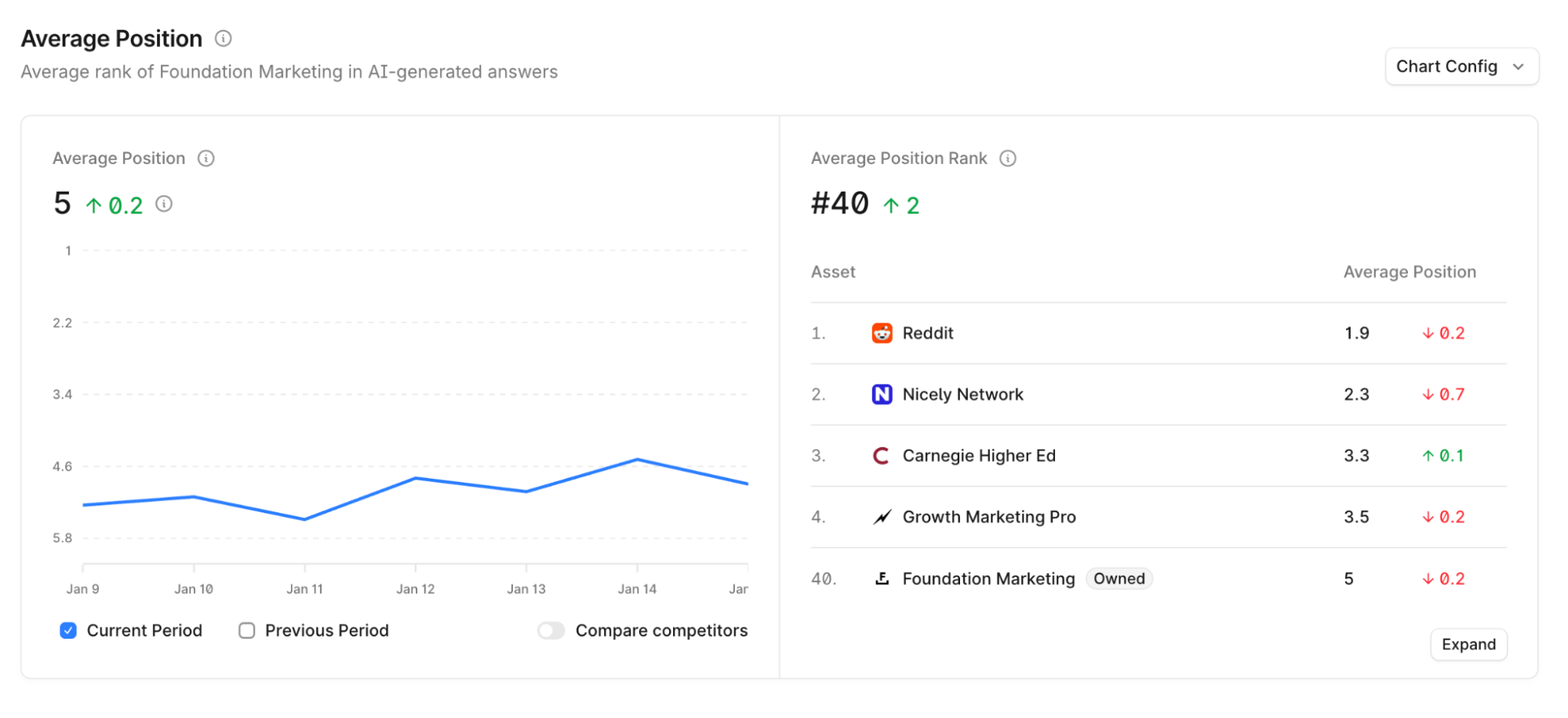
The key areas where Profound shines:
AI visibility tracking: Monitor brand mentions across multiple AI platforms.
Competitive intelligence: See which competitors are dominating AI-generated conversations.
Topic-level insights: Understand what themes and queries associate most strongly with your brand.
Strategic direction: Identify gaps where content, PR, or authority signals can move the needle.
This isn’t a replacement for SEO — it’s what comes next. Profound gives forward-thinking teams a way to understand discovery in a world where search engines increasingly act like answers, not directories.
If AI is becoming the first touchpoint for your buyers, Profound helps ensure you’re part of the conversation.
You can learn more about Profound here.
4. AthenaHQ for AI search performance
If traditional SEO is about ranking pages, AthenaHQ is about earning trust inside AI engines.
AthenaHQ positions itself around Generative Engine Optimization (GEO) — a concept that reflects how brands are discovered when AI systems summarize the web instead of listing it. The platform helps teams understand how their brand is perceived, cited, and represented inside AI-generated answers.
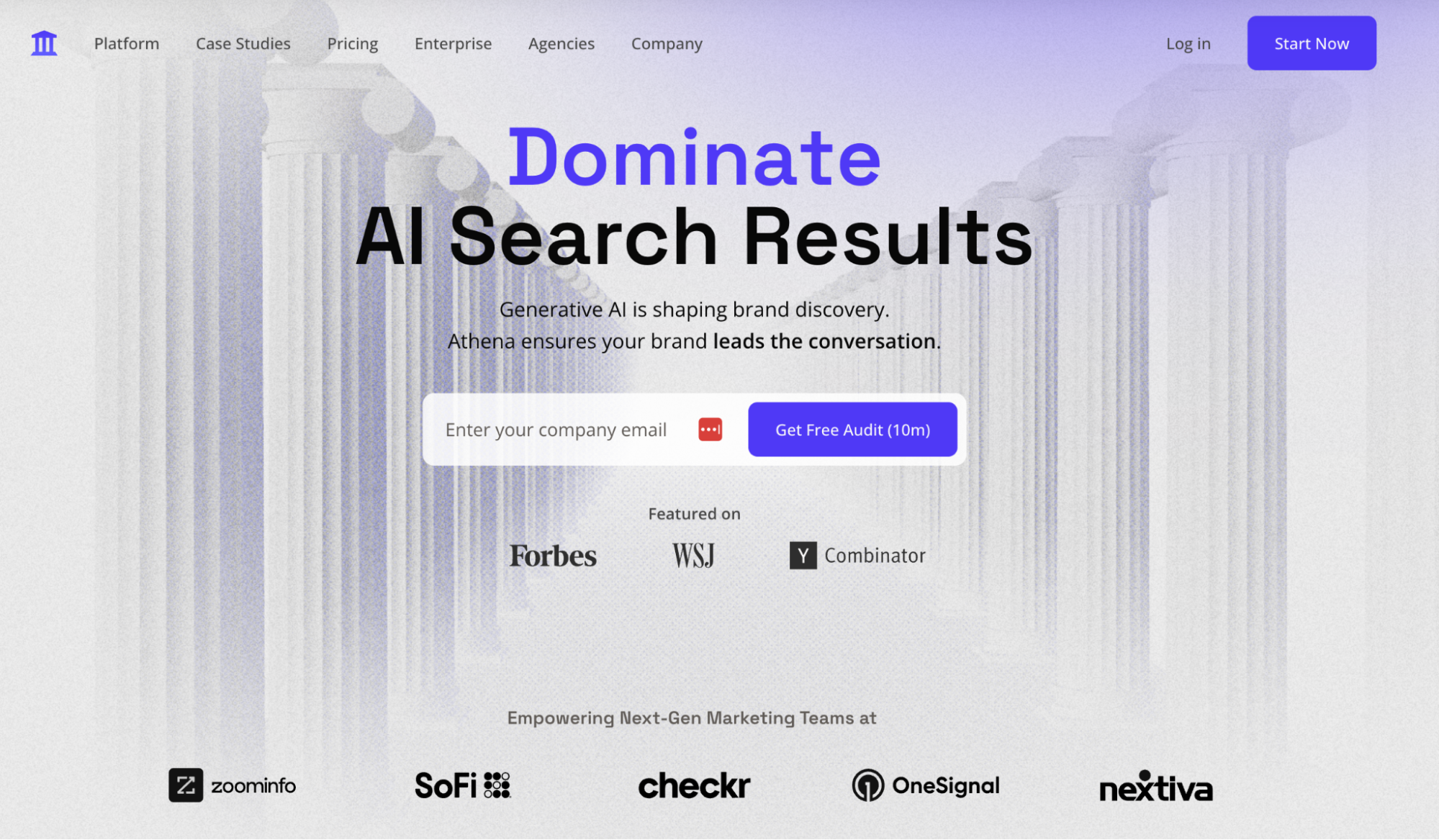
What I like about AthenaHQ is that it doesn’t just show you dashboards — it shows you why you’re showing up the way you are.
You can analyze prompt-level behavior, sentiment, competitor presence, and citation patterns to understand what’s influencing AI outputs. From there, AthenaHQ helps you identify concrete opportunities to improve visibility through content, authority signals, and narrative alignment.
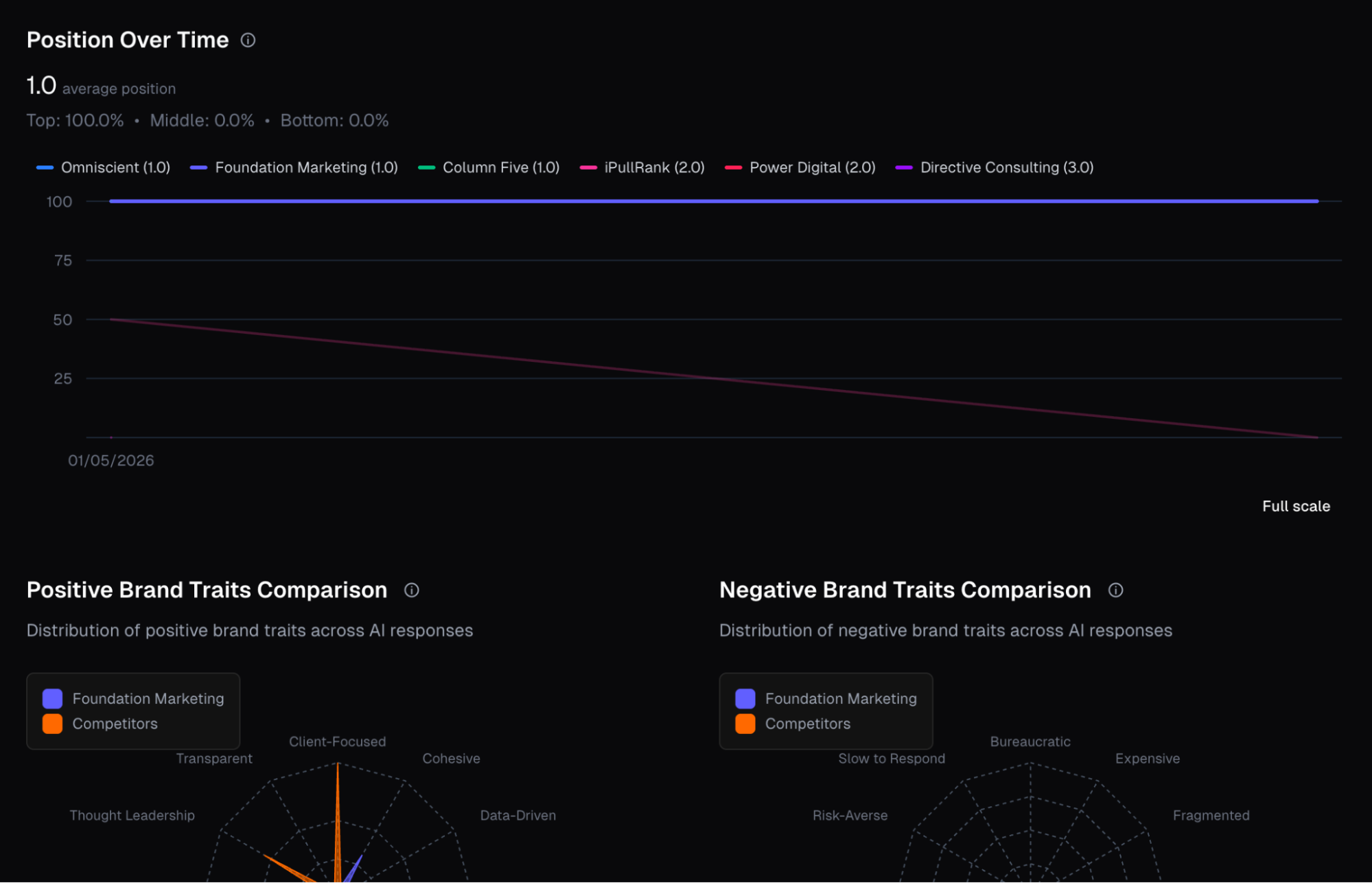
The most impactful parts of AthenaHQ include:
Prompt-level tracking: See how your brand performs for specific AI queries.
Citation & sentiment analysis: Understand whether AI tools reference you positively, neutrally, or not at all.
Competitive benchmarking: Compare your AI presence directly against competitors.
Actionable optimization insights: Translate AI visibility data into content and brand recommendations.
AthenaHQ is especially useful for teams who already understand SEO fundamentals and want to extend that thinking into AI-driven discovery. It’s not about gaming prompts — it’s about building the signals AI models rely on when deciding who to trust.
If your leadership team is asking, “How do we show up in ChatGPT?” — AthenaHQ gives you real answers.
5. Frase for on-site SEO and brief creation
Frase is changing how SEO pros and content creators handle on-site optimization and brief creation.
The process is streamlined, straight forward and efficient.
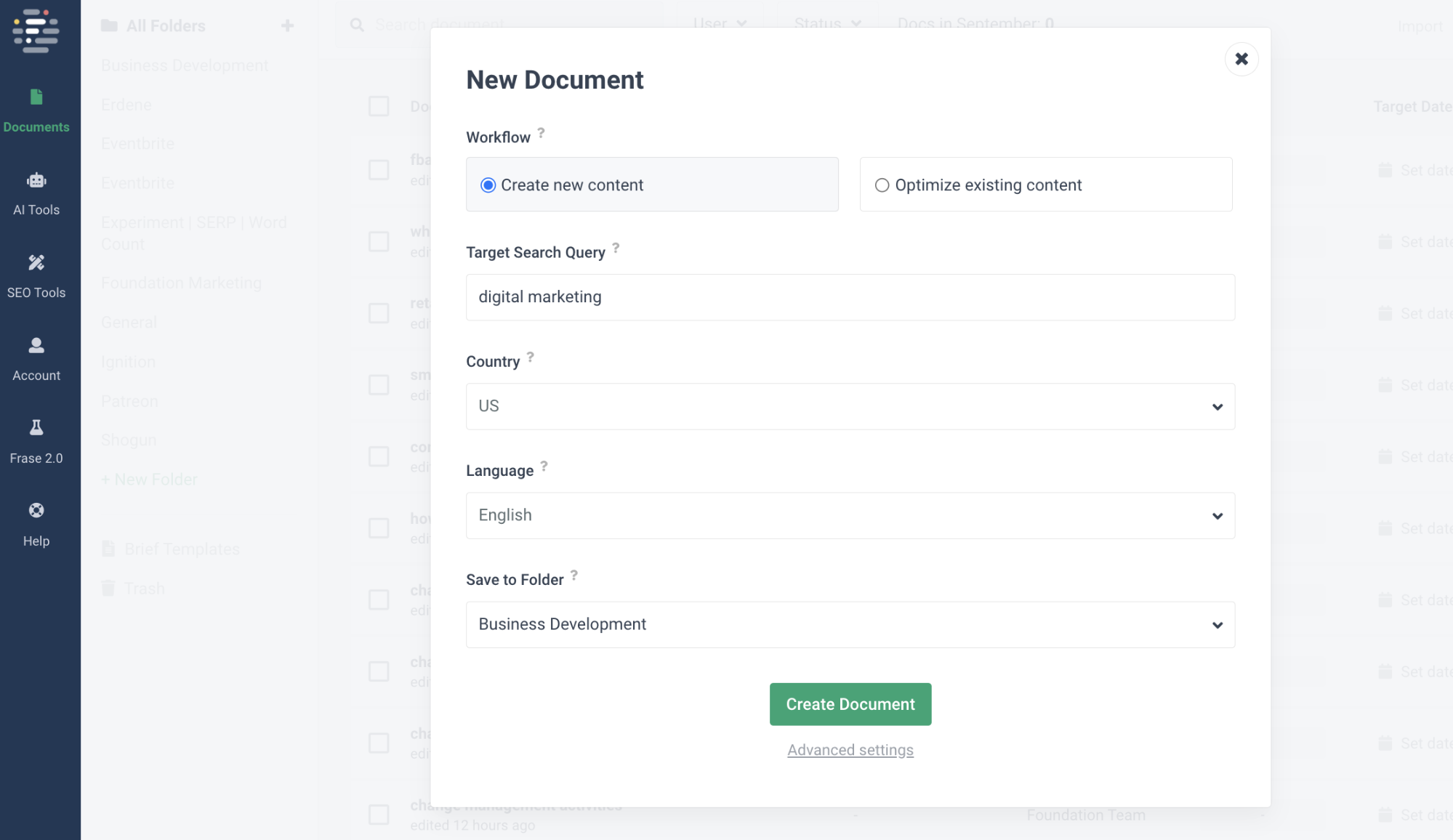
You can (1) create new content or (2) optimize existing content directly in Frase. For example, in the sample below I’m using Frase to create new content with a focus on the keyword “digital marketing”:
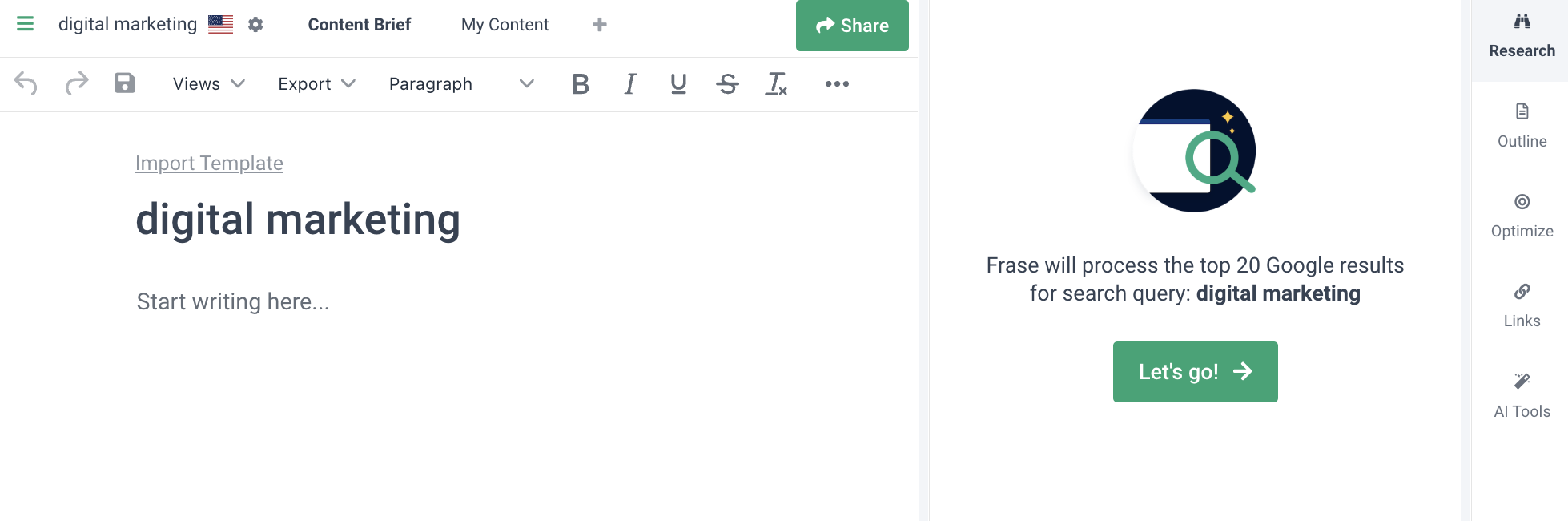
Frase then gives me a WYSIWYG editor where I can begin to create the content that will hopefully rank for “digital marketing”:
Frase then uses the SERP to help create content that is aligned with what exists today. It scrapes the SERP and identifies some of the top articles that are the highest ranking articles for the query.
I’m able to look at the titles that make up all of these various articles and select the headers that I want to carry over into my own brief.
Here’s how it looks in the Frase interface:
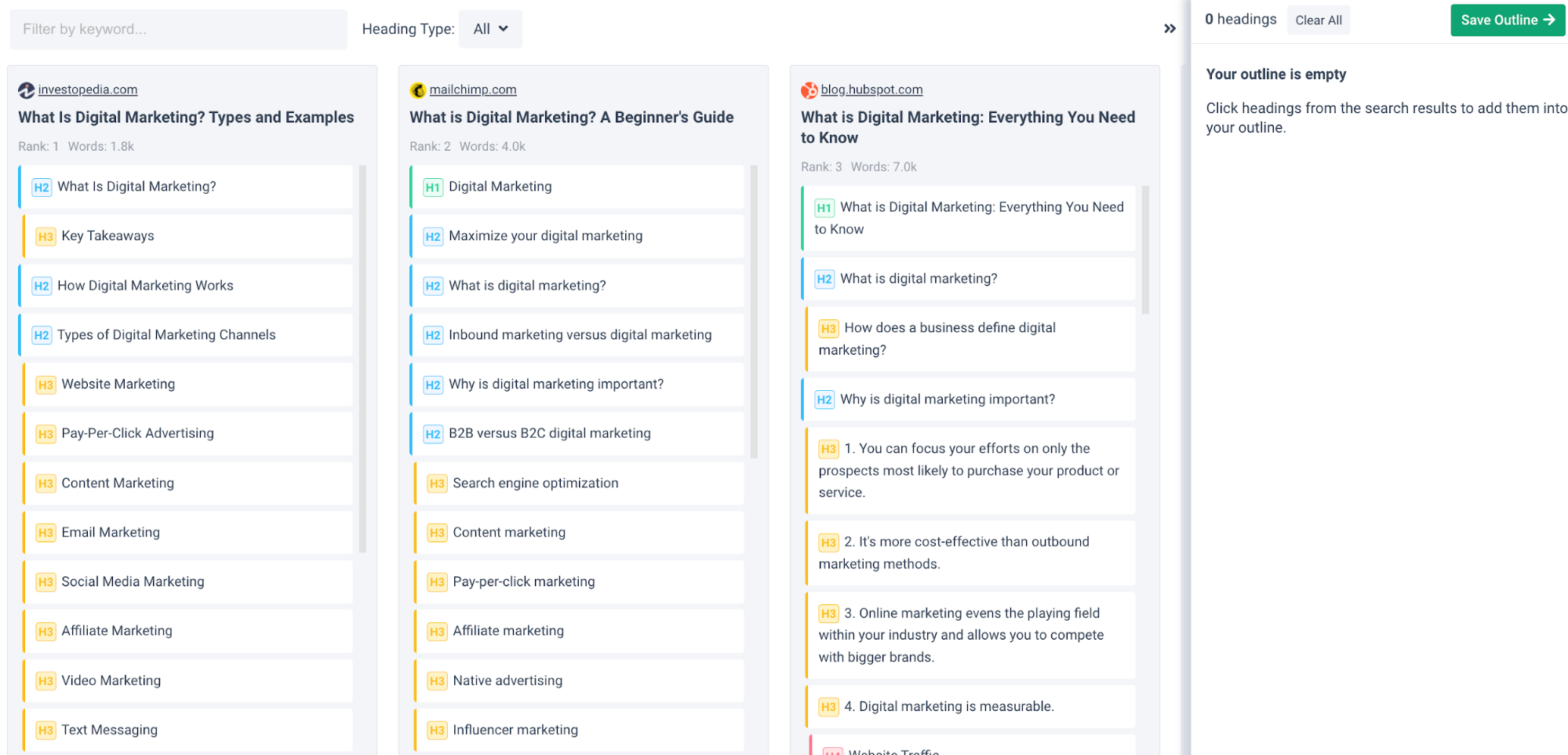
After going through the various headers, I can select the ones that I think would be relevant for my own outline and the app automatically creates them for me:
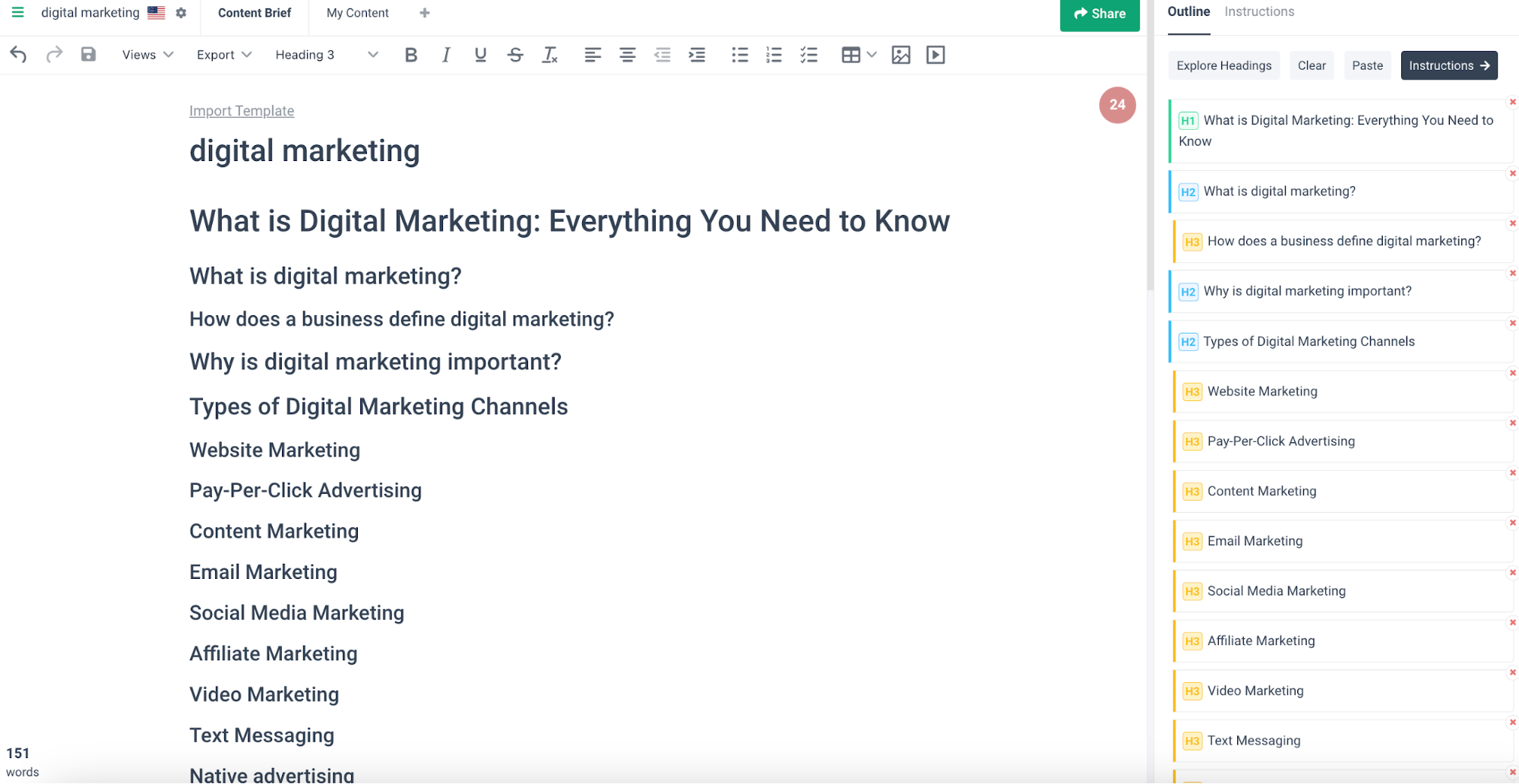
The Frase app then allows you to give instructions to your AI agent when crafting a brief for each header. Customizing these instructions results in higher-quality drafts because they help their AI understand exactly what you want each section to cover. If you’re not looking for perfection, you can ask AI to write the instructions on your behalf and see how it does.
Here’s a sample of the AI generated instructions that it created:
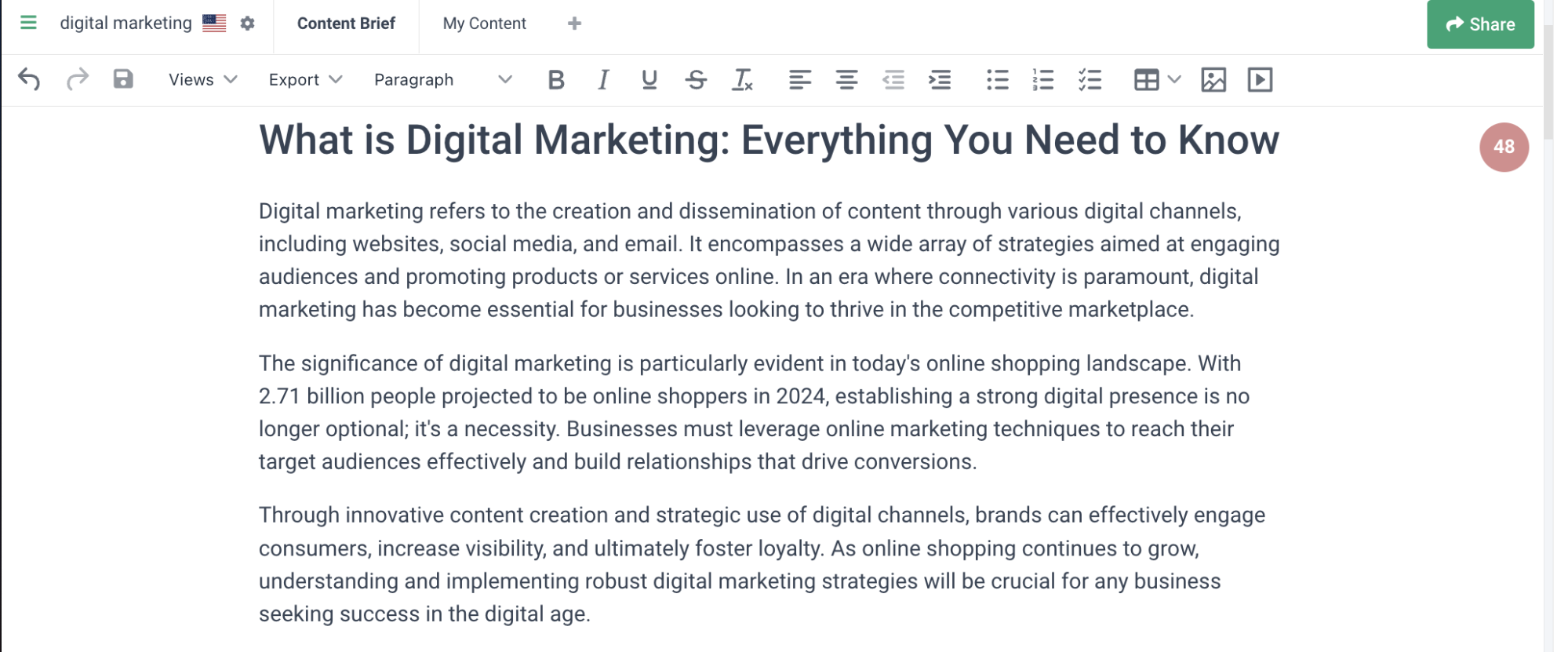
– Introduce the concept of digital marketing by explaining its definition as the creation and dissemination of content through various digital channels, including websites, social media, and email.
– Discuss its significance in today’s online shopping landscape, highlighting that 2.71 billion people are online shoppers in 2024, which emphasizes the need for businesses to establish a strong digital presence.
– Keywords to include: digital marketing, online marketing, content creation, digital channels, online shoppers.
Not bad eh? You can sign up here.
And then a few seconds later, Frase gives you the draft:
One of the standout features of Frase is its ability to generate detailed content briefs within minutes.
These briefs provide writers with a roadmap to creating content that is both SEO-friendly and engaging for readers. By offering insights into keyword usage, heading structure, and recommended reading length, Frase ensures that every piece of content has the potential to drive traffic and engage visitors.
Want to use Frase? Sign up for Frase here.
6. Semrush Content Toolkit for SEO-driven content creation
One of the biggest mistakes teams make with AI content is separating writing from ranking. Semrush Content Toolkit is built on the belief that those two things should never live apart.
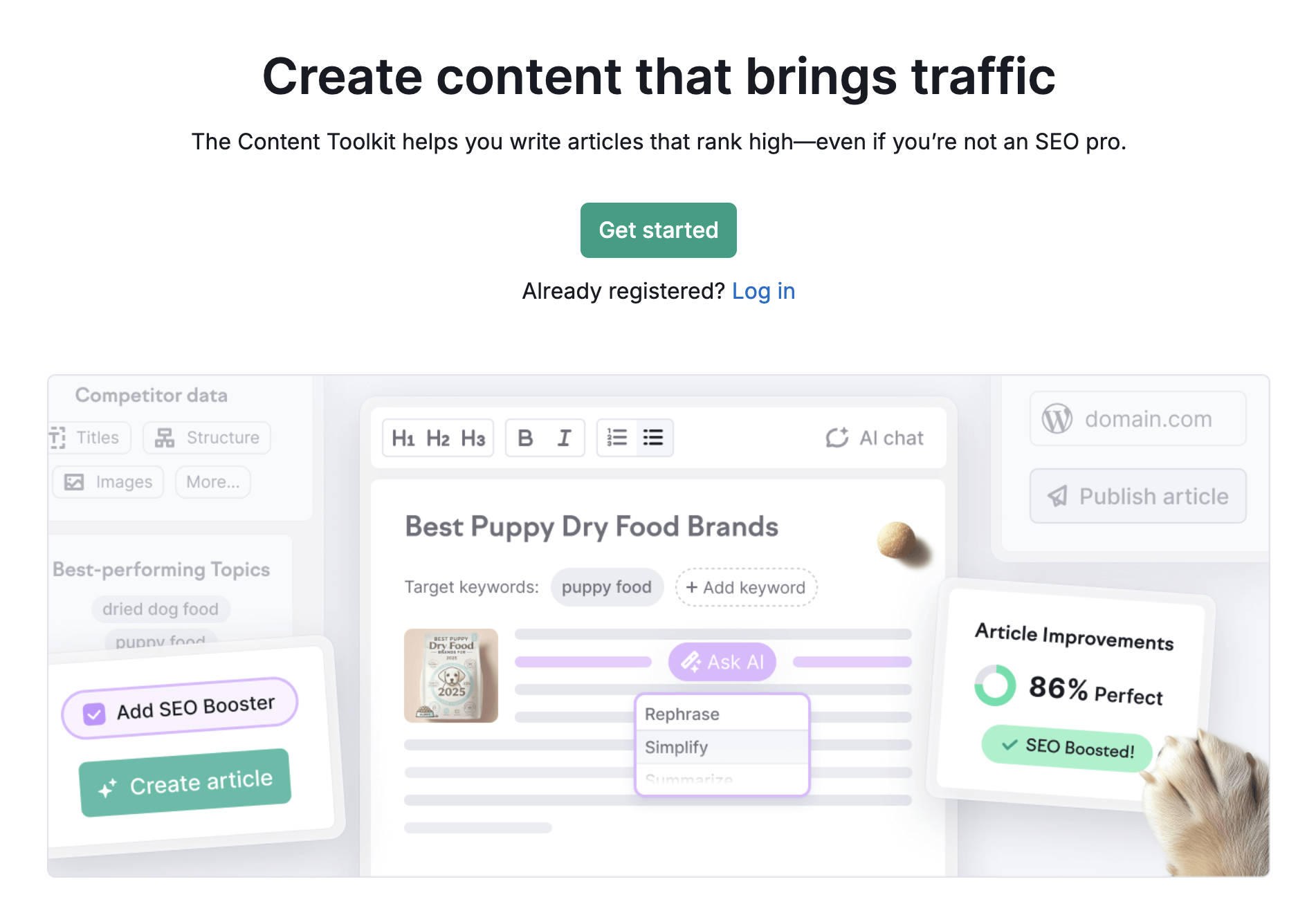
Semrush Content Toolkit brings AI-assisted writing directly into the SEO workflow, making it easier for marketers to plan, create, optimize, and improve content that’s designed to perform in search — not just read well. Instead of guessing what topics matter or how to structure a piece, the toolkit uses real search data to guide every step of the process.
What makes this tool especially powerful is that it doesn’t start with a blank page — it starts with intent, keywords, and competitive context. You’re not just writing content. You’re building assets engineered to win visibility.
At a high level, Semrush Content Toolkit helps teams:
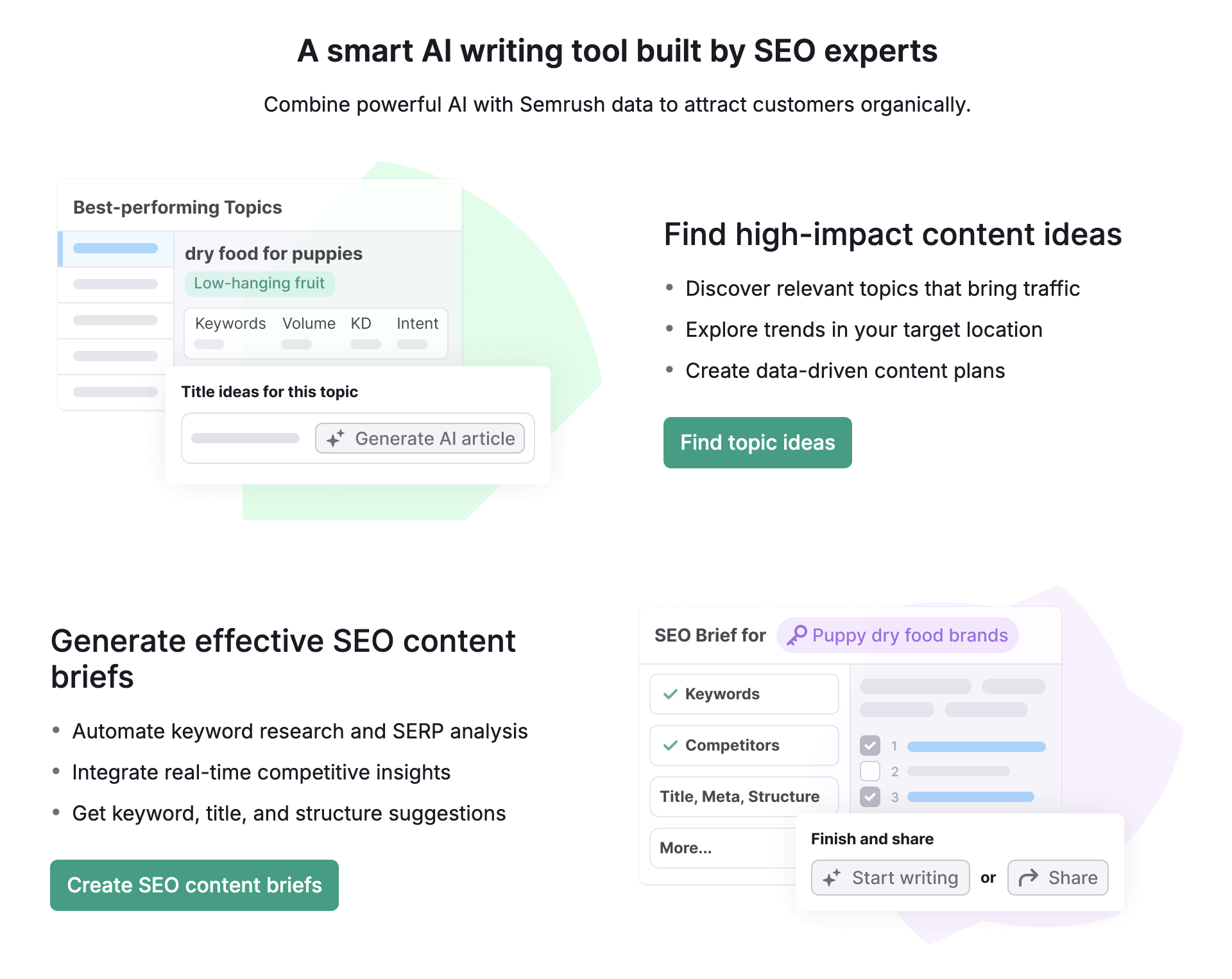
Plan content with search intent in mind: Discover topics, keywords, and questions people are actually searching for — before you write a single word.
Create AI-assisted drafts optimized for SEO: Generate outlines and content that align with ranking factors, readability, and competitive benchmarks.
Optimize content in real time: Get on-page SEO recommendations as you write, so optimization happens during creation — not after.
Refresh and improve existing pages: Identify underperforming content and use AI + data to update it for better results.
One of the most underrated advantages of Semrush Content Toolkit is how seamlessly it fits into existing workflows. Writers get guidance without feeling constrained. SEO teams get structure without becoming bottlenecks. And content leaders get visibility into what’s being produced — and why.
Instead of using AI to produce more content faster, Semrush Content Toolkit encourages teams to produce the right content, the right way, with performance built in from the start.
For organizations that already rely on Semrush for keyword research and competitive analysis, the Content Toolkit feels like the missing execution layer — the bridge between strategy and output.
You can check out Semrush Content Toolkit here.
7. ElevenLabs for audio AI & voice creation
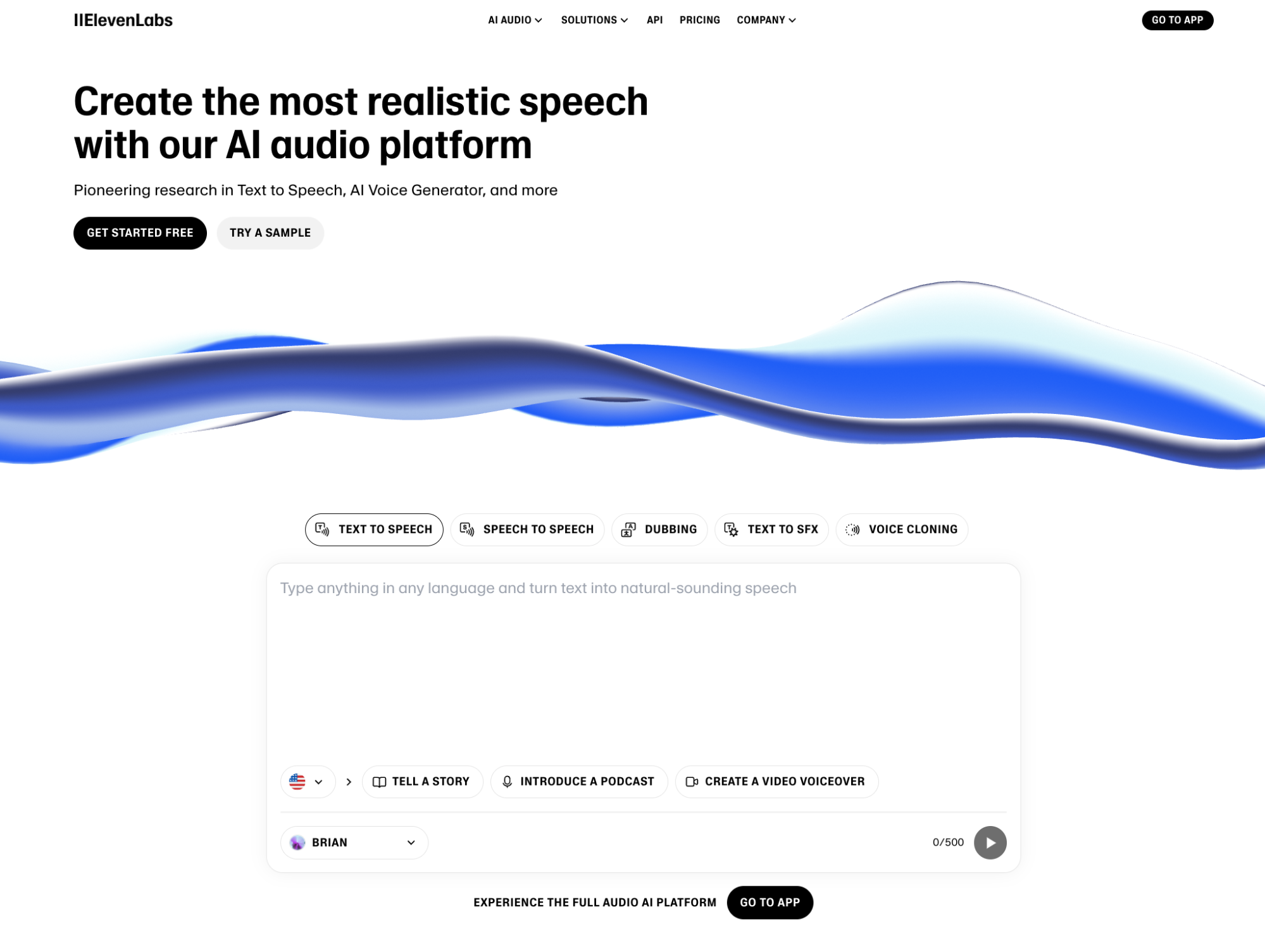
ElevenLabs stands out as my favorite AI voice synthesis tool for a multitude of reasons.
I’ve used it on podcasts.
I’ve seen it used for audiobooks.
I’ve used it to create video content.
ElevenLabs is one of the best AI audio tools on the market. Here’s a few ElevenLabs alternatives.
At the forefront is its remarkably lifelike voice generation capability, which not only captures the nuances of human speech but also offers a wide range of emotions and accents. This versatility makes it an invaluable asset for creating engaging audio content for podcasts, audiobooks, or even voiceovers for video content.
It’s one of the first tools that I tried for audio AI. I currently use the Premium version and had them professionally recreate a synthetic version of my voice. I think it turned out quite well and used both Eleven Labs and the AI video tool HeyGen to create the video below:What sets ElevenLabs apart further is its intuitive interface and user-friendly design, ensuring that even those new to voice synthesis can easily bring their projects to life. Additionally, its robust customization options allow creators to fine-tune voices to match specific characters or branding needs perfectly. In an era where audio content’s popularity continues to soar, ElevenLabs provides an essential tool for creators seeking to produce high-quality, captivating audio experiences for their audiences.
8. HeyGen for avatar creation & AI video
HeyGen stands out in the digital landscape as a revolutionary AI tool designed for creating lifelike avatars and engaging AI-generated videos.
Here’s a sample of an AI video created using HeyGen in the wild:
Its advanced algorithms enable users to craft detailed, personalized avatars that can mimic human expressions and emotions with astonishing accuracy.
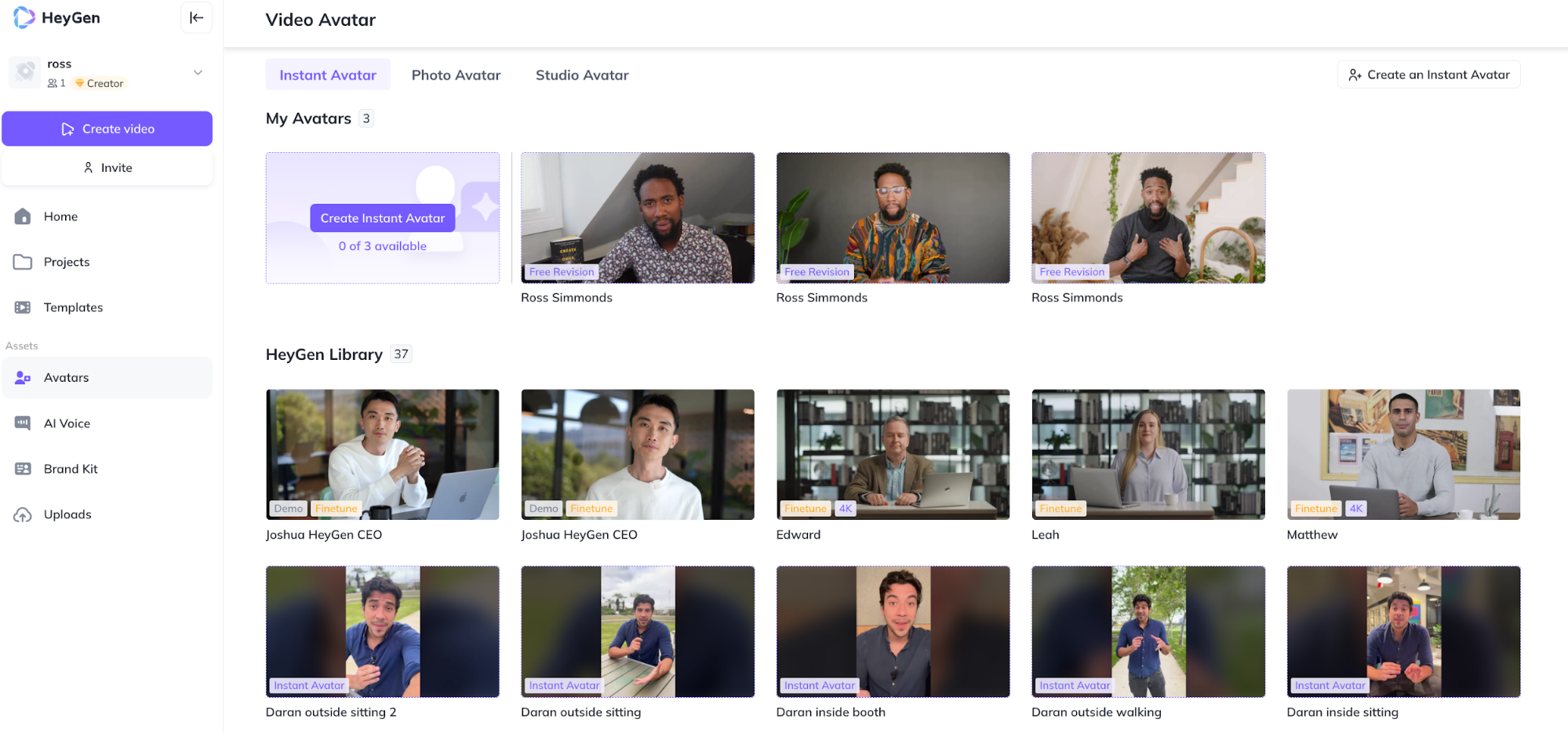
Furthermore, HeyGen’s prowess extends into the realm of AI-powered video creation, where it offers an array of features that simplify the process of generating professional-looking videos. From script to screen, users can leverage HeyGen’s intuitive platform to produce content that resonates with their audience, whether it’s for marketing campaigns, educational content, or entertainment purposes. The seamless integration of custom avatars into these videos adds a layer of personalization and innovation that sets creators apart in a crowded content space.
HeyGen is not just another tool; it’s a game-changer for individuals and businesses looking to elevate their digital content with AI-generated avatars and videos. Its user-friendly interface, combined with powerful customization options, makes it accessible to both novices and professionals alike, ensuring that anyone can unlock the full potential of their creative visions.
9. Descript for AI assisted podcast editing
I’m a HUGE fan of Descript. It’s probably one of the best tools on the market for AI assisted podcast edits…
Here’s a video where I show how tools like Descript are giving podcasters and video creators super powers:
Descript stands out as an unparalleled AI tool for audio and podcast editing, offering a suite of features that simplify the editing process to a level never before imagined.
It’s ability to transcribe audio into text in real-time allows users to edit their podcasts or interviews by simply deleting or rearranging the text, which then reflects in the audio file—a game changer for content creators.
Additionally, Descript’s Overdub feature allows you to correct or modify spoken words without re-recording, using AI to seamlessly match the speaker’s voice tone and cadence. This tool not only streamlines the editing workflow but also empowers creators with limited technical skills to produce professional-quality audio content efficiently.
10. Riverside for podcasting & video content production
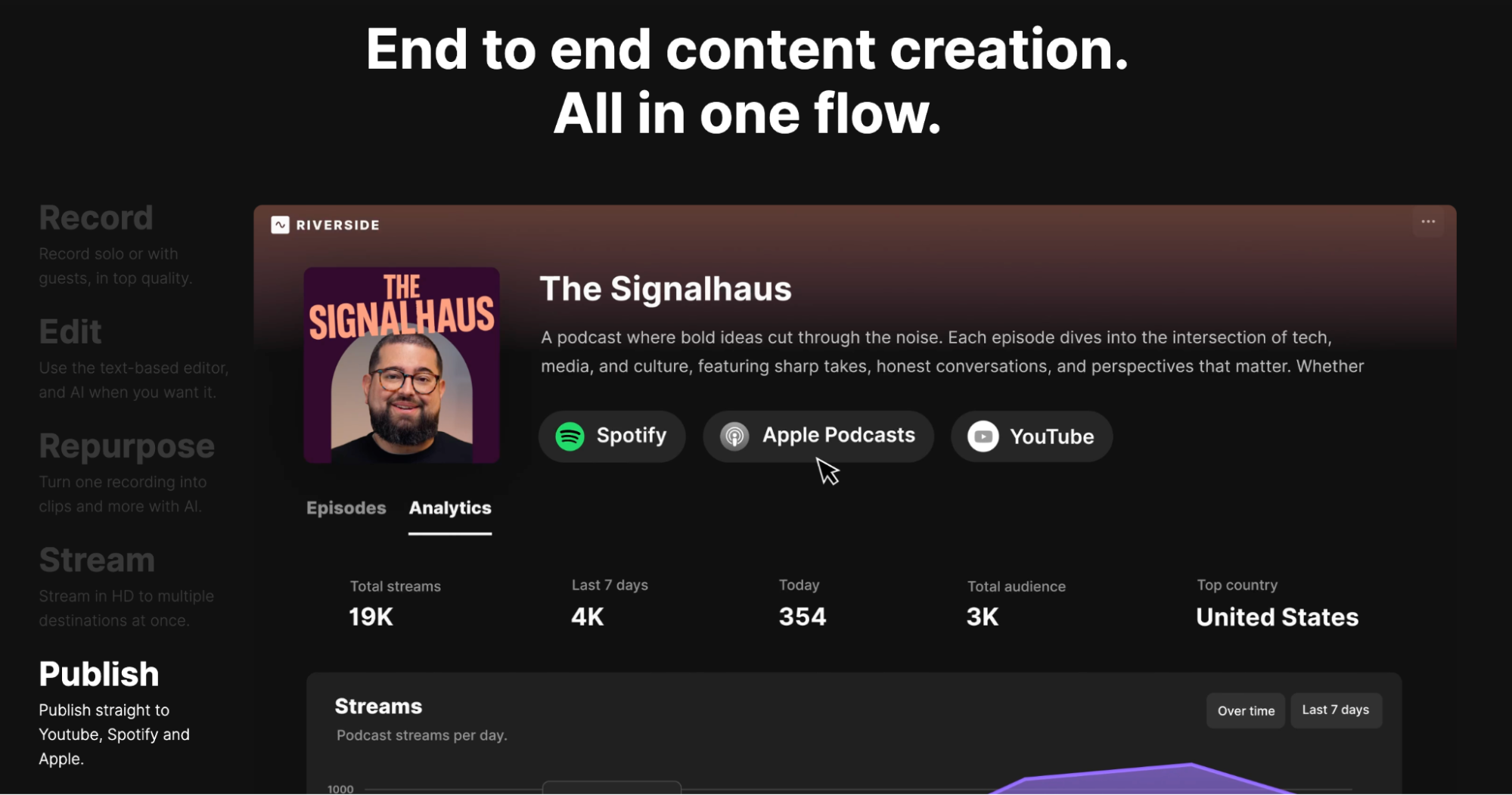
Content doesn’t just start with writing — it starts with capture. Riverside is one of the best tools available for recording high-quality audio and video remotely, without forcing creators to become technical experts.
Riverside allows you to record studio-quality podcasts and videos directly from your browser. Each participant records locally, which means you get clean, high-resolution files even if someone’s internet connection drops mid-conversation.
But Riverside doesn’t stop at recording. It’s built for modern content workflows — where one recording turns into dozens of assets.
Some of Riverside’s standout capabilities include:
Local 4K video & uncompressed audio: Broadcast-quality output without studio setups.
AI-powered editing tools: Transcripts, clips, captions, and highlights in minutes.
Remote collaboration: Record guests anywhere in the world with minimal friction.
Repurposing efficiency: Turn long-form conversations into short-form content fast.
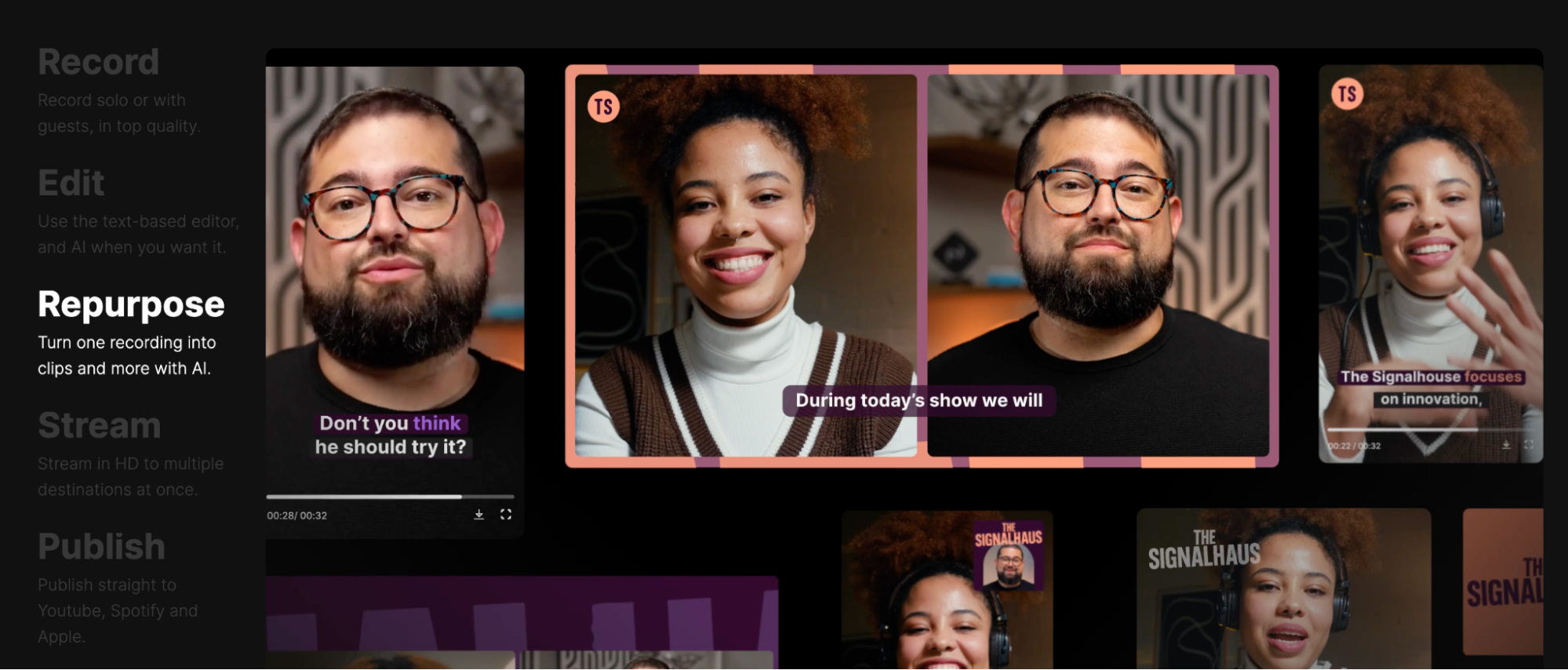
For marketers investing in podcasts, interviews, webinars, or video thought leadership, Riverside removes the technical barriers that slow teams down. It lets you focus on the conversation — and worry about polish later.
If content distribution is a priority, Riverside makes creation dramatically easier.
11. Unbounce for AI created landing pages & targeting
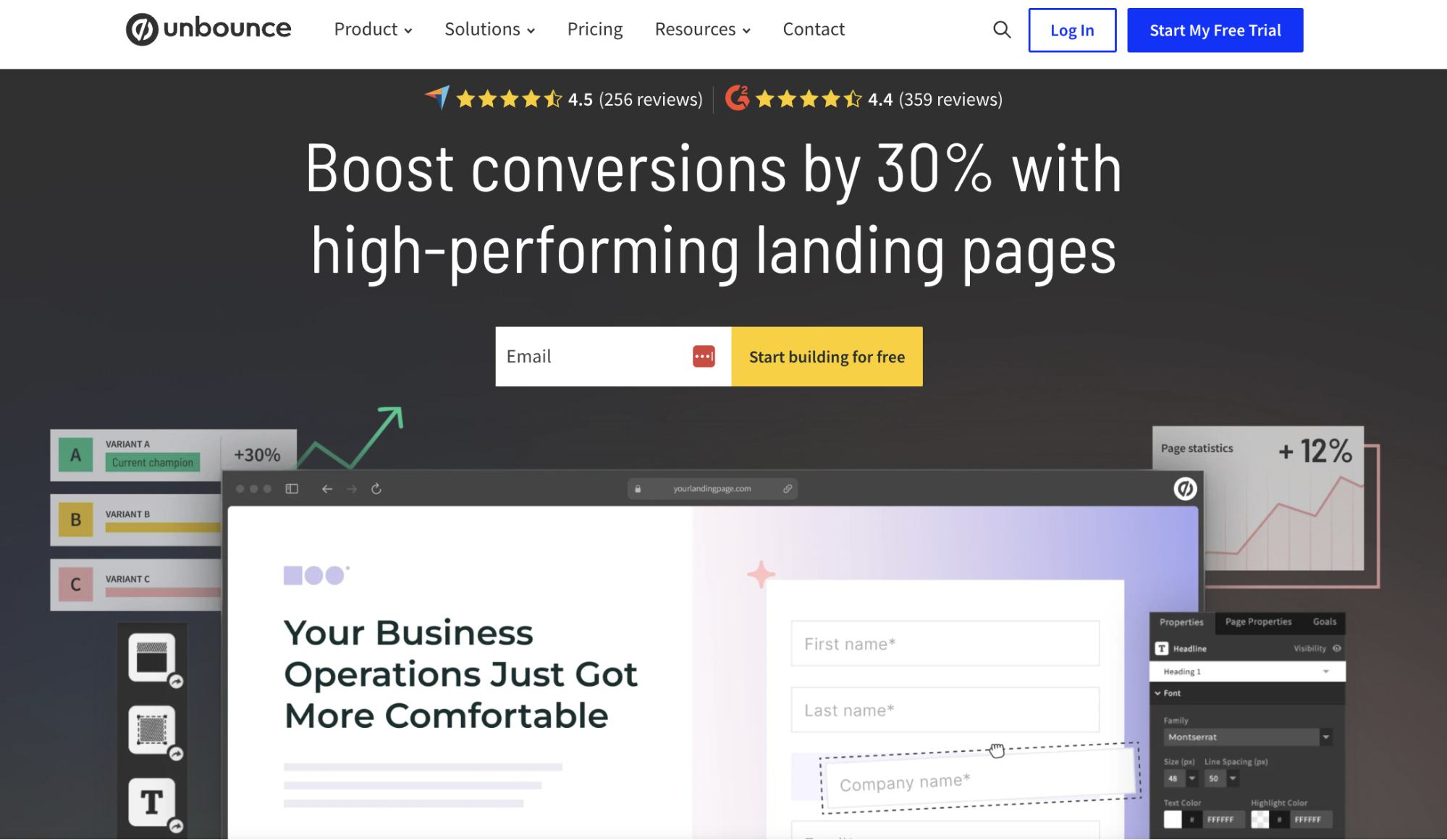
Unbounce empowers businesses to transform countless website visitors into valuable leads, sales, and signups. With a comprehensive suite of tools, templates, and resources, the platform equips you to craft highly effective campaigns and optimize them from all perspectives, infused with AI technology throughout.
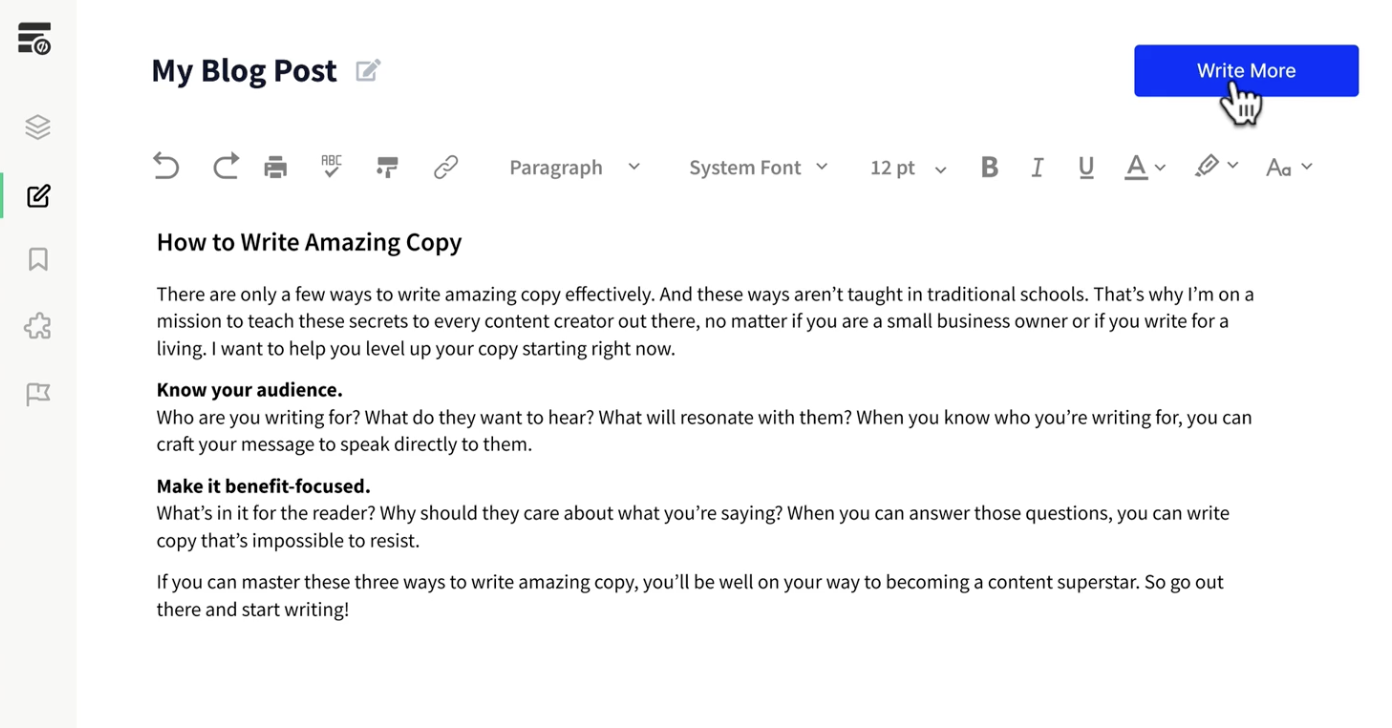
One of my favorite AI tool integrated into Unbounce is their Smart Copy tool which revolutionizes how businesses approach creating custom landing pages. It gives you the ability to use the power of AI to generate engaging, professional copy swiftly right in the Unbounce app.
When you’re creating content with Unbounce, you can click “write more” and the AI tool will do that:
Unbounce has always been a leader for landing pages.
But now that it’s incorporated AI into the product – it’s become an AI tool that can become a secret weapon for marketing teams.
This tool streamlines the ideation and iteration process, enabling companies to swiftly draft and enhance their messaging sans the requirement for a dedicated copywriter. Utilizing Smart Copy, users can input fundamental details about their product or service and their target audience. Subsequently, the AI generates a range of top-notch content alternatives for selection.
This not only accelerates the development of landing pages but ensures that the copy is tailored to appeal directly to the intended demographic. Unbounce’s Smart Copy offers a flexible and efficient solution that empowers marketers and entrepreneurs alike to achieve professional-grade results.
12. Hubspot AI Writer for social media content & remixing
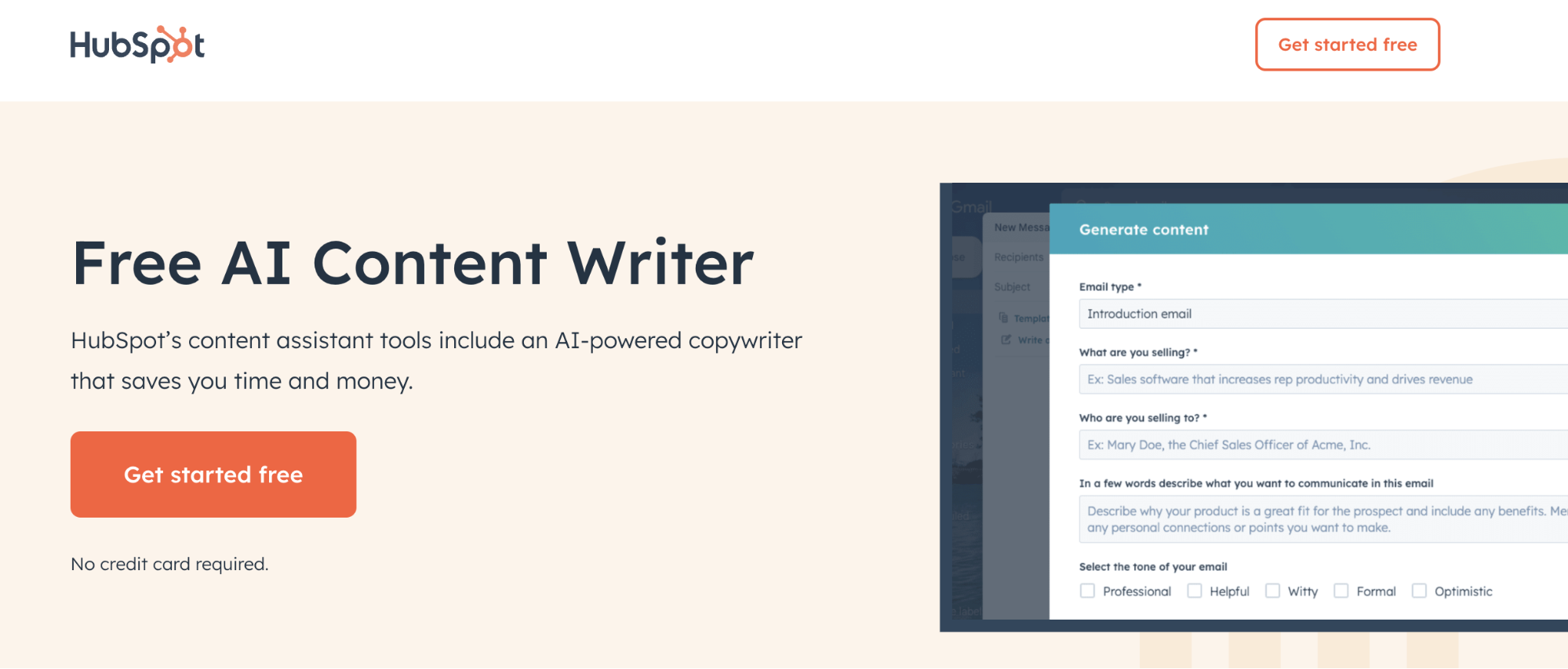
HubSpot’s free AI Writer is not as sophisticated as Jasper or Distribution.ai but it’s a game-changer for those seeking to elevate their social media presence swiftly and efficiently. If you already have a Hubspot account or need a lightweight (good price) solution for AI writing…
This tool is gold.
By simply answering a few prompts, users can harness the power of artificial intelligence to generate compelling posts that resonate with their audience.
This tool is particularly adept at remixing existing content, giving it a fresh twist that re-engages followers. Whether you’re looking to boost engagement, increase your reach, or simply save time on content creation, HubSpot’s AI Writer streamlines the process, making it easier than ever to maintain a dynamic and impactful social media strategy.
13. HypeFury for AI social media & content scheduling
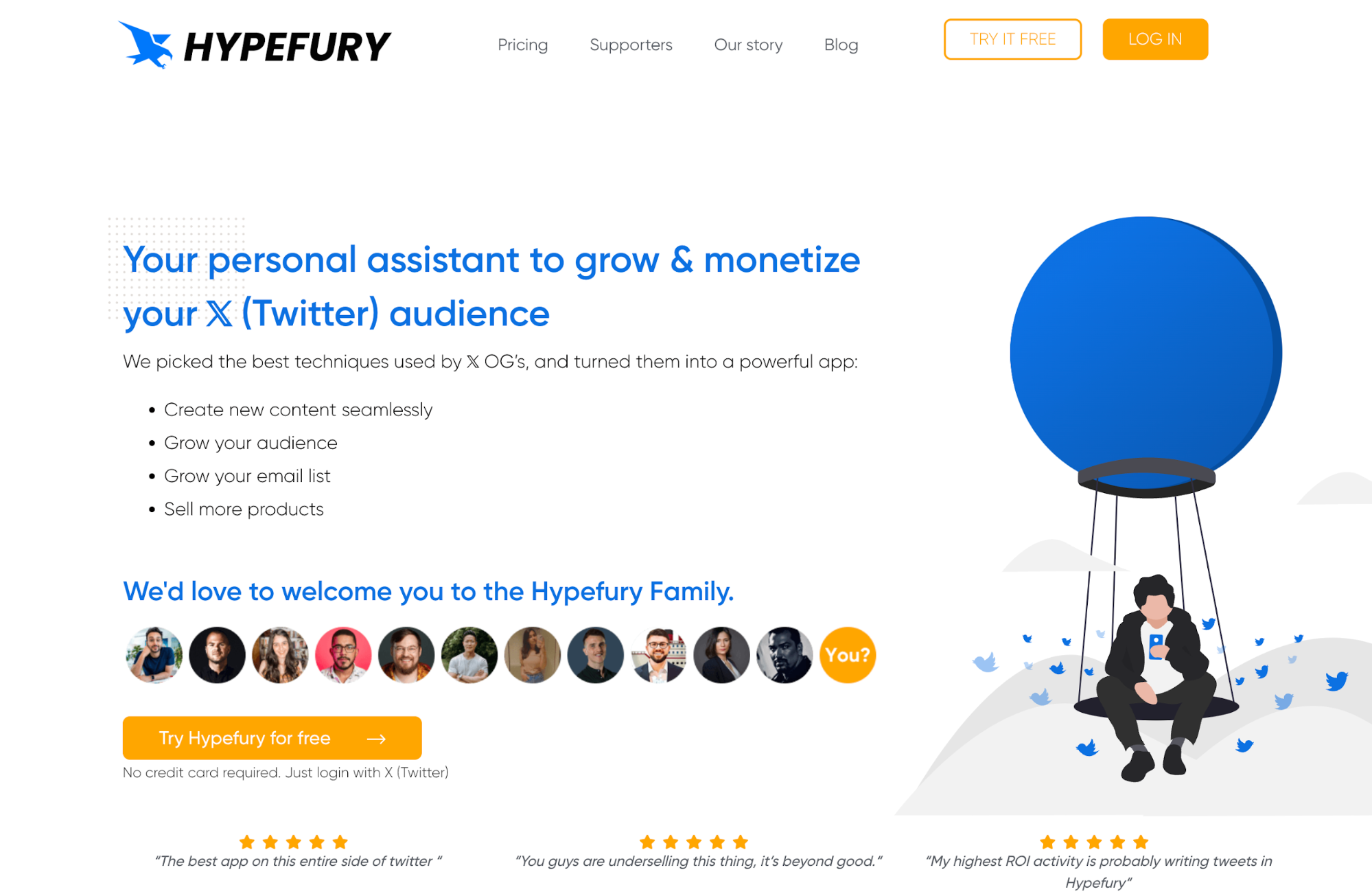
Hypefury is an indispensable tool for content creators on Twitter, offering a streamlined way to maintain a consistent presence on one of the largest social media platforms. With its intuitive design and powerful features, HypeFury enables users to schedule tweets, threads, and even retweets in advance. This ensures that your audience receives a steady stream of content, even when you’re not actively online.
One of the standout features of HypeFury is its ability to automatically repost your best-performing tweets at optimal times, maximizing engagement and reach. This means that your top content gets seen by more people without additional effort on your part. Moreover, HypeFury offers valuable analytics insights, allowing creators to understand which types of content resonate most with their audience.
For those looking to monetize their Twitter presence, HypeFury provides tools to promote products or services directly within the scheduled content. You can set up sales tweets in advance and pair them with high-engagement posts to increase visibility and conversion rates. Whether you’re sharing blog posts, podcast episodes, or simply engaging with your followers through thoughtfully crafted tweets, HypeFury amplifies your ability to connect with your audience effectively.
14. Canva for image creation & creative design
In 2024, Canva acquired Leonardo AI to further strengthen it’s position in the market as one ofthe most innovative AI solutions for marketers. Canva has forever changed the way that graphics are created and the acquisition of Leonardo supports their overall vision and mission towards empowering everyone to have the ability to create.
One of the best AI tools that Canva offers is their free online AI image generator which gives you the ability to create images in the matter of seconds on the back of their training set:
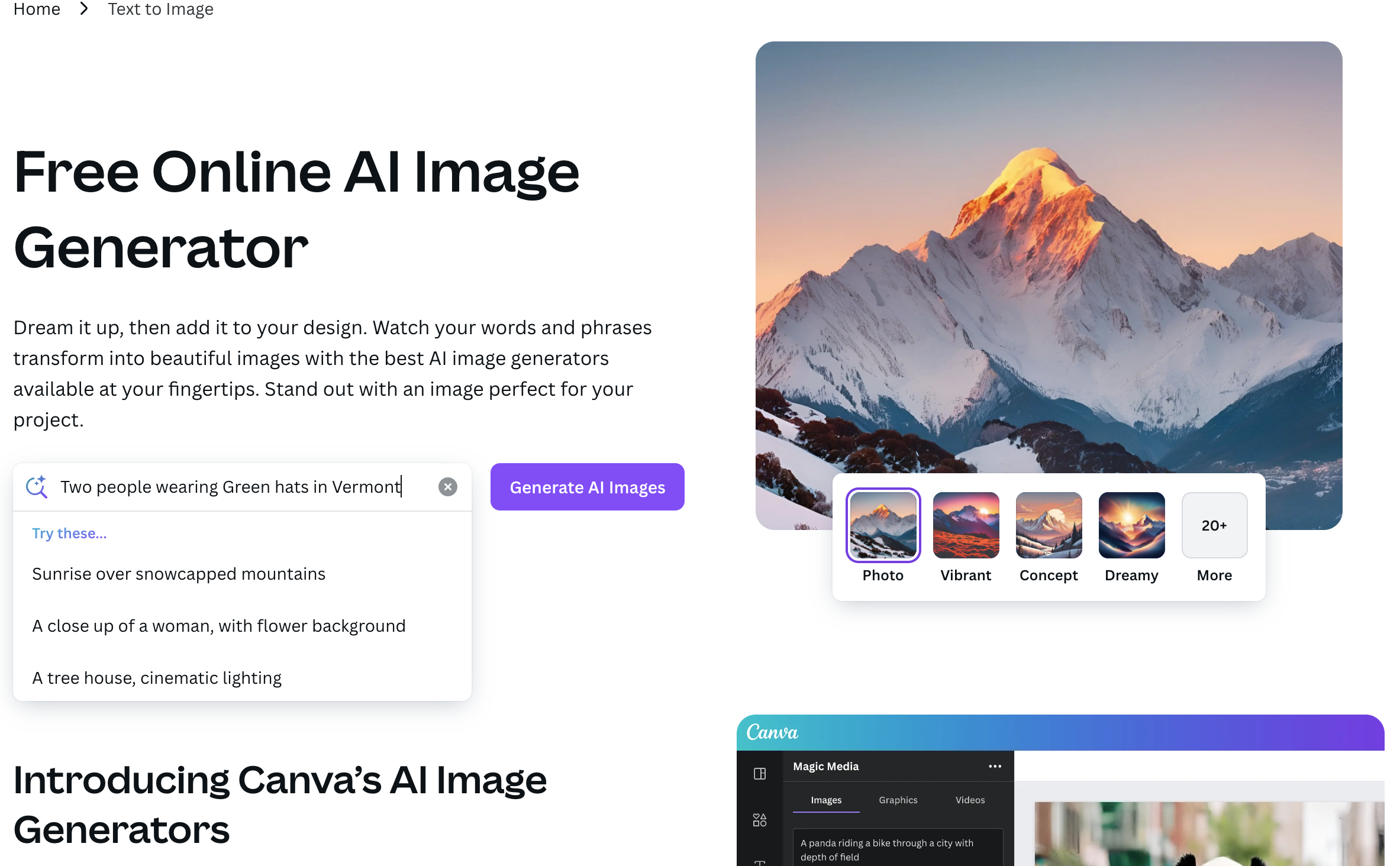
As an example, I asked Canva to create a photo of two people wearing green hats in Vermont and they delivered:
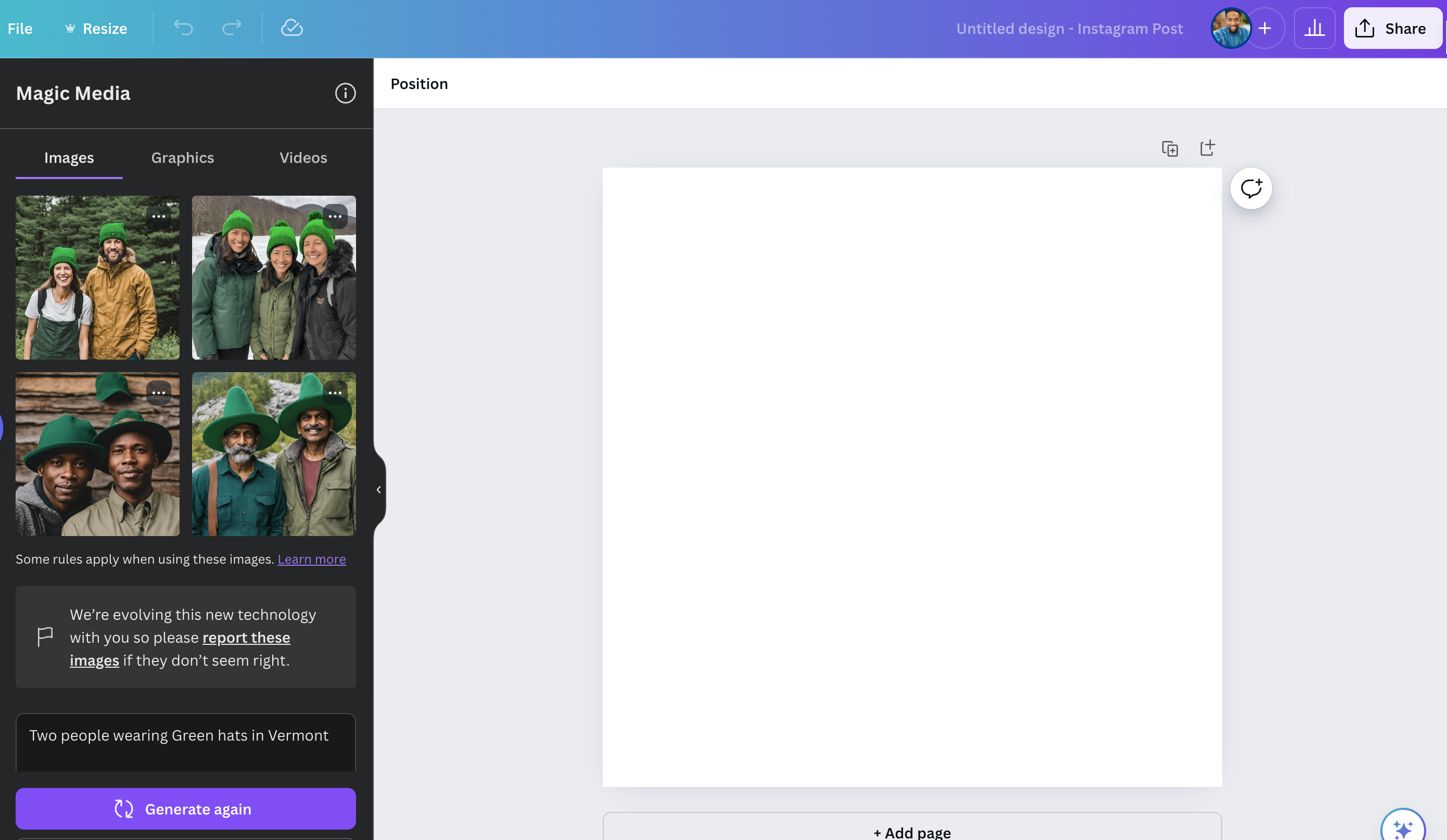
Using the Canva AI image tool, I can move these images to my canvas and get back to working on a graphic that works for my brand. This could be a brochure, advertisement or even a social media post. The possibilities of using Canva when it comes to graphics are endless and the combination of AI to replace the necessity of stock images is wildly impressive.
15. Zapier for connecting AI tools with marketing tools
Zapier stands out as a pivotal tool for integrating various AI tools with marketing platforms, streamlining the process of automating tasks across different software.
By leveraging Zapier, marketers can create seamless workflows that connect their favorite AI tools—like content creation, customer service bots, or analytics—with the marketing tools they rely on daily, such as email marketing services, CRM systems, and social media platforms. Here’s a simple example of Zapier being used with AI that I think shows the power of this technology:
- Fireflies (or some other call recording software) records and transcribes the meeting
- Zapier triggers a ChatGPT conversation with the transcript
- ChatGPT drafts a follow-up email based on the transcript
- Gmail creates a draft with the AI-generated content
This is all possible today.
It’s absolutely wild.
This connectivity allows for the automation of routine tasks, like updating customer records or posting content across multiple channels, freeing up valuable time to focus on strategy and creative initiatives.
The beauty of Zapier lies in its simplicity; with just a few clicks, you can set up “Zaps” that trigger actions between apps without the need for complex coding. This makes it accessible to marketers of all skill levels and enhances productivity by allowing teams to spend less time on manual data entry and more time crafting meaningful customer experiences.
16. Midjourney for creating graphics and art
Midjourney is an AI image creation tool that has revolutionized the way marketers approach visual content creation.
With its advanced AI capabilities, Midjourney simplifies the process of generating stunning graphics and art that can captivate any audience. This AI tool is a game-changer for marketers who are constantly on the lookout for fresh, innovative ways to grab attention in a crowded digital landscape. Here’s a snapshot of some of the graphics it can create in the matter of minutes:
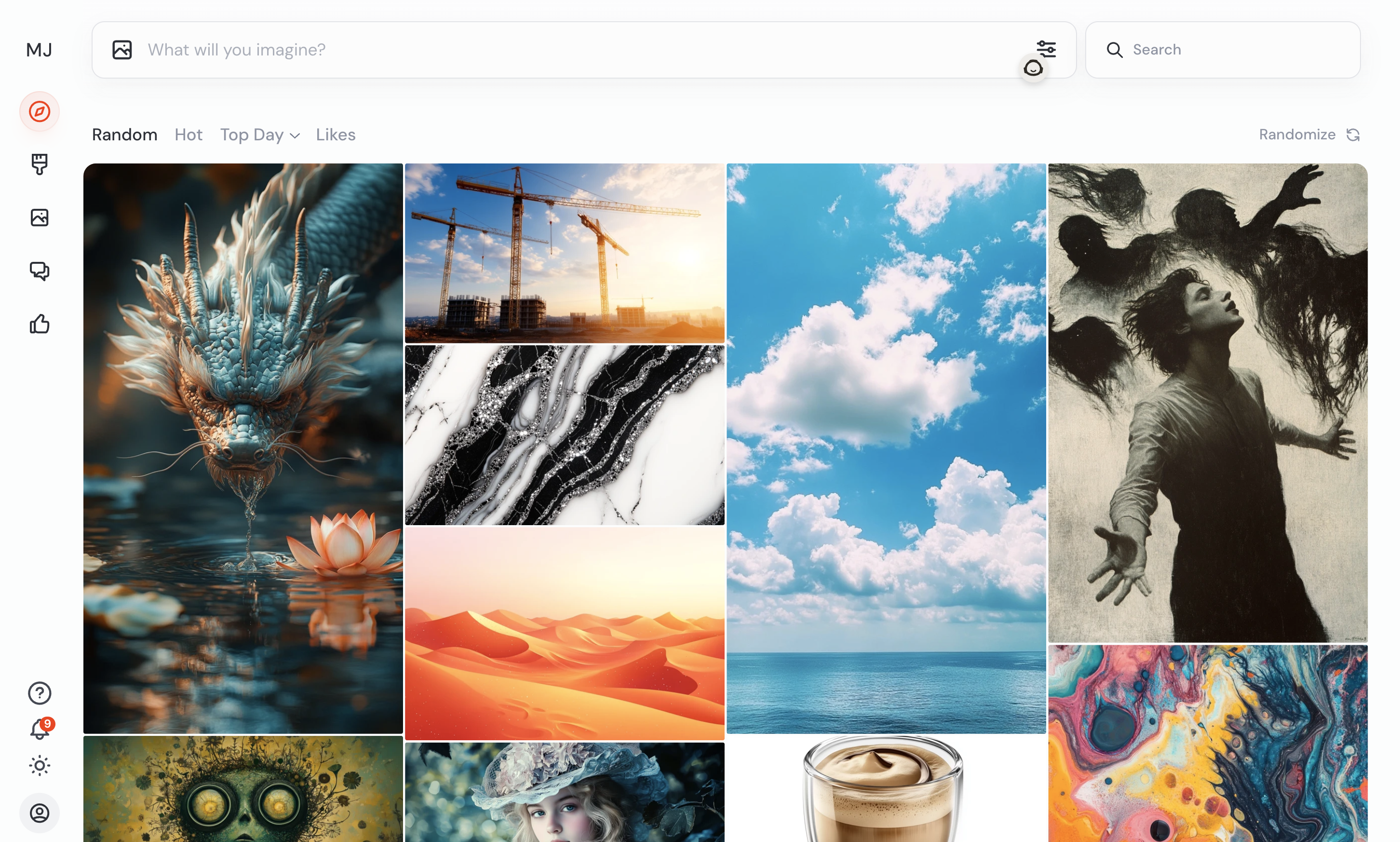
One of the standout features of Midjourney is its ability to understand and interpret words. I told Midjourney in the example below that I wanted an image of a digital marketing strategist wearing suspenders (and in the next one I said wearing a Coogi Sweater) and in the matter of a few seconds it started to create them:
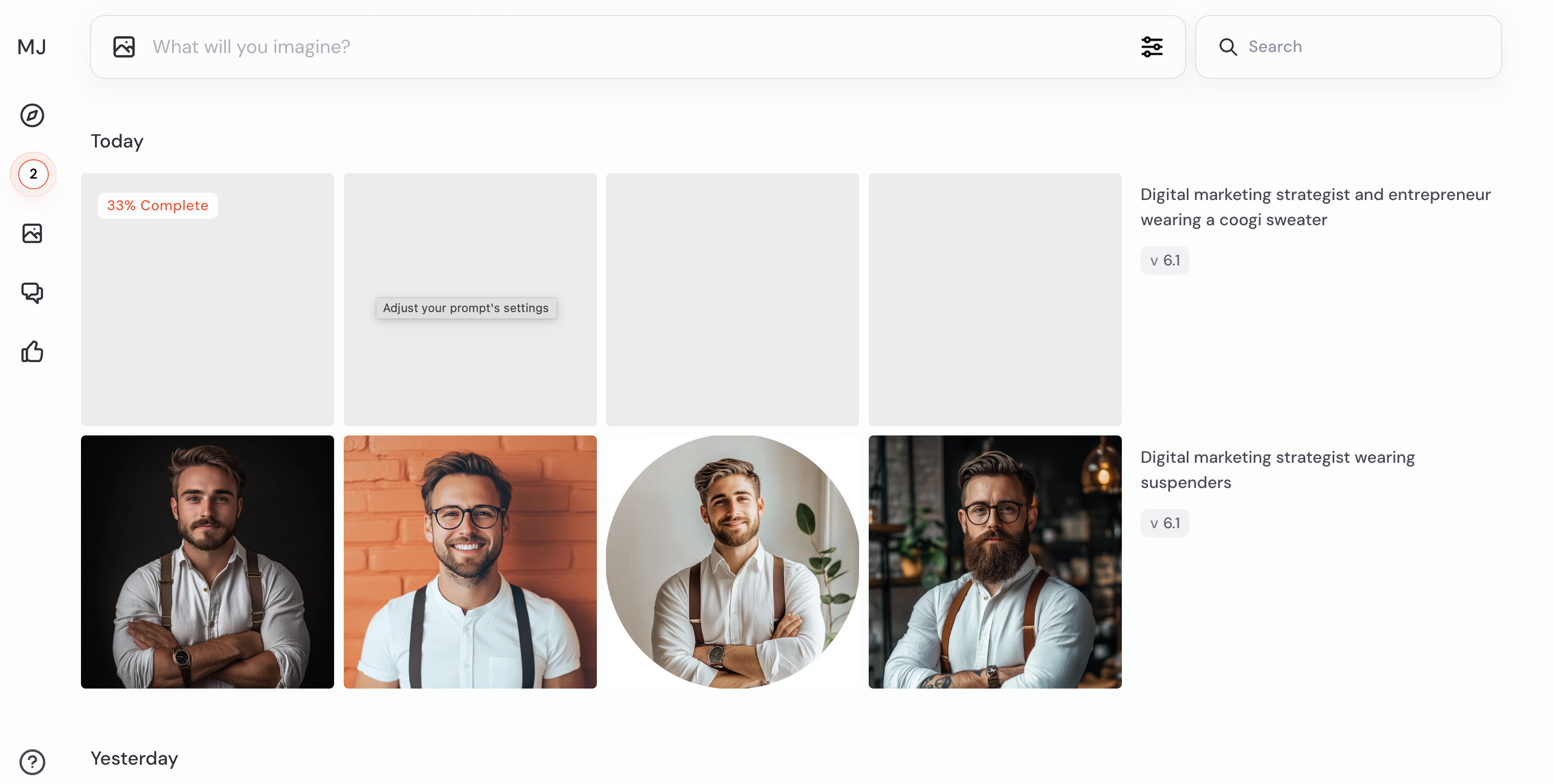
Marketers can input text descriptions of what they envision, and Midjourney’s AI will bring those visions to life with remarkable accuracy and creativity. It’s one of the best image AI tools that I’ve come across.
This not only accelerates the content creation process but also opens up new possibilities for personalized and targeted visual storytelling. Midjourney’s versatility makes it an indispensable tool across various marketing channels.
17. Runway for turning graphics into video assets
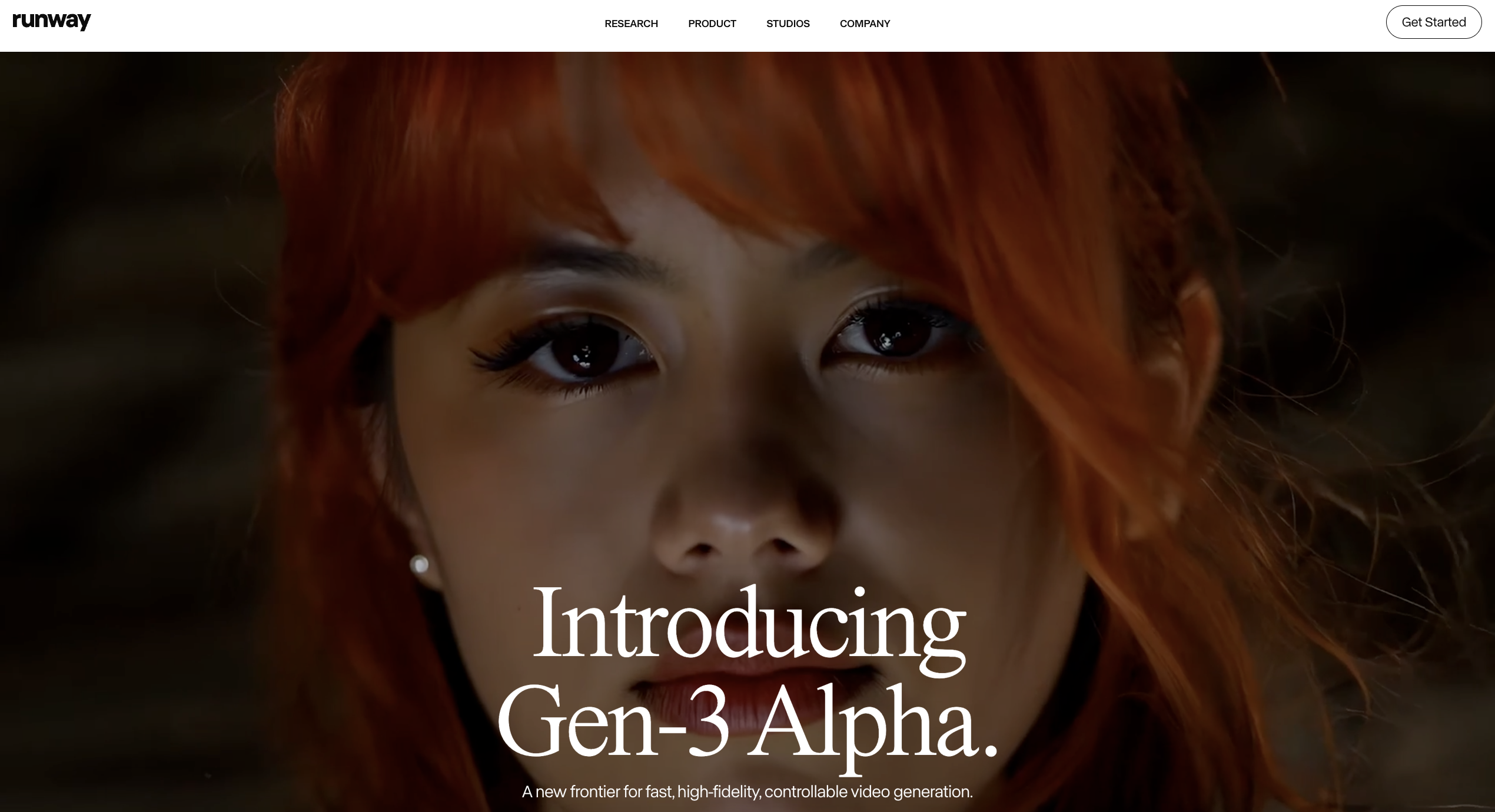
Runway excels as an outstanding AI video tool, effortlessly transforming static graphics into dynamic video assets.
With its user-friendly interface and sophisticated algorithms, Runway empowers marketers to infuse vitality into their visuals, crafting immersive video content that captivates audiences. Whether for social media campaigns, website backgrounds, or digital ads, Runway offers a seamless platform for creating storytelling videos that enhance brand messaging.
You can upload a photo from a beach and tell Runway to add stars to the sky.
You can upload a picture of a building and tell Runway to make balloons come from the windows.
The options are endless and restricted only by creativity.
Here’s a few examples of some of the use cases that Runway ML provides creatives:
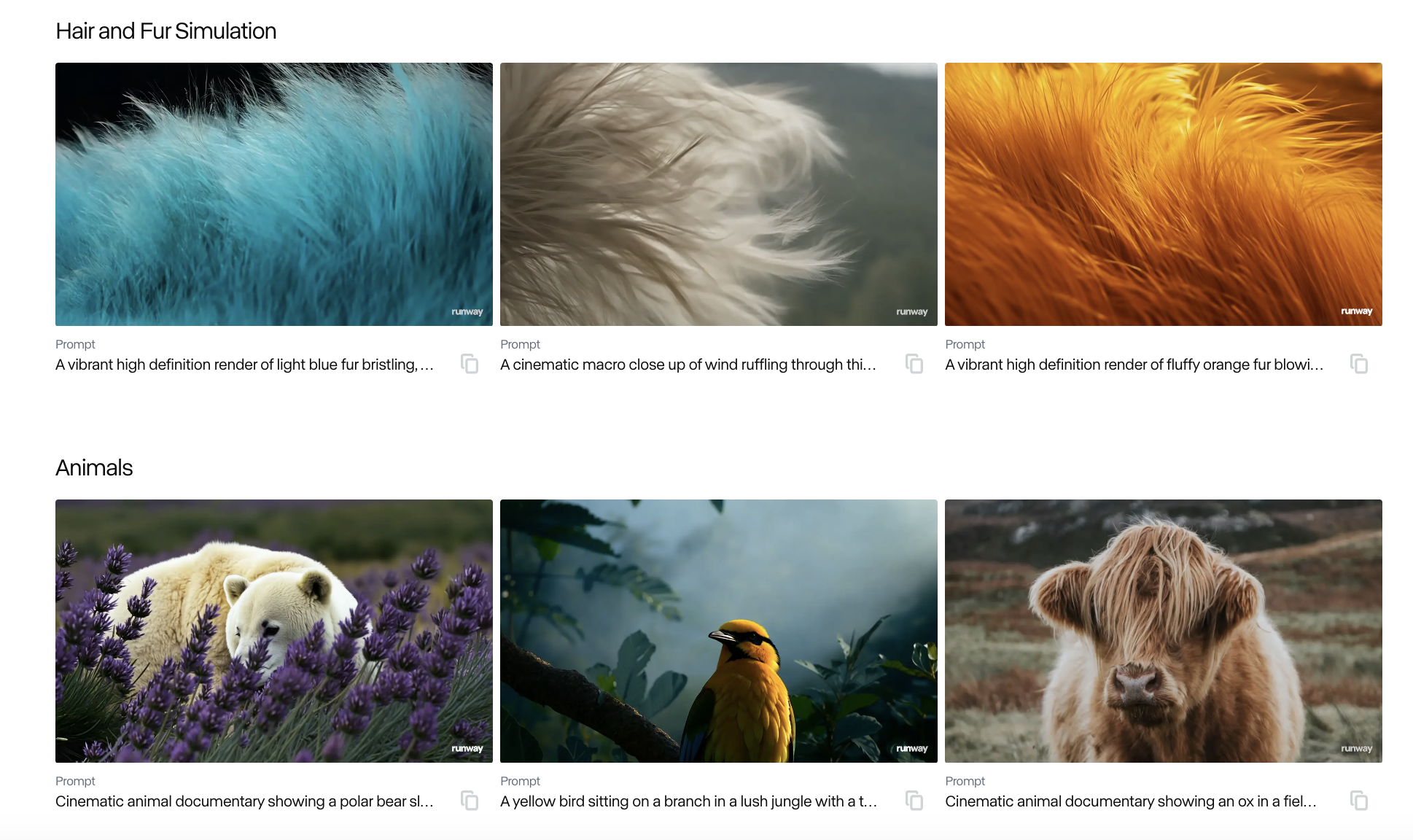
Runway is a cutting-edge platform that offers a suite of creative tools and AI models, widely used in the entertainment industry for its innovative capabilities. Its technology has been harnessed in various high-profile projects, including the critically acclaimed film Everything Everywhere All At Once. In music, Runway’s tools have contributed to the production of music videos for renowned artists such as A$AP Rocky, Kanye West, Brockhampton, and The Dandy Warhols.
Impressed?
It gets better.
Runway has also been used by popular television shows like The Late Show and Top Gear, showcasing its versatility and impact across multiple media formats. Runway continues to push the boundaries of creativity by providing accessible and advanced AI-driven solutions for filmmakers, musicians, and TV editors.
18. Ignition for GTM planning, research & strategizing
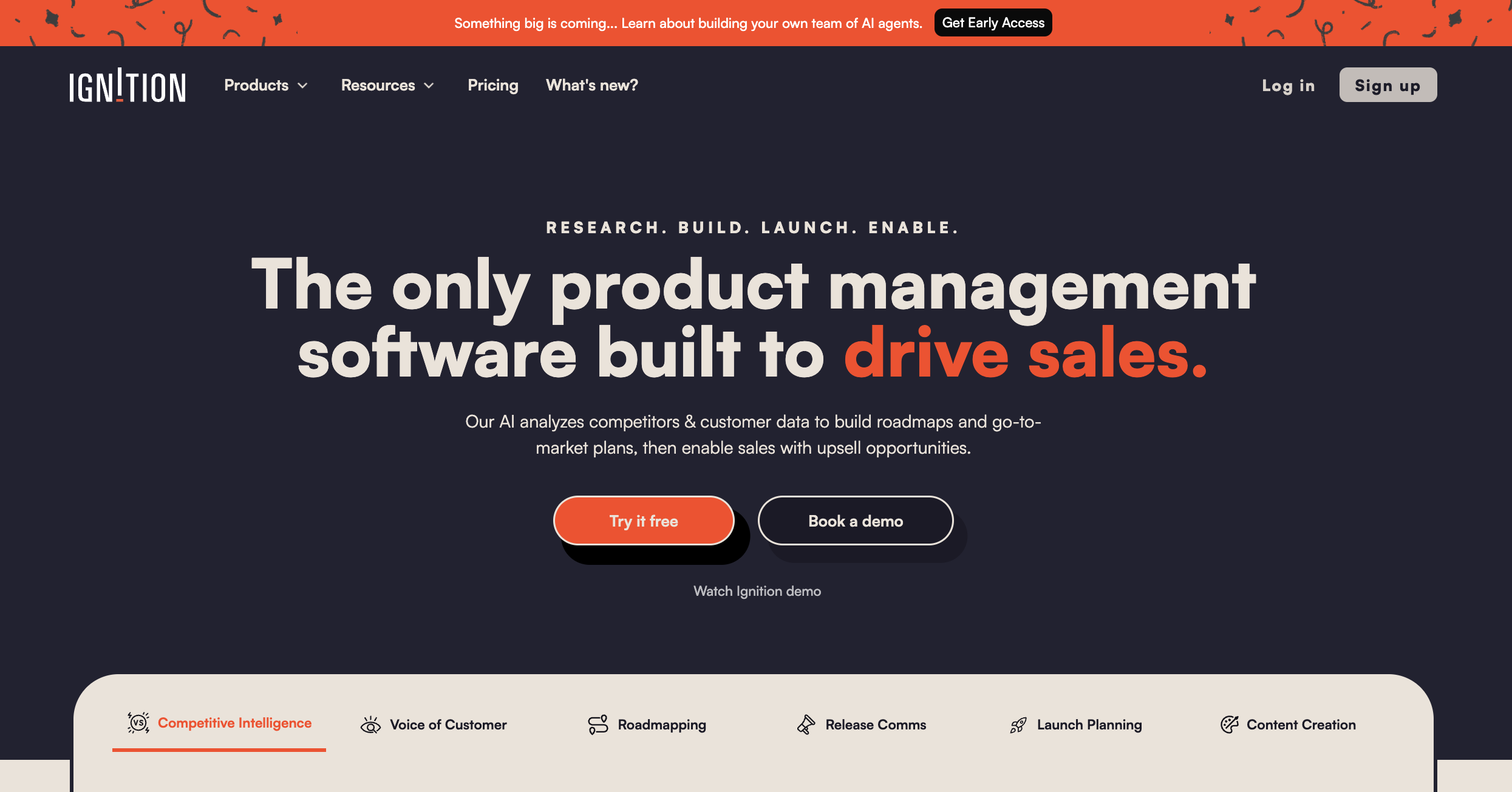
Ignition is an AI-driven tool designed to streamline go-to-market (GTM) processes for product and product marketing teams.
It offers features like competitive intelligence, customer feedback analysis, AI-powered roadmapping, and automated launch planning, all integrated into a single platform.
Ignition helps teams align on GTM strategies by generating insights, creating marketing assets, and automating workflows, ultimately enabling more efficient and data-driven product launches.
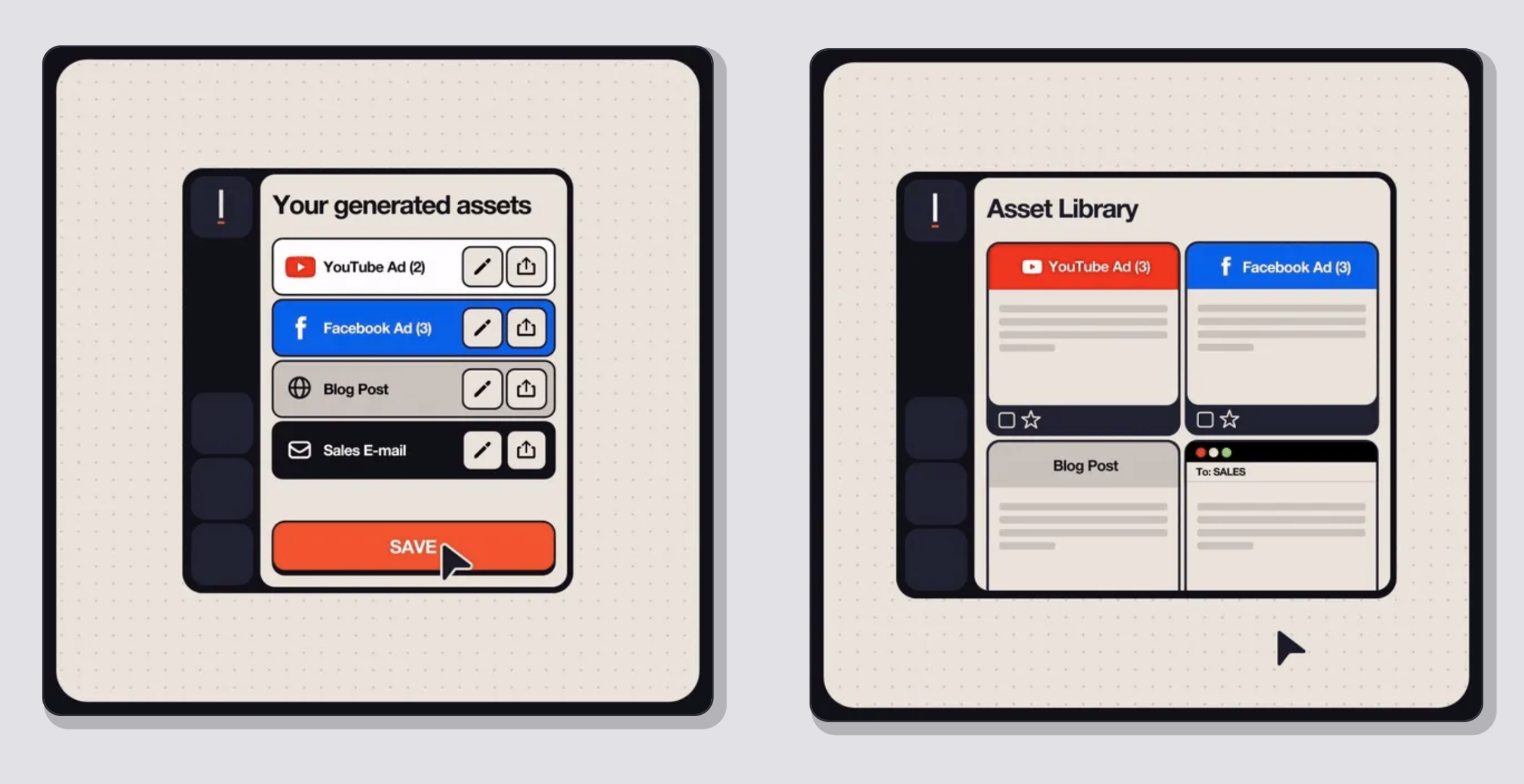
One of the coolest features within Ignition is the fact that you can create marketing assets right in the product:
19. AdCreative for AI assisted Ad creation & design
One of the best parts about AdCreative AI is the power of scale.
You can develop hundreds of conversion-focused ad creatives in a matter of minutes, while staying on brand. Haagen Dazs (the ice cream) used AdCreative and saw more than a 30% increase in their conversions due to a more robust creative ad set. This is the power of an AI tool that gives you the chance to do more with less and maximize your creative outputs.
You can upload a brand and in the matter of seconds get a plethora of creative assets that are on-brand:
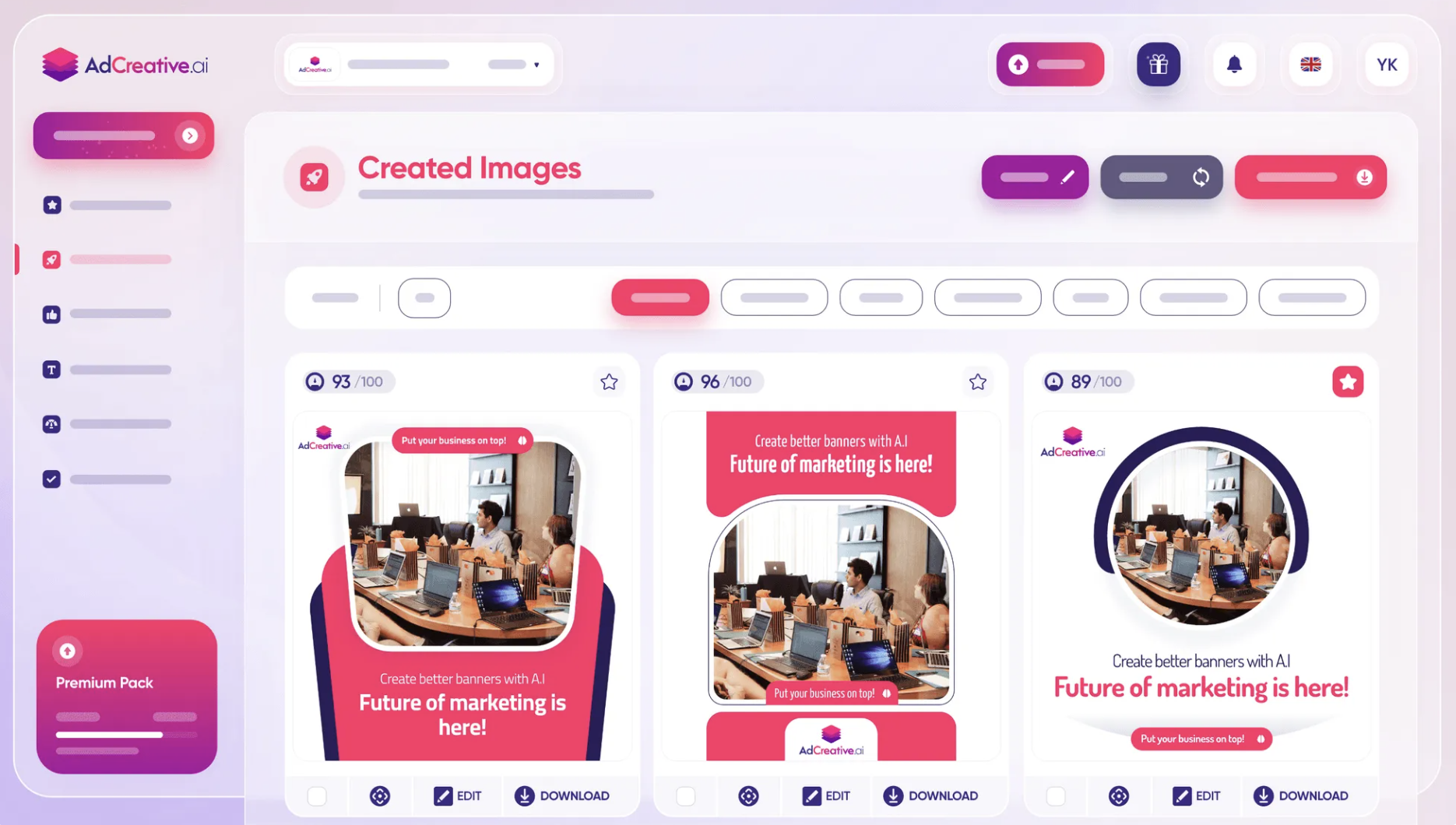
Test more creatives while decreasing time-spent on design process and get up to 14x better conversion and click-through-rates with our unique AI. In seconds, create hundreds of professionally designed, conversion-focused ad creatives with our AI, all customized to match your brand logo and colors.
The reality of creative marketing in 2025, 2026, 2027 and beyond is that the constant changes of social media platforms results in a constant change of ad sizes and specifications.
AdCreative AI has you covered across more than 10 different formats:
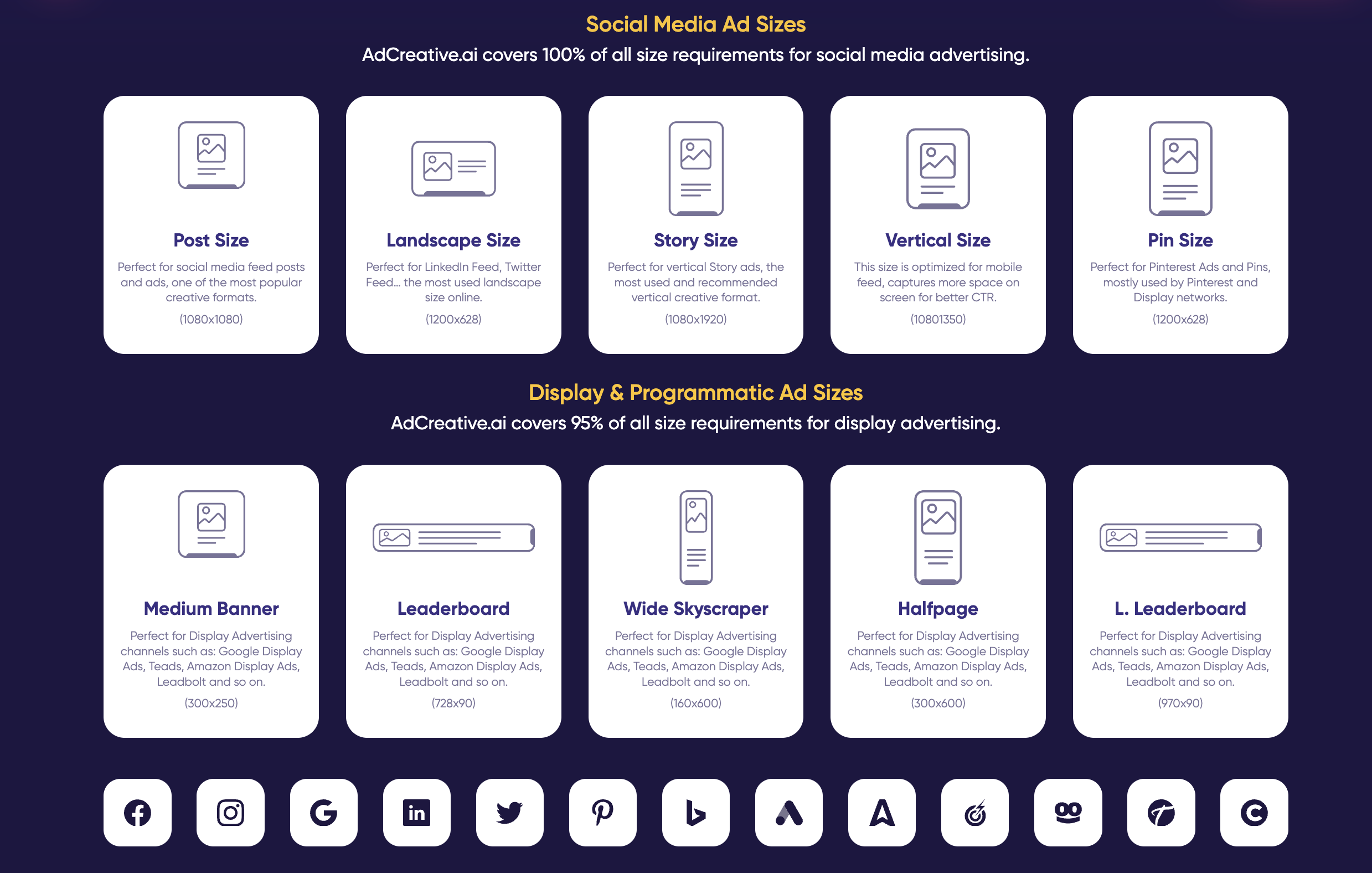
Generate more than 180 conversion-oriented creatives or banners in seconds, no design skills needed.
Ad Creative recently launched a few new features including: Background Remover AI, Image Upscaler AI, Face Enhancer AI, and Text Reader AI.
It feels like out of all the AI tools on the market focused on eCommerce and Ads – Ad Creative is executing at an impressive rate and will arm you with the tools you need to scale your paid marketing engine.
20. Opus Pro for turning long videos into short clips
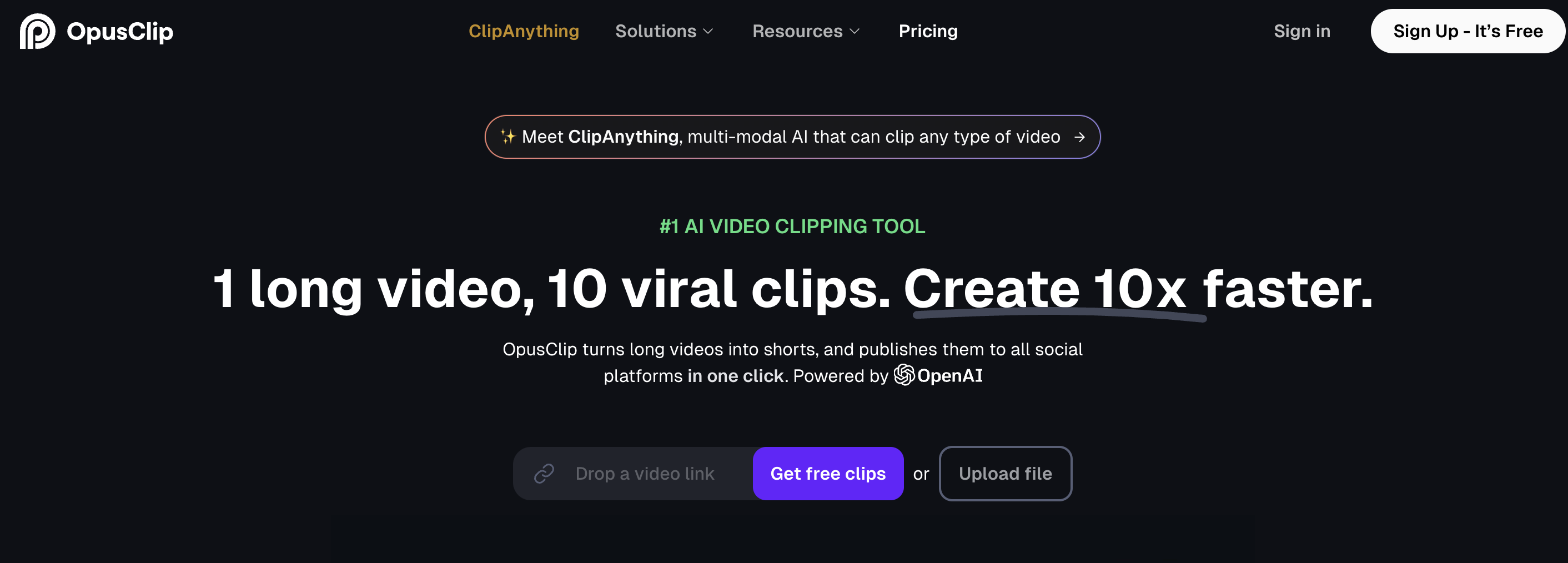
Opus Pro is an AI-powered tool designed to help content creators, marketers, and businesses efficiently transform long videos into engaging short clips suitable for social media platforms like TikTok, YouTube Shorts, and Instagram Reels. It’s powered by OpenAI and has case studies from brands like the Seattle Seahawks, Voxmedia, Chili Piper, Zoominfo and more.
Here are some key features and functionalities of Opus Pro:
- AI-Powered Video Clipping: Opus Pro uses AI technology to analyze lengthy videos and automatically identify the most engaging moments. It then generates short, optimized clips that are ready for sharing on social media. This automation significantly reduces the time and effort needed for manual editing, making it an invaluable tool for content creators looking to repurpose long-form content quickly.
- Custom Branding: Opus Pro allows users to create custom branding templates, ensuring a consistent look across all videos.
- Multi-Language Support: Opus Pro supports multiple languages (such as English, German, Spanish, French, and Portuguese), making it accessible to a global audience. These features help maintain brand identity and broaden the content’s reach to different markets.
- Advanced AI Features: The platform includes innovative AI capabilities like ClipGenius™, which identifies key segments and seamlessly stitches them together. It also provides an AI Keyword Highlighter that scans video captions for important keywords to enhance visibility and engagement. Another upcoming feature, AI b-roll integration, aims to enrich video content by automatically adding relevant b-roll footage.
- User-Friendly Interface and Accessibility Options: Opus Pro’s interface is designed to be intuitive and easy to navigate, catering to both beginners and advanced users. It also offers auto-captioning with high accuracy, which can increase video watch time by up to 45% by making content more accessible and engaging for diverse audiences.
- Virality and Engagement Optimization: The tool includes a unique feature called AI Virality Score™, which predicts the potential of video clips to go viral based on an analysis of thousands of viral videos. This allows users to strategically focus on content that is more likely to perform well.
21. Bardeen.ai for streamlining workflows within tasks
Bardeen is a fascinating tool.
It’s like Zapier but for the browser and with a focus on B2B sales / marketing. It’s a powerful Chrome extension that can control any browser tab and run workflows 24/7 in the cloud. With its ability to integrate with 100+ apps, Bardeen is perfect for automating repetitive tasks and speeding up time-consuming activities.
When it comes to HubSpot integrations, Bardeen stands out by addressing three core challenges faced by B2B sales and marketing professionals.
Here’s a look at the top three AI automations for HubSpot that can significantly enhance your workflow:
1. Automating Lead List Imports into HubSpot
After attending a trade show or field event, one of the most time-consuming tasks is importing new leads into HubSpot. With Bardeen, you can automate this process effortlessly. The automation allows you to import contact information directly from a variety of sources—such as Google Sheets—into HubSpot.
This is a game-changer for sales teams who want to spend more time engaging with leads and less time managing data entry. By leveraging Bardeen’s AI capabilities, you can ensure that your lead data is accurate and up-to-date without the manual effort.
2. Sync Contact Data from Google Sheets to HubSpot
Keeping contact data up-to-date across platforms is essential for effective sales and marketing efforts. Bardeen provides an automation that syncs contact data in a Google Sheets spreadsheet with HubSpot. Each time a new contact is added or an existing contact is updated in Google Sheets, the changes are automatically saved in HubSpot.
3. Enrich Contact Information and Create or Update HubSpot Contacts
Bardeen’s AI-powered Playbook allows you to enrich contact information in a Google Sheets spreadsheet and automatically create or update HubSpot contacts. This automation not only saves time but also adds value by pulling in additional information such as social media profiles and company details.
22. Surfer SEO for AI assisted content creation & optimization
Surfer SEO is one of the top Generative AI SEO tools helping marketers create content that scales.
For example, it uses GenAI to help you identify a series of other topics and content you can cover based on keyword research:
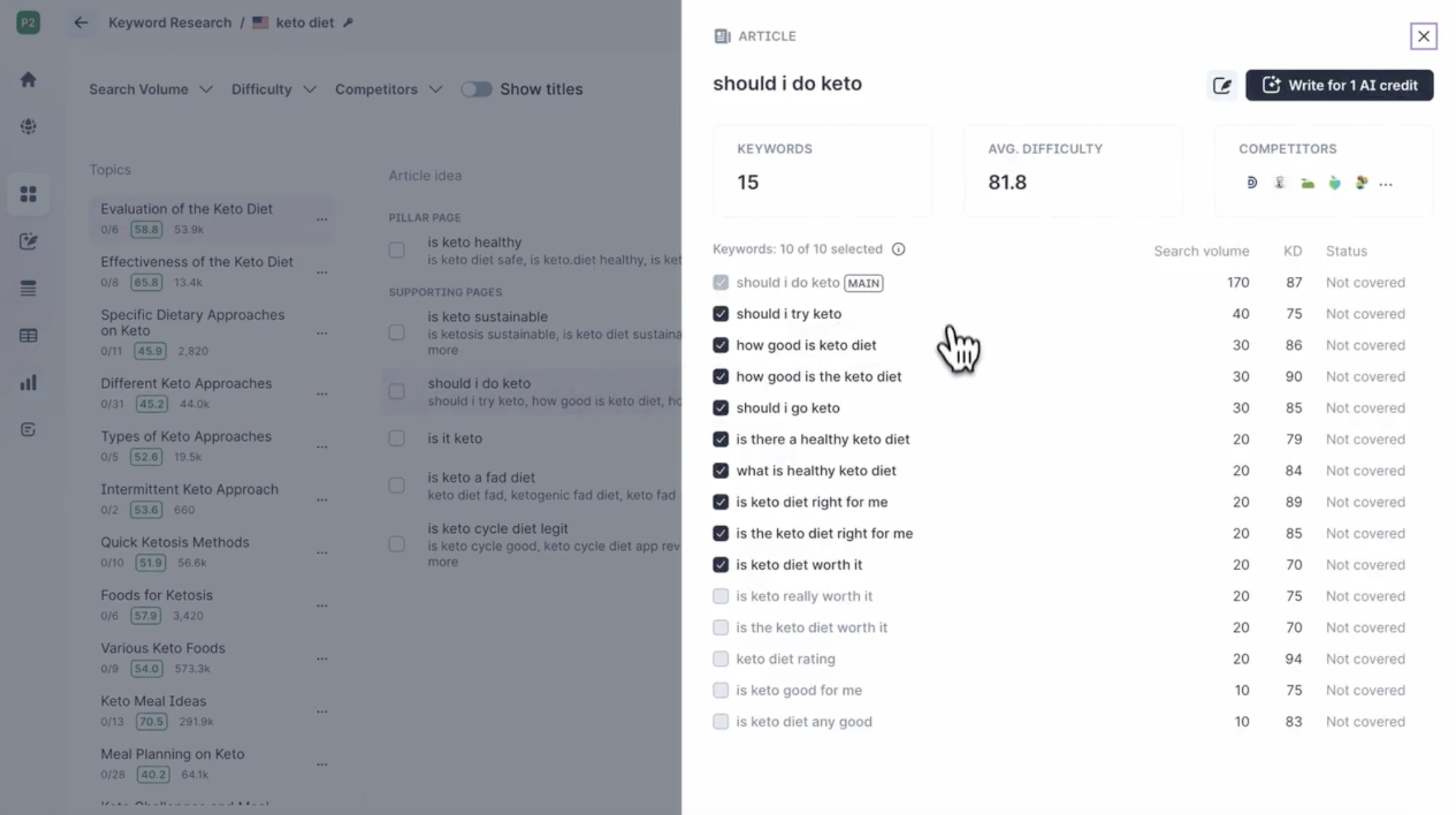
Surfer SEO is a powerful tool that uses AI to analyze top-performing content for any given keyword and provides recommendations for optimizing your own content.
This includes suggestions for word count, headings, and other on-page elements that can improve your search engine ranking. By utilizing Surfer SEO’s AI-powered insights, you can create high-quality, optimized content that stands out in the crowded digital landscape.
You can sign up for Surfer SEO here and start turning mediocre content into assets that rank.
23. Vimeo for AI assisted script writing and video content
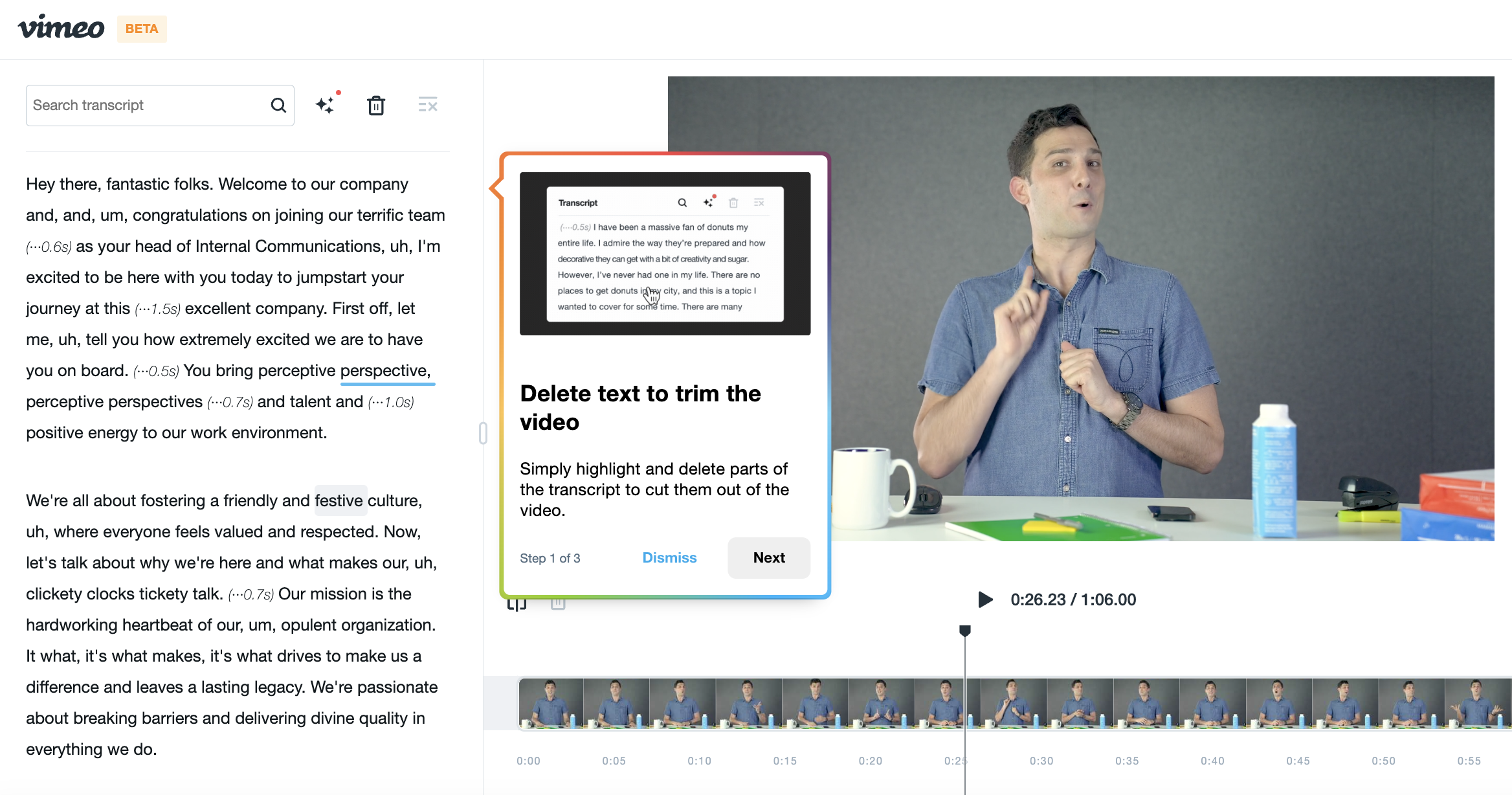
I recently started using Vimeo AI for a few different videos that I shared on social media, and I must say, it’s a game-changer. Vimeo AI has completely transformed the way I approach video content creation, making it not only easier but also faster to produce high-quality videos that stand out on platforms like LinkedIn, Twitter, and Instagram.
One of my favorite features is the AI-powered script generator. You click a few buttons are a met with a powerful script in the matter of seconds. The best part is that you can give the project insight into who you are beforehand to ensure it gives you a script that is on brand:
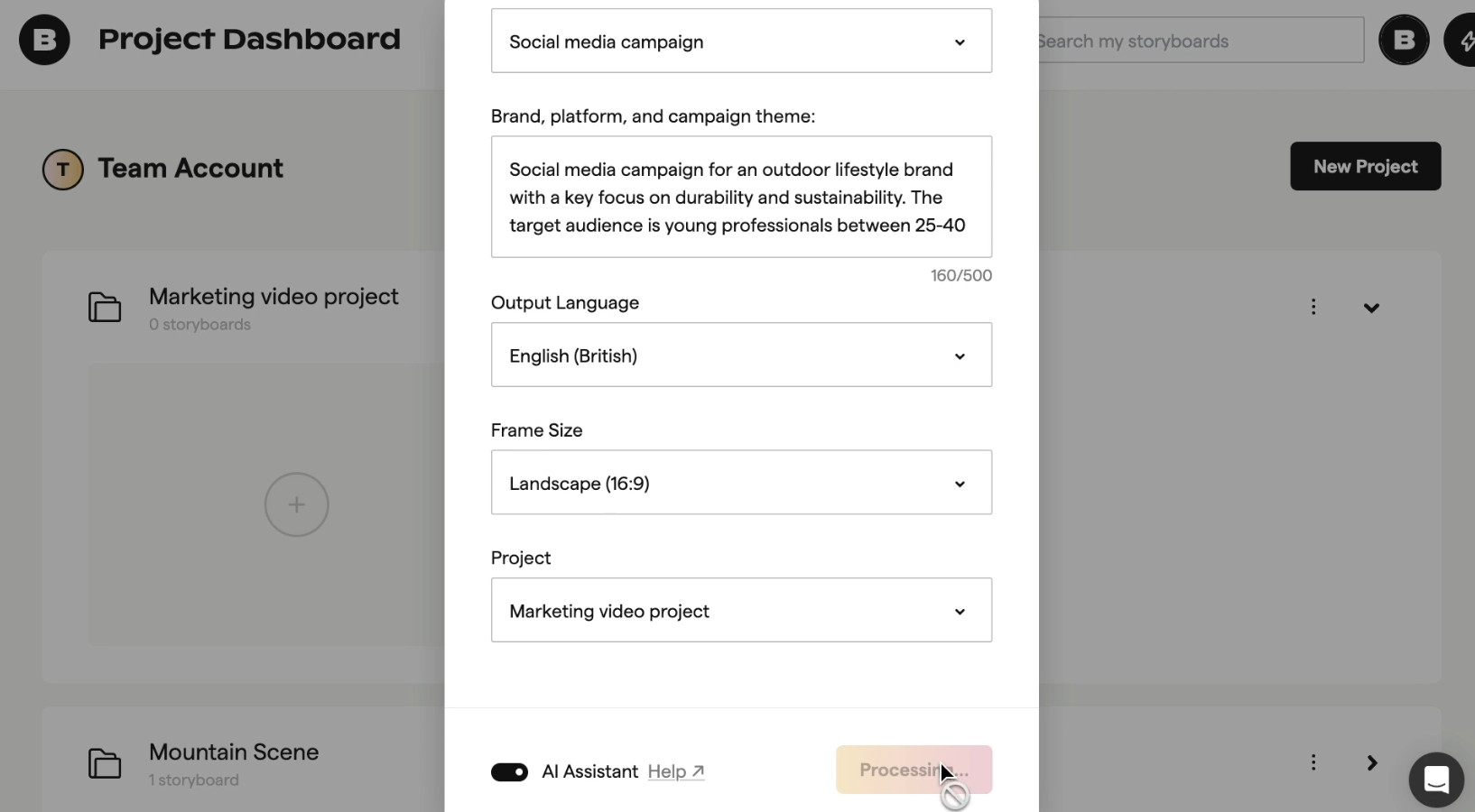
When you’re trying to create engaging content, crafting a compelling script is often half the battle. With Vimeo AI, you just provide a brief description of the video concept, and it generates a script in seconds.
I used this for a promotional video where I wanted to highlight the key benefits of a new product. The script came out polished and on-point, saving me hours I would have otherwise spent brainstorming and writing.
Another standout feature is the built-in, online teleprompter.
It’s incredibly helpful for recording videos when you want to speak directly to the camera with confidence. Vimeo AI’s advanced editor makes this possible, and it’s a huge time-saver. You can remove filler words like “um” and awkward pauses in just a few clicks.
Vimeo AI makes it incredibly easy to capture, edit, and share content from wherever you are. Whether I’m on my desktop or using my mobile device, I can generate scripts, record with the teleprompter, edit the footage, and post directly to social media—all within the Vimeo AI platform.
24. SimilarWeb for AI assisted research and analysis
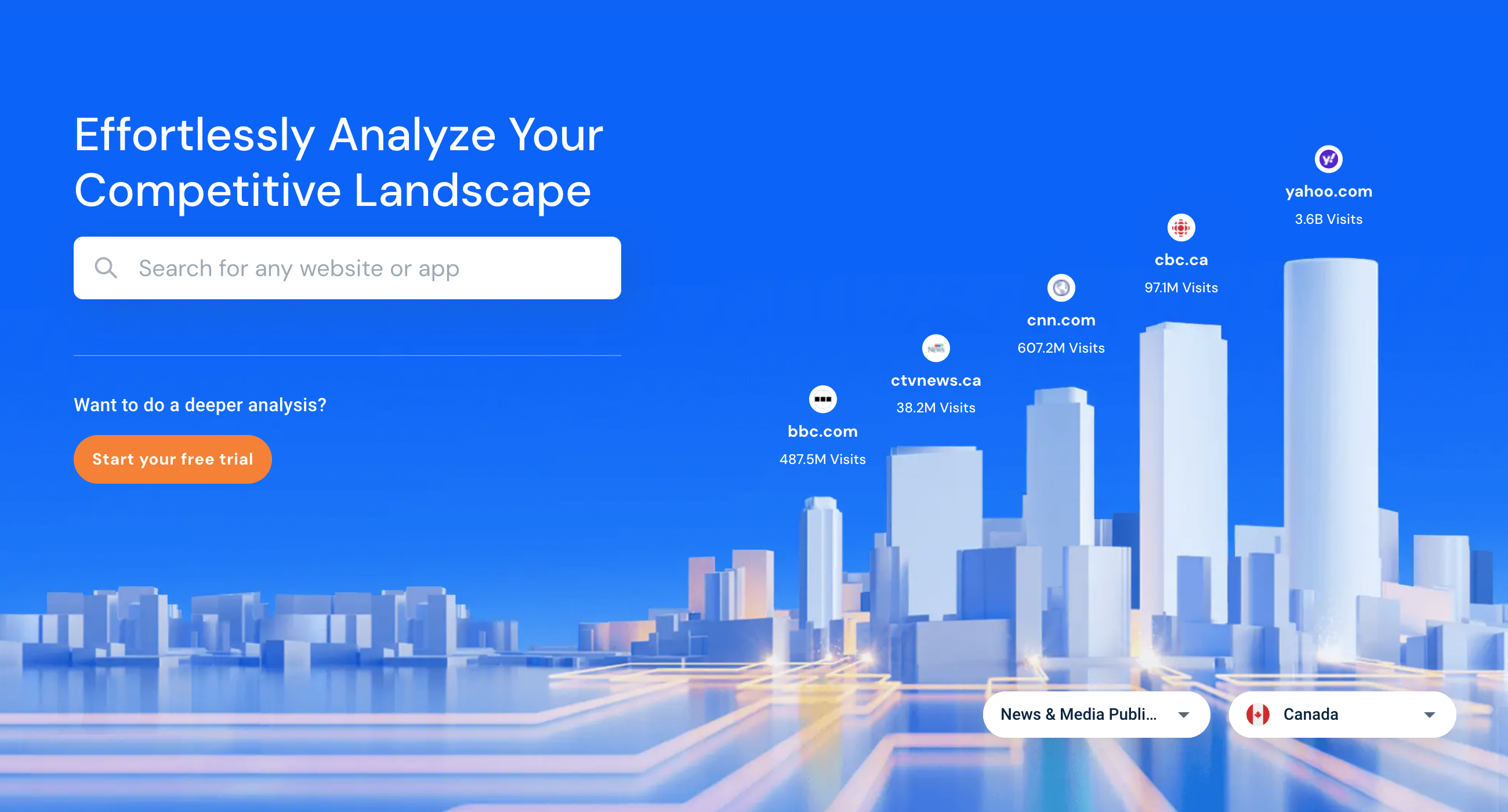
As content creators, we know that research and analysis are crucial for producing high-quality and relevant content. It can be time-consuming and tedious to gather all the necessary information from various sources. But with the help of AI technology like SimilarWeb, this process becomes much more efficient and accurate.
SimilarWeb is an online tool that uses AI algorithms to provide in-depth insights into website traffic, audience demographics, and industry trends. With its advanced data collection capabilities, SimilarWeb can assist content creators in conducting thorough research on a particular topic or niche.
But here’s the part that I love most…
It’s empowering the full revenue function.
Similarweb’s SAM product is a sales tool that helps marketers & sales executives get insight around companies using a Chrome Extension. Whether it’s data on LinkedIn or Google Calendar – the latest iteration of Similarweb goes beyond just content:
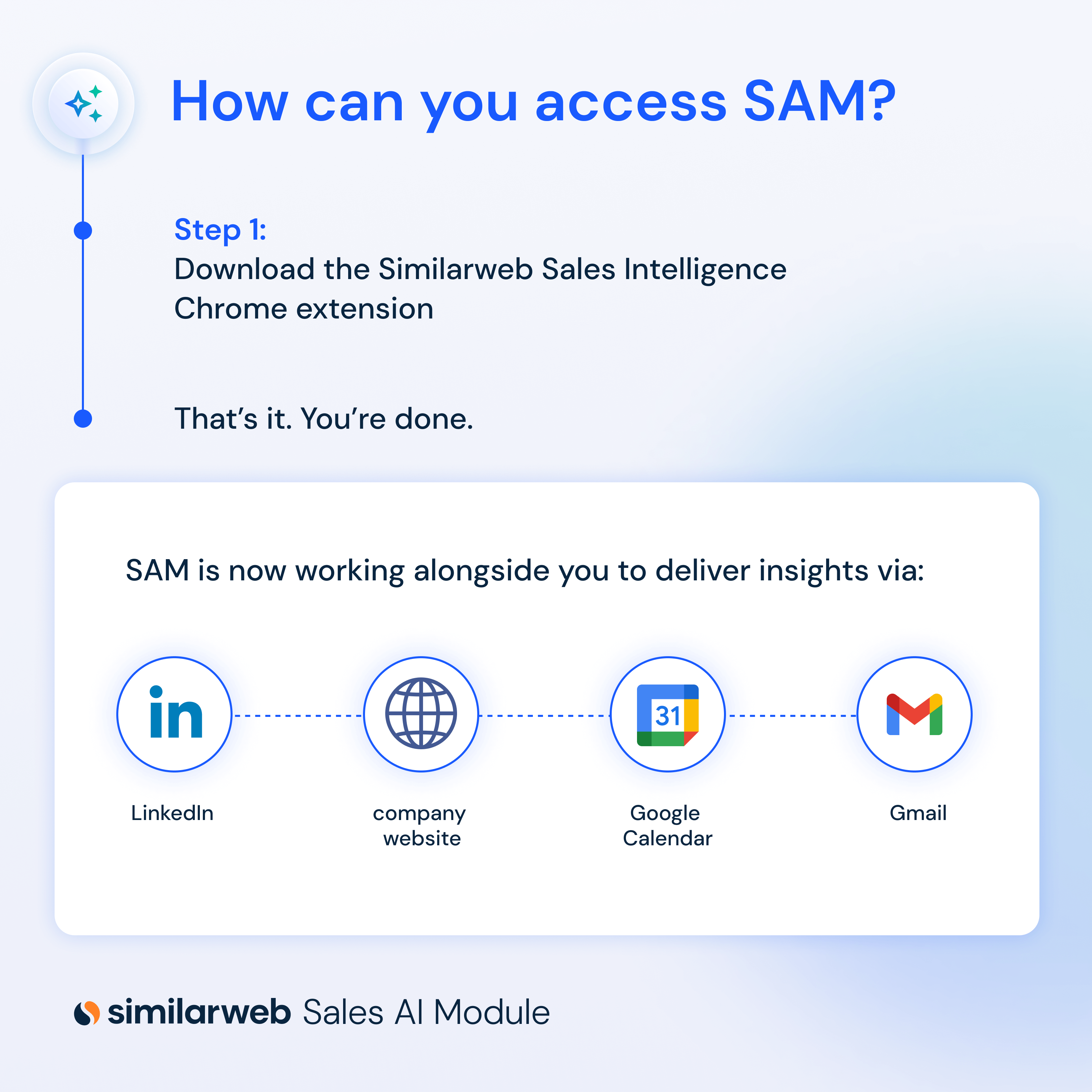
One of the most significant benefits of using SimilarWeb is its ability to analyze competitor websites. By inputting your competitors’ URLs into the platform, you can gain valuable insights into their web traffic, top-performing
25. Murf AI for AI created audio files for voice overs
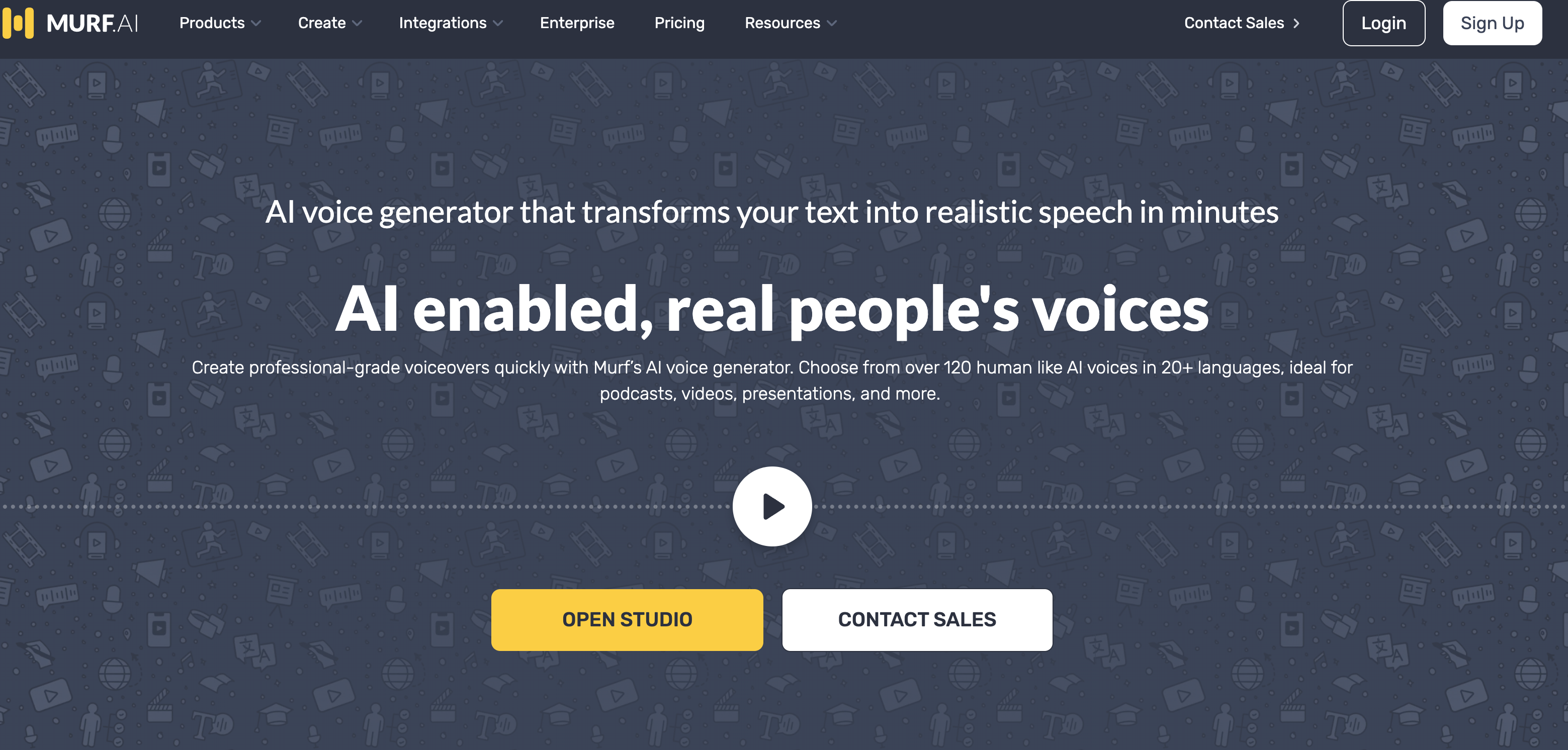
Murf AI is considered one of the top ElevenLabs alternatives on the market today.
Murf AI stands out in converting text into lifelike AI voices, offering a diverse selection of 120 voices across 20 languages. Tailored to meet specific voice needs, users can fine-tune breaths, pauses, and pronunciation. With a rich array of 100% natural-sounding AI voices in numerous languages, Murf is perfect for crafting polished voice-overs for your videos and presentations.
One of the coolest features within Murf is the integration with Canva. This allows users to easily convert their Canva designs into videos with AI-generated voiceovers. The process is simple – just add your text and select your preferred voice, then Murf AI will quickly produce an audio file for your video. The user experience is also super simple as it integrates directly into the app:

26. ElevenLabs (again) for global translation
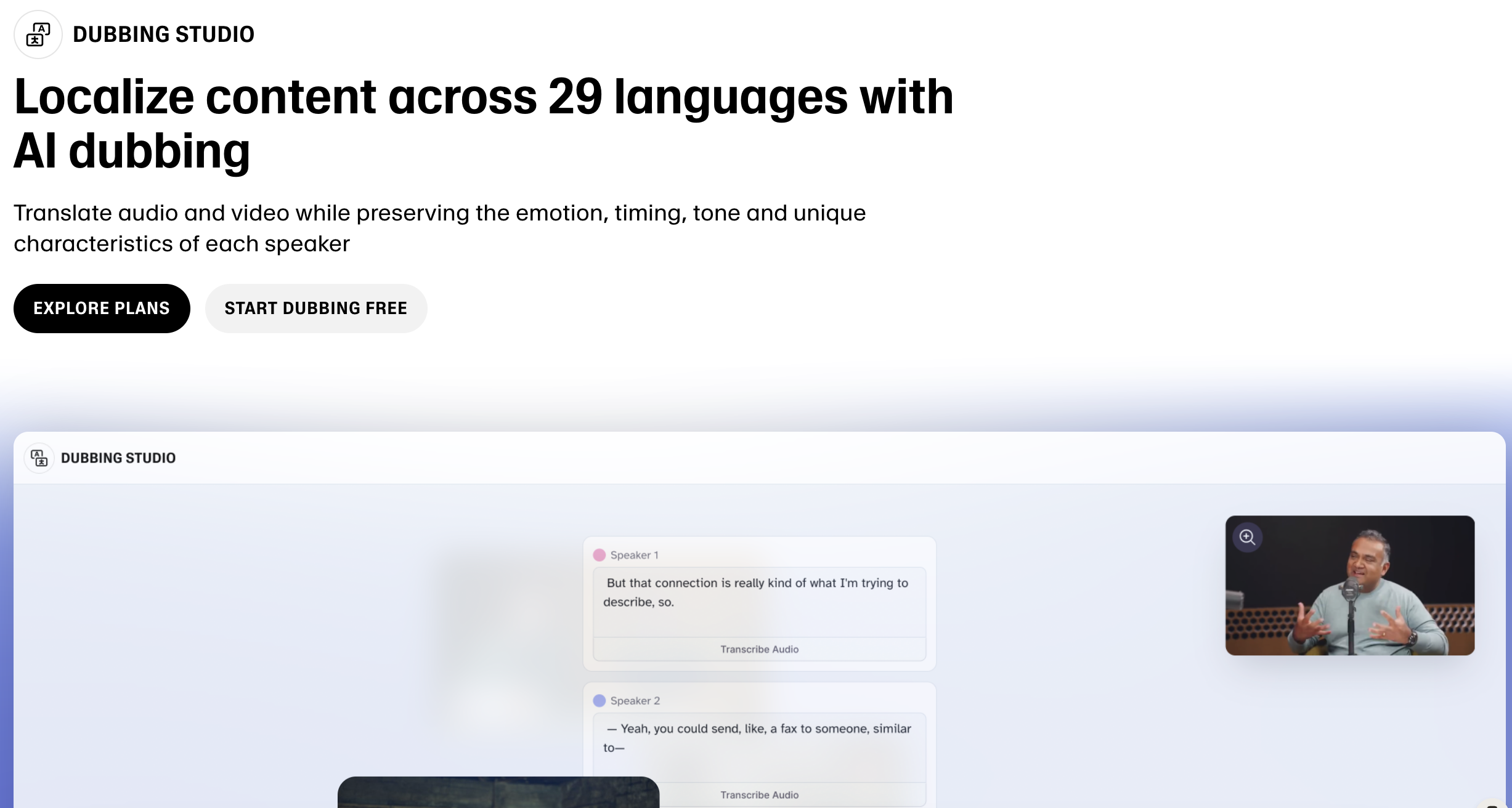
ElevenLabs has emerged as a leading AI voice synthesis platform, offering a suite of features that cater to content creators, businesses, educators, and developers alike.
It is known for producing natural-sounding, high-quality voices that go beyond the capabilities of traditional text-to-speech (TTS) systems. Specifically…
It’s great for translation.
The AI dubbing feature allows users to translate and dub content into 29 languages, maintaining the original tone and style. This feature is beneficial for translating educational videos, films, and promotional content. However, users have noted that while the dubbing sounds natural when successful, it can sometimes result in mixed audio outputs that are difficult to understand if there is background noise in the original file.
27. Figma AI for website design, mock ups & creation
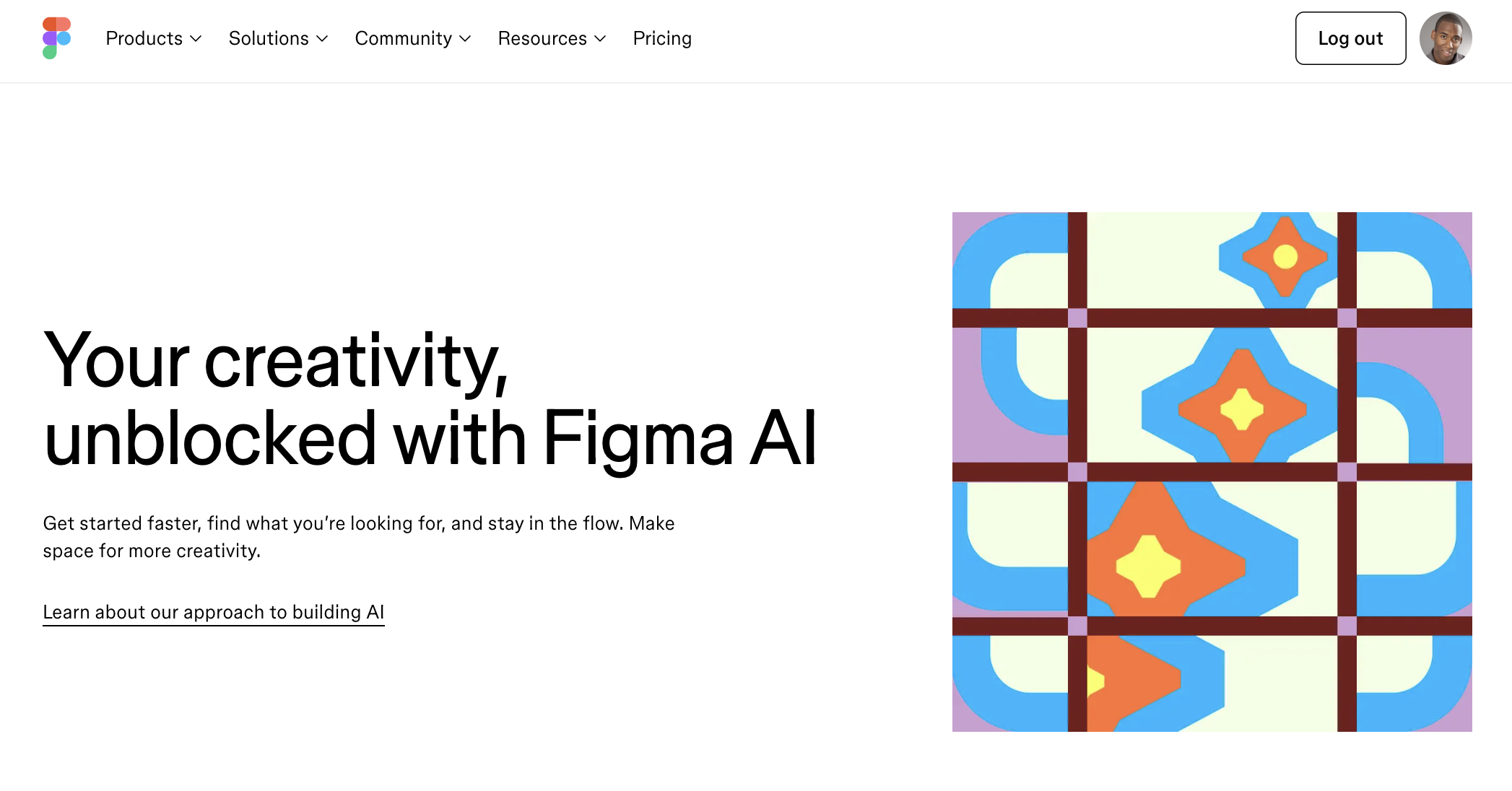
Figma, a widely-used design and prototyping tool, has introduced a suite of AI-driven features under the banner of Figma AI, aiming to revolutionize the way designers create, iterate, and collaborate on projects. Announced at the 2024 Config conference, these AI tools are integrated directly into Figma’s platform, enabling designers to work more efficiently and creatively.
Key Features of Figma AI
- Text-Based Design Generation: Figma AI allows designers to generate entire layouts from simple text descriptions. By leveraging natural language processing (NLP), Figma AI understands design conventions and patterns, producing high-quality, ready-to-use components that can be further customized by the user. This feature streamlines the early stages of design, reducing the time spent on creating initial mockups and concepts.
- AI-Powered Prototyping: The “Make a Prototype” feature significantly speeds up the prototyping process by automatically connecting frames and creating basic interactive elements. While more advanced prototyping will still require manual input, this tool effectively handles the more repetitive tasks, allowing designers to focus on refining user experience and interaction details.
- Layer Organization and Renaming: Figma AI introduces a smart layer renaming feature, which automatically names layers based on their content and position. This helps maintain a cleaner and more organized workspace, especially in complex projects where file organization can become cumbersome.
- Content Replacement and Translation: The “Replace Content” feature enables designers to replace placeholder text with more meaningful content in just a few clicks. Additionally, Figma AI offers translation tools that integrate directly within the design interface, reducing the need for third-party tools and streamlining the localization process.
- Remove Backgrounds and Generate Assets: With AI-powered background removal and asset generation, Figma AI provides functionalities that were previously dependent on plugins. Users can quickly remove backgrounds from images or generate new design elements like Gantt charts and timelines without leaving the Figma environment.
28. Notion for content creation & project management
One of the biggest challenges marketing teams face isn’t a lack of ideas — it’s lost context. Notion was one of the first tools that showed how much faster teams can move when knowledge, planning, and execution live in one place.
Notion acts as a central workspace where docs, databases, project plans, and now AI all come together. Instead of juggling notes, briefs, calendars, and task trackers across different tools, teams can build connected systems that reflect how they actually work.
With Notion AI built directly into the platform, it becomes more than a place to store information. Teams can draft content, summarize research, brainstorm ideas, and clean up messy notes without leaving their workflow.
The core strengths of Notion come down to a few things:
Connected knowledge: Strategy, content, and execution live in one searchable system.
AI-assisted writing: Generate, summarize, and refine ideas directly inside your docs.
Custom workflows: Build editorial calendars, campaign trackers, and playbooks your way.
Team collaboration: Real-time editing, comments, and permissions keep everyone aligned.
Notion isn’t trying to tell teams how to work. It gives them the building blocks to create systems that scale with their ambition — and AI that helps them move faster without losing clarity.
29. Singulate for hyper-personalized messaging at scale
One of the biggest problems in marketing today isn’t creating content. It’s getting that content to feel relevant to the person on the other side of the inbox. Generic blasts still dominate email, even though audiences expect messages that speak directly to them. That’s exactly the hole Singulate was built to fill.
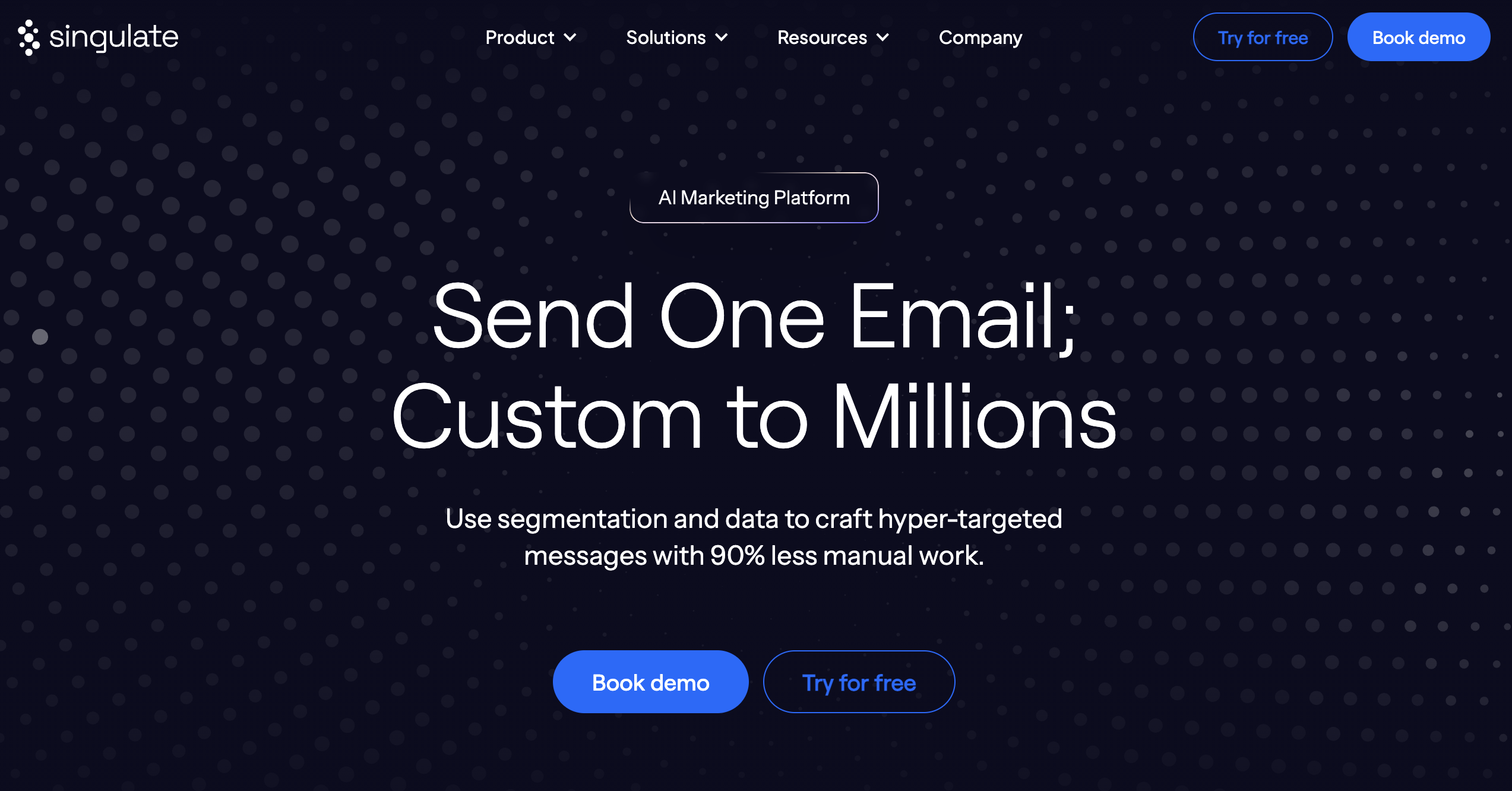
Singulate isn’t just another email tool. It’s a generative AI personalization platform that helps you create highly segmented, deeply relevant communication that feels like it was written specifically for each recipient. By breaking traditional lists and rigid workflows, Singulate lets you build dynamic audience segments on the fly using real CRM, event, and product data, then automatically generate bespoke content that aligns with each segment’s context.
What makes Singulate so powerful is how it blends data, segmentation, and AI content generation in a way that’s actually usable in real campaigns:
Smart segmentation on the fly: Build micro-audiences in seconds without manual list juggling or complex filters.
Data cleanup and transformation: Automatically organize messy CRM data so personalization actually works.
Generative personalization: Create copy that adapts to each individual, including summaries, recommendations, and context-rich snippets, without writing dozens of versions manually.
AI-powered automation: Layer segmentation and personalized content into workflows that nurture, engage, and convert.
Seamless integrations: Leverage existing tools and data instead of rebuilding workflows from scratch.
This isn’t about sending another email. It’s about sending relevant emails that feel one-to-one at scale. For teams focused on lifecycle marketing, nurture campaigns, and meaningful engagement, Singulate helps move beyond templates and into true personalization.
30. Zebracat for turning blog posts into video asset
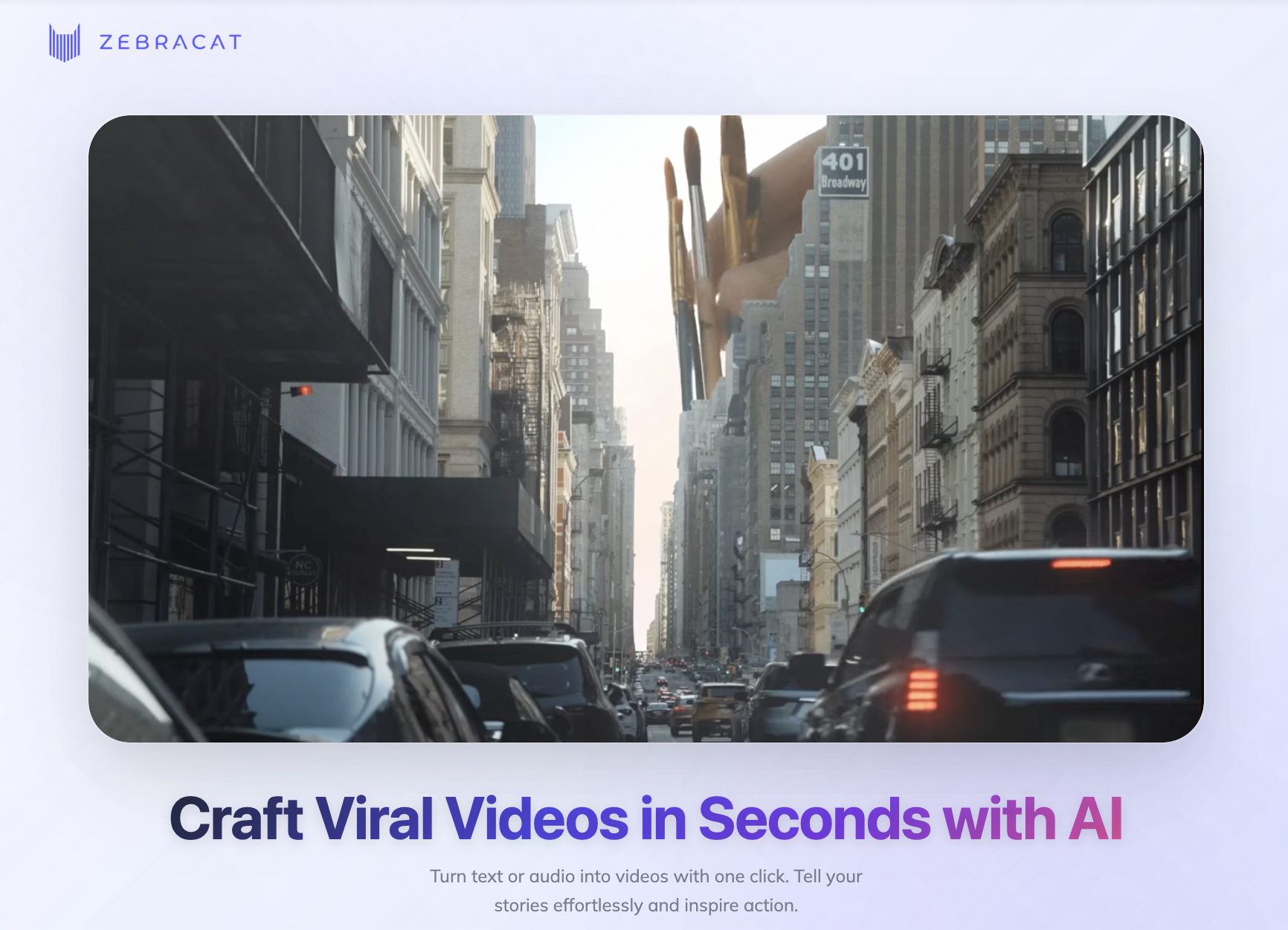
It’s fascinating that Zebracat is used by marketers and execs at Microsoft, Fiverr, Upwork, Durran, Amazon and more. The market raves about hte tool with a 4.8 score on G2 and 4.9 on Capterra.
Zebracat is a new type of video creation platform that turns a single prompt, script or blog post to high-impact marketing videos in no time. This tool is perfect for content creators who want to repurpose their written content into compelling visual assets.
With Zebracat, users can simply input their text and the AI technology will automatically generate a storyboard with professional graphics, animations, and audio. This saves time and resources for businesses that are looking to create engaging videos without hiring expensive video production teams.
Moreover, Zebracat offers various customization options such as choosing different video styles, adding logos and branding elements, and incorporating background music. This allows users to tailor their videos to match their brand identity and marketing goals.
Not only does Zebracat save time and money, but it also helps improve overall content quality. By turning blog posts or articles into videos, businesses can reach a wider
31. Writesonic for AI article writing & SEO checker
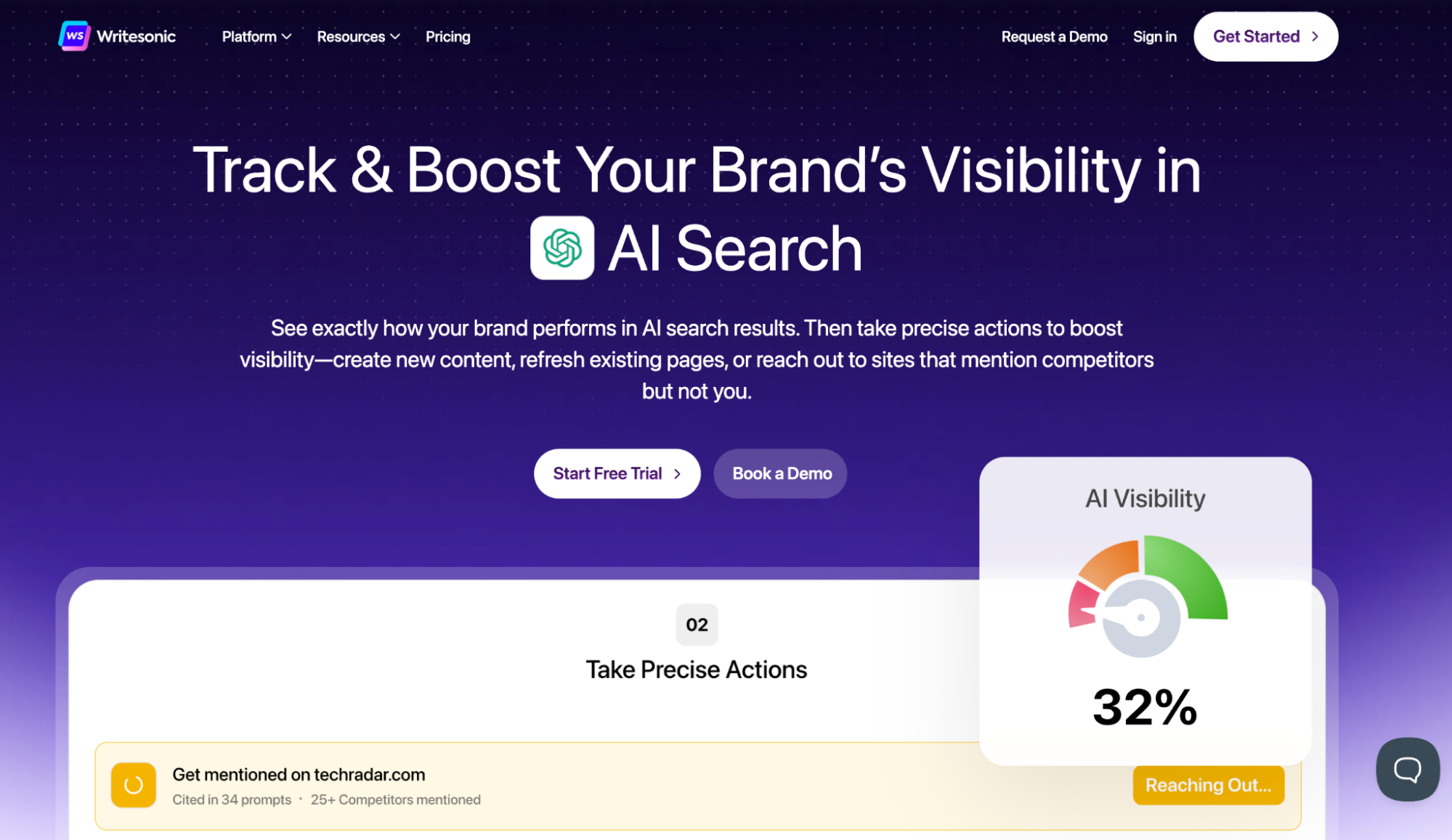
Writesonic is an AI-powered content creation tool that has transformed the way marketers produce written content, driving organic traffic and enhancing SEO strategies.
Leveraging its advanced AI capabilities, Writesonic makes it incredibly easy to generate factually accurate and engaging articles that can captivate any audience. This AI tool is a game-changer for marketers who need fresh, data-driven content to stand out in a competitive digital landscape. Here’s a glimpse of what Writesonic can deliver in just a few minutes.
One of the standout features of Writesonic is its ability to provide real-time data on the latest topics. With Writesonic, you can generate fact-checked and cited content that aligns perfectly with your brand’s voice and style, ensuring that your messaging remains consistent and authoritative.
Marketers can input specific topics or keywords, and Writesonic’s AI will conduct in-depth web research, competitor semantic analysis, and even automate internal linking to enhance SEO performance. It’s one of the best content AI tools for achieving maximum reach and engagement.
This not only speeds up the content creation process but also opens up new opportunities for personalized, data-backed storytelling. Writesonic’s versatility makes it an indispensable tool for scaling content across various marketing channels.
32. Lumen5 for AI powered video creation
Lumen5 is an AI-driven video creation platform that has revolutionized the way marketers and content creators approach video production. With its intuitive design and advanced AI capabilities, Lumen5 simplifies the process of transforming text into visually engaging videos that can capture any audience’s attention.
This AI tool is particularly valuable for those looking to create compelling video content quickly.
It’s self described as being “easier than making a slide deck.”
That’s pretty impressive.
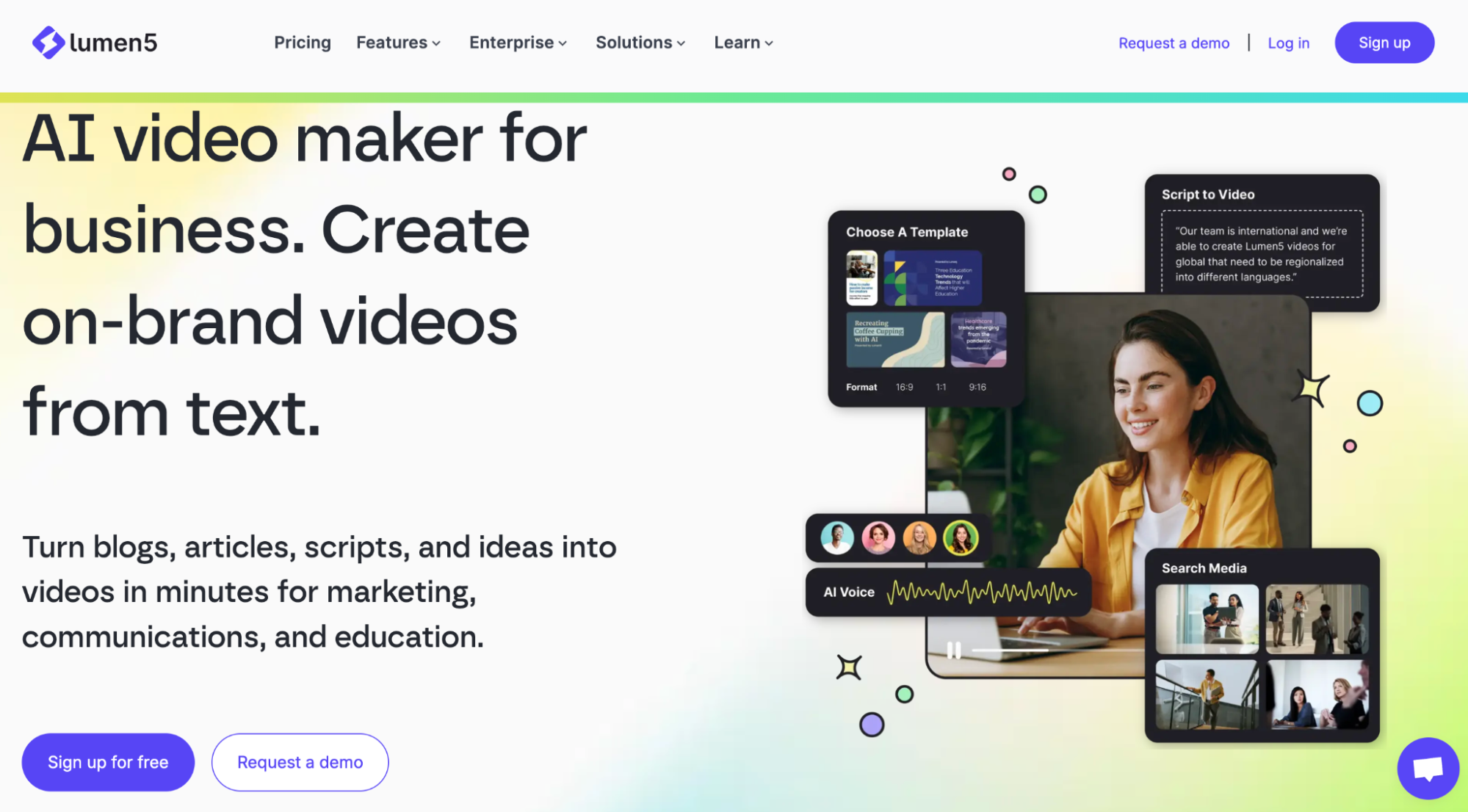
After testing the tool, I’ll say one of the most impressive features of Lumen5 is its text-to-video conversion capability. You can input a URL, blog post, or script, and Lumen5’s AI automatically generates relevant visuals, video clips, and animations to match the text.
This makes it incredibly easy to repurpose existing content into video format, saving time and effort for marketers who need to produce videos for social media, websites, or presentations. The platform offers a wide variety of templates and styles that can be customized to fit a brand’s specific needs, providing flexibility and creative control.
Lumen5 also employs machine learning and natural language processing (NLP) to enhance the video creation process. These technologies allow the platform to automate various aspects of video production, such as scene length and keyword highlighting, creating an efficient workflow that minimizes the need for manual editing. This automation not only speeds up the video creation process but also ensures a consistently high quality of output, making it ideal for marketers looking to maintain a strong visual presence across multiple platforms.
The platform includes robust collaboration tools, particularly useful for teams. With options to assign roles and permissions, multiple users can work on video projects without compromising quality or consistency. Lumen5’s integration with social media and digital marketing platforms ensures that content is optimized for different channels, whether it’s a short Instagram Story or a longer YouTube video, allowing marketers to easily distribute their content where it matters most.
Furthermore, Lumen5 offers a range of plans to cater to various needs, from a free option with watermarked videos to more advanced plans that offer higher resolutions, access to millions of stock assets, and enhanced customization options. The platform supports multiple video formats and resolutions, making it versatile enough to meet the needs of different types of content creators, from freelancers to large marketing teams.
However, while Lumen5 is highly effective for creating quick and professional-looking videos, it does have some limitations. Users have reported occasional issues with rendering times and glitches, and there are restrictions on certain customizations, such as adjusting text placement or integrating custom audio tracks. These limitations might be a concern for those seeking highly polished, customized video content.
33. Gia for AI-powered sales outreach and conversion
One of the biggest missing pieces in modern sales isn’t leads. It’s personalized conversations that actually convert. Too often, outreach feels robotic, follows the same tired templates, and fails to connect with prospects in a meaningful way. That’s where Gia comes in.
Gia is an AI-powered sales assistant designed to help teams craft better outreach, follow-ups, and conversational sequences at scale without the manual grind. It sits between automation and human intuition, helping sales teams sound thoughtful, relevant, and timely in every interaction.
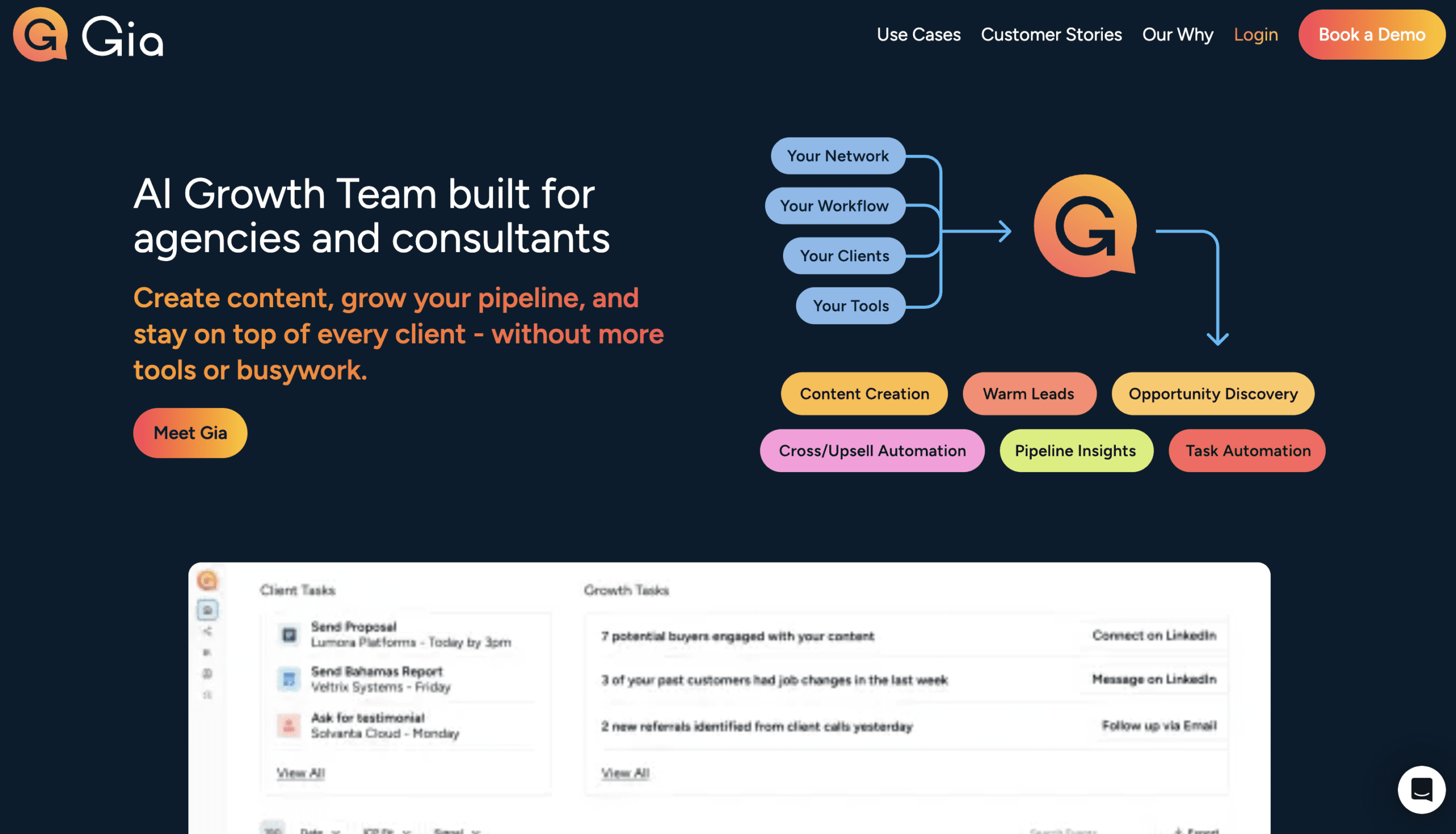
Instead of spending hours drafting and revising messages, Gia uses AI to generate outreach that reflects your voice, adapts to buyer context, and evolves as conversations progress. Whether it’s cold outreach, follow-ups, or account-based messaging, Gia helps teams move faster without sacrificing quality.
The core strengths of Gia include:
AI-enhanced outreach: Generate sales messages that feel personalized instead of templated.
Context-aware messaging: Tailor outreach based on industry, account, and conversation signals.
Rapid iteration: Test different hooks, tones, and angles without rewriting from scratch.
Conversation intelligence: Improve follow-ups using real responses and engagement signals.
Scalable personalization: Deliver relevant messaging across large pipelines with ease.
Gia doesn’t replace human sellers. It helps them show up better. By handling the heavy lifting of drafting and iteration, it frees teams to focus on strategy, relationships, and closing deals.
34. Grammarly for AI powered spell check
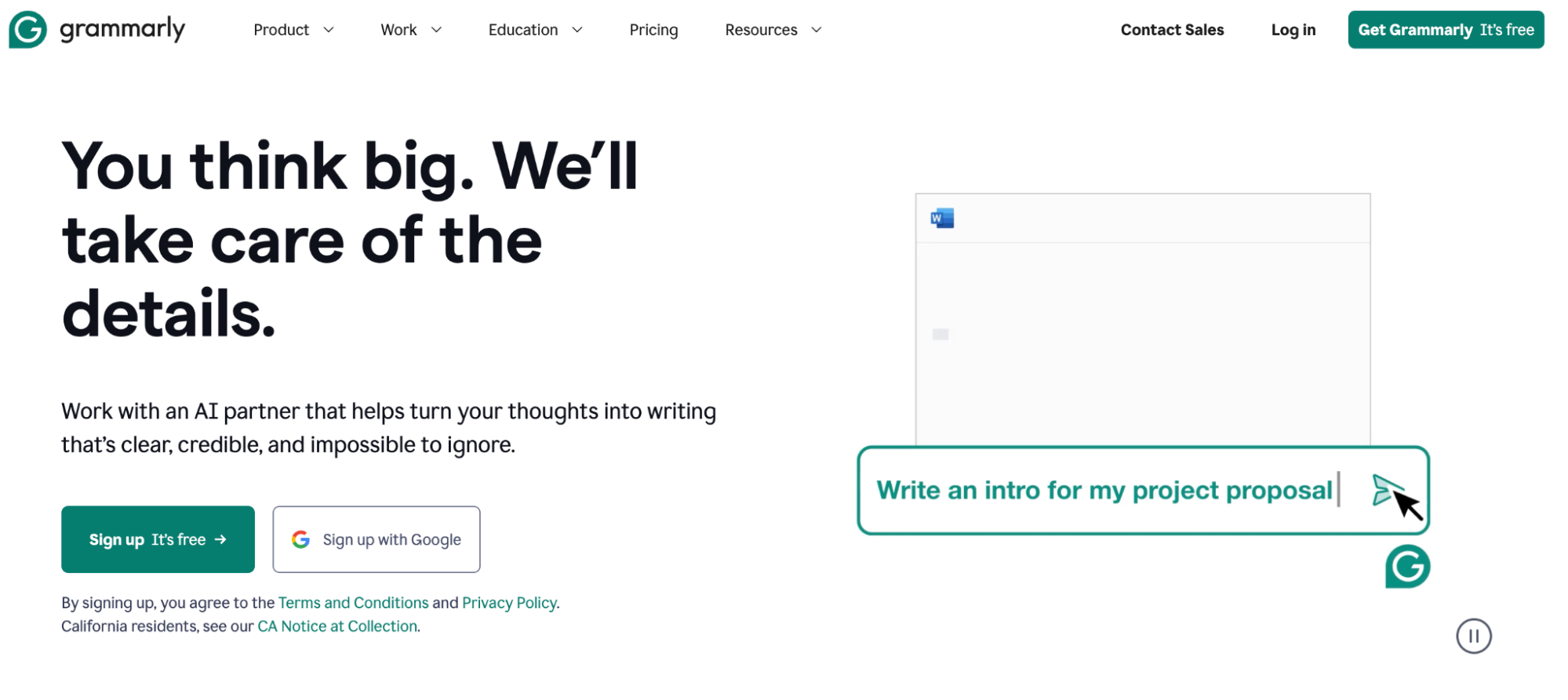
Grammarly is a go-to for writers, professionals, and anyone wanting to refine their written communication. This AI tool goes beyond spell check to provide thorough writing support.
Grammarly scrutinizes text for grammar, punctuation, and style errors, but its capabilities do not end there. It also provides suggestions to enhance clarity, tone, and engagement, making it an invaluable asset for producing clear, concise, and impactful writing. Whether drafting an email, preparing a report, or crafting social media posts, Grammarly’s intuitive platform supports users in conveying their messages effectively and accurately. With personalized feedback and performance statistics available, it encourages users to refine their writing skills over time.
Grammarly serves as an essential tool for maintaining professionalism and excellence in communication.